
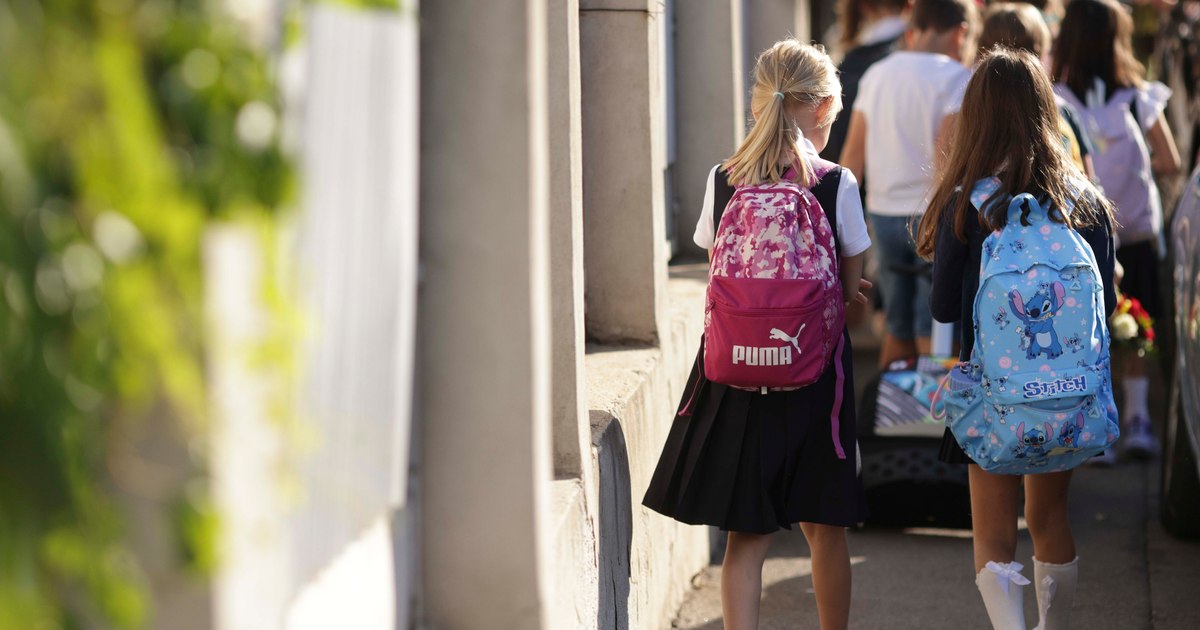
A legislative proposal submitted to Parliament is causing criticism in the chain. The initiators want the allowance to be comprised of two parts: a fixed part, worth 100 lei, and a flexible part, up to 250 lei, given only to children who have 10 to wear and are not absent. The criterion of absences would also apply to kindergarten, if the initiative were to pass. ,,It is not constitutional“, says teacher Vali Neagu. While several parents propose that the parliamentarians who are absent should also have their incomes reduced.
What the legislative draft provides
The initiative proposes to reduce the state allowance for children between 3 and 18 years old, from 292 lei to 100 lei. While “minimum 250 lei” would be awarded in the form of a “presence scholarship”.
This scholarship would be conditional on:
-
attending classes,
-
maintaining average 10 in wear or “very good” rating.
The amount for the scholarship would be indexed annually with the average rate of inflation.
The criterion of attending classes would apply to all children enrolled in a form of education: from kindergarten to high school.
“In the case of preschoolers, the condition of attending classes is also considered fulfilled in the situation where they register unexcused absences within the limit of a maximum of 5 days per month, without these affecting the right to the award of the attendance scholarship”. write in the proposal.
Instead, students would be conditioned by “daily attendance”, except for excused absences.
The initiators’ argument
The authors of the project argue that the change is necessary to reduce school dropouts.
The purpose of this measure is to stimulate constant participation in the educational process, empowering students and their families, as well as reducing the phenomenon of school dropout and early school leaving.
In the statement of reasons, they state that the current system of allowances is a “passive” one and that the state should actively encourage students’ attendance at school, not just provide universal financial support.
The way it was done during the communist period is also brought up as an argument.
“Historically, the regulations prior to 1989 established a different legal regime of the state allowance for children, characterized by numerous conditions regarding its granting. Thus, according to Decree no. 410/1985 regarding the state allowance and allowance for children, the right to the allowance was not universally recognized for all children, but was conditioned by the professional status of the parents, the family’s income, the home environment (urban or rural) and the number of dependent children. Therefore, the allowance had a predominant character of social support granted to the family, dependent on various socio-economic criteria, and not a universal right of the child, as it is later enshrined by the Constitution and in the jurisprudence of the Constitutional Court”he writes in the statement of reasons.
The initiators are two UDMR parliamentarians, who were joined by several colleagues from their own party, but also from other formations: five PSD parliamentarians (Alexandru Ghighiu, Ariana Bucur, Virgil Chirilă, Andrei Cosmin, Mircea Nicula), two from USR (Radu Mihaiu, the former mayor of sector 2, and deputy Bogdan Rodeanu) and the liberals Florin Roman and Raluca Turcan.
The Minister of Education puts the poor results in simulations on the shoulders of parents. Director: “The parent is missing from the child’s life, gone abroad to work”
Teacher Vali Neagu: “The allowance is not a reward”
The proposal is harshly criticized by Vali Neagu, Romanian Language and Literature teacher and educational advisor at a school in a vulnerable community: Curcani commune, Călărași county.
I consider it an unconstitutional measure. Allowance is a child’s right, not a reward. The conditioning of a significant part of it risks penalizing precisely children from vulnerable environments, where absences have, most of the time, social causes – poverty, lack of transport, family problems –, not lack of will or interest in school.
Although in the short term it could work as an incentive, in the long term such conditioning comes with a major risk, says the teacher: the deepening of inequalities.
Kids who already start out at a disadvantage will lose that money more easily without the real issues behind truancy being addressed.
Asked what he noticed in his daily practice that actually reduces school dropout, Vali Neagu talks about several important levels:
“Children stay in school when there is constant support: hot meals, supplies, educational programs and trusting relationships with teachers. Conversely, lack of resources, parental migration and the need to work at home frequently lead to absenteeism. A very clear example is the Summer School organized in 2024, in Curcani: we had the largest attendance – about 100 children who came daily for a month, in July. An essential factor was the hot meal. Also, through “School after school” type projects, carried out in partnership with NGOs, attendance at classes has increased noticeably, and today we have children from this community who are high school students.”
Counseling families, the presence of school mediators and real support for teachers working in disadvantaged areas are measures that could contribute to reducing the phenomenon at the national level, the teacher believes.
“Investment in prevention is much more effective than sanctioning. A clear national framework is needed, guaranteeing equal rights, but with locally adapted solutions. Each community has specific problems, and the effective measures are the flexible ones, built on the realities on the ground”adds Vali Neagu.
National Assessment and the Baccalaureate, in question. The trade unions are preparing a referendum to trigger the strike: “Is this how the party ordered it?”
“I propose the same criterion for all parliamentarians”
On social media, the proposal quickly generated reactions, mostly criticism.
“If a child loses their allowance for 20 hours absent per year, I propose the same criterion for all parliamentarians. That all their income be cut off for 20 hours of absence from Parliament and that they also use public transport or walk.”, wrote a mother on the Parents of Students from Romania Facebook group.
Other parents also drew attention:
“What does it have to do with it? The allowance is NOT a scholarship!”;
“It sounds like discrimination! The state allowance is a child’s right according to the Romanian Constitution and the specific legislation on child protection. It is not an optional aid, but a right guaranteed by law for every child!”;
“Yes, dropping out of school could be reduced by getting money for attending classes, but that doesn’t mean the allowance should be reduced. The allowance is an important help for some, even if it’s as little as it is.”
And the application criterion – since kindergarten – surprised many:
“A big stupidity! How to give the allowance based on attendance at KINDERGARTEN???? Kindergarten children go for three days and stay at home for two weeks because they are sick. It’s a big stupidity! What should we do, take them sick?”.
Sarcastically, one parent wrote:
“I would say to take away their allowance altogether and give it to the parliamentarians, why bother?”
