
December 21 is considered the shortest day of the year 2025 and is also one of the oldest holidays of mankind, celebrated since prehistoric times. The winter solstice has a long tradition also on the current territory of Romania.
On December 21, at 5:03 p.m., the Sun will reach its southernmost point in the sky. The moment marks the winter solstice, meaning the beginning of astronomical winter in the Northern Hemisphere.
The sun reaches its southernmost point
Although most people think of the entire day as the December solstice, it actually occurs at a precise moment when the Sun is just above the Tropic of Capricorn, an imaginary line of latitude located about 23.5 degrees south of the Equator, the southern limit to which the Sun can reach directly overhead (at the zenith), scientists show.
Instead, on the summer solstice, which will be on June 21, 2026, at around 08:24, the sun reaches its northernmost point in the sky and is at the zenith above the Tropic of Cancer (about 23.5 degrees north latitude)
The winter solstice is linked to the apparent annual movement of the Sun on the celestial sphere, a phenomenon that represents the consequence of the real movement of the Earth around the Sun, explain the specialists from the “Admiral Vasile Urseanu” Astronomical Observatory.
“On the date of the winter solstice, the Sun rises 23 degrees and 27 minutes south of the east cardinal point and sets at the same angle south of the west cardinal point. At noon, it “rises” — taking into account the average latitude of our country, 45 degrees — to only 21 degrees from the horizon. Consequently, on this date, the length of the day has the minimum value of the year, 8 hours and 50 minutes, and the duration of the night has the maximum value of 15 hours and 10 minutes (for Bucharest). Obviously, in the southern hemisphere of the Earth, the phenomenon occurs in reverse, this moment marking the beginning of astronomical summer”. shows the Astronomical Observatory.
The day the sun “stands still”
The term solstice comes from the Latin words sol (“sun”) and sistere (“to stand still”), and refers to the fact that, during this period, the apparent position of the Sun in the sky changes very little from one day to the next.
“There is a second movement of the Sun, distinct from that of the heavens, which takes place from bruma (‘winter day’) to solstitium (‘solstice’). The mist is so called because then the day is the shortest, and the solstice because the Sun seems to stop, being then closest to us.” informs Marcus Terentius Varro (116 BC – 27 BC), one of the great Roman scholars of his time, in the work De lingua Latina.
The time of the winter solstice, i.e. the beginning of the astronomical winter, occurs every year around December 21st.
The day of the winter solstice is most commonly December 21 or 22, but the moment can also occur on December 20 or 23. The last solstice on Dec. 23 was in 1903, and the next one will be in 2303. A solstice on Dec. 20 is also rare, with the next one in 2080, Time and Date says.
Astronomical winter begins, but the days are getting longer
Starting from the winter solstice until June 21, the length of the days will continuously increase and that of the nights will decrease.
“The shortest day of the year is usually associated with the latest sunrise and earliest sunset of the Sun. However, in most places the earliest sunset occurs a few days before the solstice and the latest sunrise occurs a few days after it, because, in addition to influencing the time of solar noon, the variation in the length of an apparent solar day also affects the times of sunrise and sunset.”notes astrophysicist Graham Jones, in an article published on the science website Time and Date.
According to the scientist, at this time of the year, the duration of a solar day is more than 24 hours. Thus, just as the time of solar noon moves later and later from one day to the next, so do the times of sunrise and sunset.
“Therefore, the latest sunrise occurs after the winter solstice and the earliest sunset occurs before it,” says astrophysicist Graham Jones.
In the months leading up to the winter solstice, the position of sunrise and sunset gradually moves south. Around the winter solstice, the Sun reaches its southernmost positions at sunrise and sunset, after which the days gradually begin to grow longer and the nights to shorten.
“In the Northern Hemisphere, the rate of increase in day length depends on the latitude of the place. At more northern latitudes, there is a faster increase in the number of daylight hours compared to areas located further south“, show the specialists of the science publication.
During the Northern Hemisphere winter, a few weeks after the solstice, the Earth is closest to the Sun. The seasons are not determined by the distance of the Earth from the Sun, scientists remind.
“Seasons occur because the Earth orbits the Sun at a tilt of about 23.4 degrees. Because of this, different amounts of sunlight reach the northern and southern hemispheres, causing variations in temperature and weather patterns throughout the year.” shows Time and Date.
The winter solstice, celebrated since ancient times
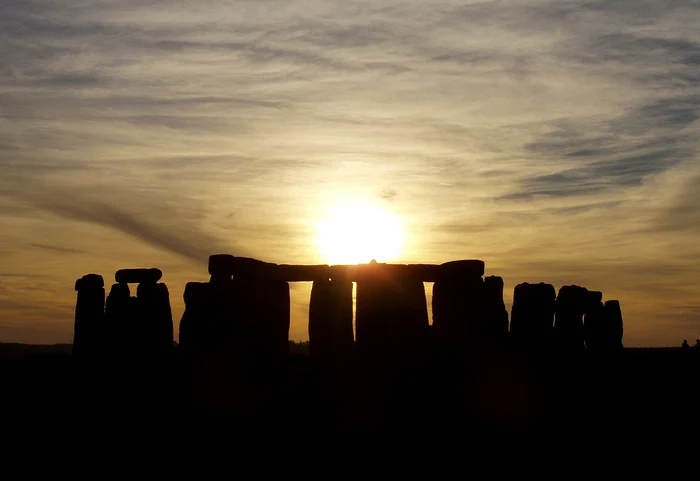
The winter solstice has been celebrated since ancient times by many civilizations, and remnants of the cult related to this moment have been preserved for thousands of years. Famous prehistoric monuments like Stonehenge in Britain and Newgrange in Ireland were built with astronomical alignments so that the light of the solstice Sun would penetrate them, symbolically marking the moment, according to archaeologists. Some pyramids were also associated with the orientation and movements of the stars.

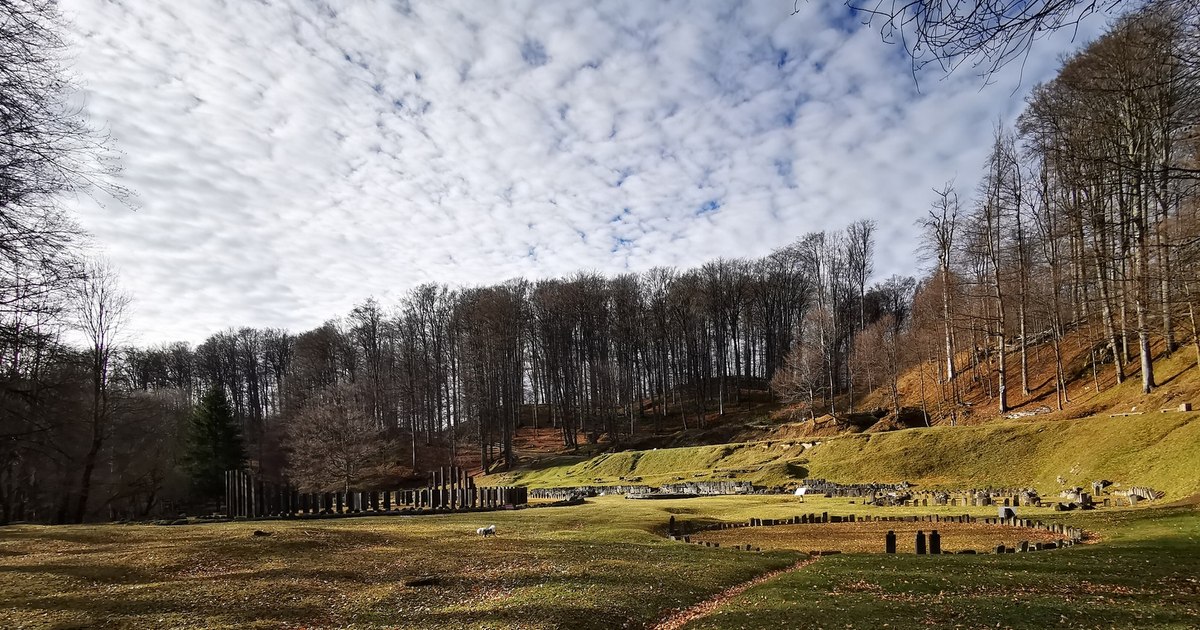
In Romania, some scientists have shown that the alignment of some sanctuaries in Sarmizegetusa Regia would be related to the celestial observations that the ancients would have made. One of the edifices indicated was the Great Circular Sanctuary in the Dacian capital. Due to the rhythmic placement of its pillars, it involved the making of celestial observations, more natural within solar cults than in the worship of subterranean divinities, noted the historian Hadrian Daicoviciu, in the Dacia volume.
“The purpose of this sanctuary has not yet been clarified, but there is no doubt that certain astronomical observations are also reflected in its construction. The connection between the Dacian calendar and the religion of the Dacians is obvious. The very presence of the stone calendar in the sacred precinct, along with other sanctuaries, underlines it, Iordanes’ words about the decisive role of Deceneus in the development of astronomical concerns among the Dacians. Naturally, astronomers were priests. Through their knowledge of the movement celestial bodies, by regulating the calendar, so necessary for agriculture for example, they increased their authority over the masses, appearing before them not as simple scholars, but as possessors of mysterious and supernatural powers”added Hadrian Daicoviciu.
The scientist Ioan Glodariu, former coordinator of the archaeological site of the Dacian fortresses in the Orăștiei Mountains, associated the “Andesite Sun” in the vicinity of the great sanctuary with a possible solar dial, an astronomical device (astrolabe) built by the Dacian elites, which could measure the passage of time with the help of the “stone ray”. On it, the positions of any solstice point, sunrise or sunset, of the sun or the moon can be determined, says archaeologist Ioan Glodariu.
