
For a child, learning is not limited to classroom hours.
It continues at home, at the kitchen table, on the way to school, sometimes even in the park. And those who support it – parents, grandparents, teachers – know that it is not always easy to find the right words or methods for each individual child.
How many times have you sat next to your child helping them with homework and felt that no matter how clearly you explain, your explanation just isn’t getting through? Not because he doesn’t want to listen, but because his mind needs something other than words. He needs to see, touch, do something concrete with the information in order to understand it.
How information becomes easier for children to understand
For example, a seven-year-old trying to understand how the human body works will not retain much from a verbal explanation, no matter how well constructed. But if he sees a clear illustration, if he can point with his finger where the heart is and where the lungs are, if he has an image to fall back on – things change. Information takes shape, becomes concrete, makes sense.
This is the role of well-thought-out educational materials: to turn abstract information into something concrete and easy to follow. They do not replace the teacher’s or parent’s explanation, but support it.
The same goes for the parent who sits next to the child at homework and has educational materials at hand: no more improvising, no more looking for something suitable on the Internet, no more wasting good minutes before entering the subject.
More types of materials, more ways to learn
There is no single resource that works for all children in all situations. A child who loves to color will be much more captivated by an activity book than a book to read. Another, who remembers better with the help of images, can understand more easily when he has a clear visual support in front of him than from an hour of explanations. Therefore, educational materials should not be seen as a single solution, but as complementary resources.
Workbooks and activity sheets bring an element that explanation alone cannot provide: active engagement. The child solves, completes, puts things together – and by this he not only understands, but also remembers. It’s the difference between listening to how something is done and actually doing it.
Games and activity resources for children come with an important advantage: the child perceives them as a fun activity. When they associate an activity with fun, they no longer feel it as an obligation. It’s no longer “homework” but “opportunity to play” – and sometimes just this change of perspective makes things go much easier, both for him and for the one who guides him.
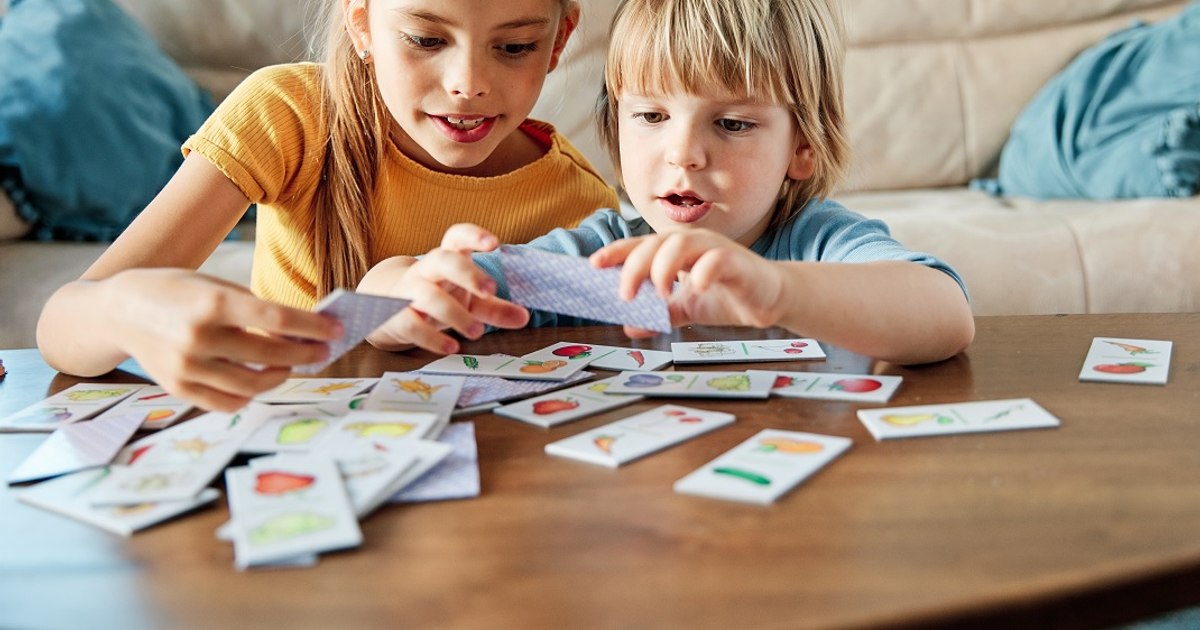
Educational flashcards, on the other hand, are simple and effective for memorization and repetition – English words, mathematical operations, animal names. They can be easily used at home, without much preparation, but also in the classroom as a quick review element.
Equally useful are the didactic boards that can be used in kindergarten, in primary classes at school, but also at home. The use of visual materials, with clear examples and attractive illustrations, helps children understand some concepts more easily, making learning a more enjoyable experience.
What makes an educational material really useful
Not every resource with vivid images and colors is effective. A few things make a material quickly put aside or, on the contrary, attractive enough to return to it often. Clarity is the first criterion. The illustrations must be interesting, the text easy to follow, the information logically organized. If the adult using it has to guess what he wants to convey, the child will not understand more easily.
It is equally important that the material is suitable for the child’s age. A material that is too simple is boring, one that is too complex discourages. The age recommendations on the materials have a real point and deserve to be taken seriously.
And last but not least, ease of use. Really useful are the materials that easily find their place in the daily routine – in the break between two activities, in the minutes before dinner, in the recap at the end of the lesson. If they require too much training, the chances of them being used consistently decrease greatly.
A change of perspective
Perhaps the most important effect of good educational materials is also the least visible at first glance: it changes the atmosphere in which the child learns. Both in the classroom and at home, when the child has the right resources at his disposal, the atmosphere around learning changes significantly.
A teacher who enters the classroom with well-chosen visual resources can make the lesson clearer and easier to follow. And at home, for a parent who sits next to the child at homework, a suitable support can make the explanations clearer and the whole moment less tiring for both of them.
And sometimes, that’s all it takes: being there for a child discovering something new and having the right resources at hand.
Photo source: envato.com
