
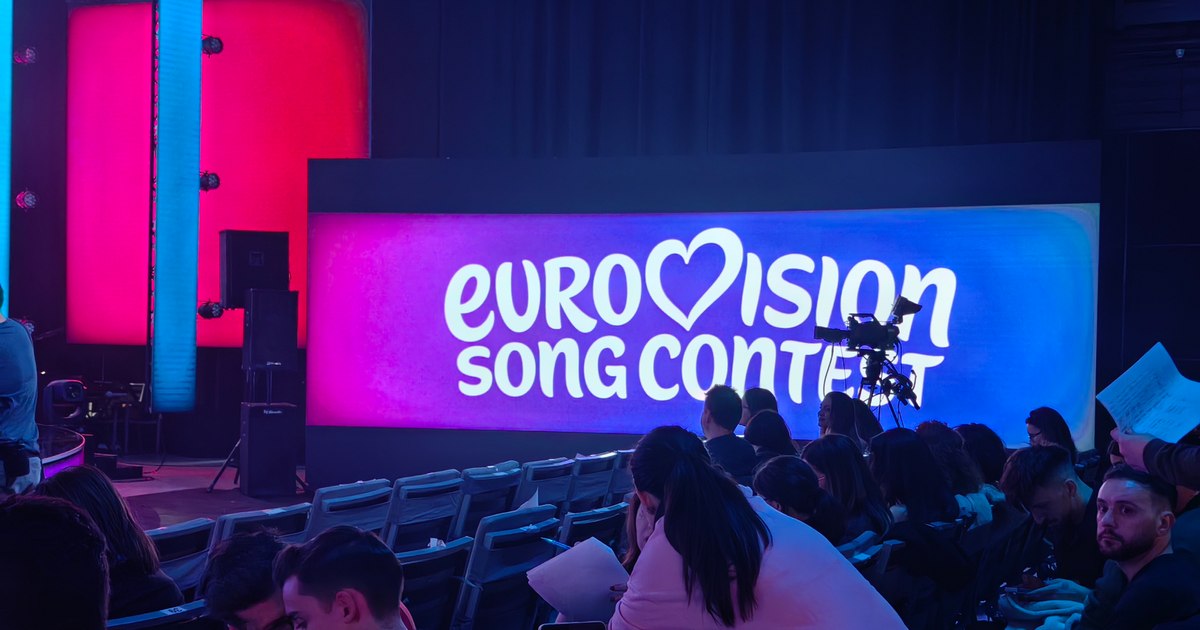
Created under the slogan “Unite through music”, Eurovision is going through one of the most difficult periods in its history in 2026. The 70th anniversary edition is marked by the biggest boycott yet, in an increasingly divided Europe.
70 years after the first edition, the Eurovision Song Contest 2026 is taking place in a tense climate, where the official slogan “United by Music” seems to be put to the test by political disputes and human rights allegations.
The competition organized this year in Vienna is no longer just a musical competition, but also the scene of a clash of opinions that transcends the boundaries of art.
The 2026 edition is already considered the most controversial in Eurovision’s recent history, after five countries – Spain, the Netherlands, Ireland, Slovenia and Iceland – decided to boycott the competition in protest at Israel’s participation amid the continuing conflict in Gaza.
Spanish Prime Minister Pedro Sánchez has publicly explained his position.
“In the face of illegal war and genocide, silence is not an option. We will not be in Vienna, but we do so with the conviction that we are on the right side of history,” he declared.
Not only have they withdrawn from the competition, but stations in Spain, the Netherlands, Ireland, Slovenia and Iceland will not even broadcast the contest. On Saturday evening, during the Eurovision final, the public television stations in the countries that are boycotting the competition chose alternative programs: in Spain, the public broadcaster TVE will broadcast an alternative music program, the Slovenian television RTV included documentaries about Gaza in its schedule, and in Ireland, the public broadcaster RTÉ chose to rebroadcast a famous episode of the Father Ted series, in which a European music contest is mocked by the famous “nul points”, notes The Guardian.
Israel at the center of the 2026 controversy
This year, all tensions converge around Israel’s participation. Supporters of the boycott accuse organizers of trying to “normalize” the situation in Gaza by keeping Israel in the contest, while Israeli officials and their allies claim the protests are anti-Semitic.
In this context, the performance of the Israeli representative, Noam Bettan, who took the stage on the first night of the competition, was interrupted by chants such as “Stop the genocide”, and the Austrian authorities announced increased security measures for the final.
Suspicions regarding possible influences on the public vote in the 2024 and 2025 editions also contribute to the tense climate hovering over the contest.
History of controversy
Historian Chris West, author of the volume “Eurovision: A History of Modern Europe Through the World’s Greatest Song Contest”, claims that the event was born from the idea of ”never again” in 1956, in a Europe that was trying to rebuild itself after the trauma of the Second World War.
Romania qualified for the Eurovision grand final. Alexandra Căpitănescu will sing from a strategic place on Saturday
The original goal was simple: bringing European states closer together through culture, television and artistic exchange, in a project that would encourage unity and dialogue.
However, politics made its presence felt quite quickly. In 1964, a Danish activist took to the pageant stage in Copenhagen with a banner reading “Boycott Franco & Salazar”, a direct reference to the dictatorships in Spain and Portugal.
Five years later, Austria refused to participate in the edition hosted by Madrid, invoking the dictatorial regime of Franco, a situation that recalls, to a certain extent, what happened now, in the edition of 2026, but on a much larger scale, because not just one, but five countries chose to boycott the event.
Over the decades, the competition has frequently been influenced by the international context. Greece and Turkey alternately boycotted the contest in the 1970s amid regional conflicts, and in Portugal, the 1974 entry was used as a signal to trigger the Carnation Revolution.
One of the most dramatic episodes happened during the war in the former Yugoslavia, when Muhamed Fazlagić managed to escape from besieged Sarajevo to represent Bosnia and Herzegovina at Eurovision.
After the breakup of the Soviet Union, many newly independent states used the contest as a platform for identity affirmation and rapprochement with Western Europe, even before integration into structures such as NATO or the European Union.
The relationship with Russia has also been marked by controversy. Georgia was excluded in 2009 due to a song considered an allusion to Vladimir Putin, and Ukraine has often used the Eurovision stage to convey messages related to the Russian-Ukrainian conflict. In 2022, Russia was officially excluded from the competition after invading Ukraine.
“The whole idea is called into question”
Eurovision continues to be watched by millions of viewers around the world, but the unprecedented scale of the boycott of the 2026 edition raises serious questions about the future of the competition and its ability to stay true to its slogan, “Unite through music”.
Commentator William Lee Adams believes that this year’s edition deeply affects the image of the contest
“This is the biggest boycott Eurovision has ever seen and seriously affects its image. Eurovision is supposed to bring countries together, and if countries no longer want to participate, the whole idea is called into question.” he pointed out.
Romania dreams of the Eurovision 2026 trophy after Alexandra Căpitănescu’s rise in the bookmakers’ charts
Emotions and hopes
Despite the political controversies, boycotts and disputes dominating this year’s edition, the competition is running and public attention is now shifting to the Eurovision 2026 Grand Final, which is set to start at 10pm.
Romania’s representative, Alexandra Căpitănescu, will take the stage in Vienna towards the end of the competition, with number 24, being the penultimate competitor of the evening, a position considered by many to be advantageous in a show of such magnitude.
His performance has already attracted strong reactions from both Eurovision fans and the international press. The BBC described her as “a force of nature”, comparing the artistic energy of the Romanian representative to a mix between Lady Gaga and Evanescence.
Romania’s moment was also appreciated by fans from several European countries, who described it as one of the strongest shows in recent years, thus increasing the hopes of an important ranking or even a surprise in the fight for the trophy.
