
Romanian tourism crossed 2025 in a state of chronic fatigue, with nerves stretched to the maximum and with the increasingly oppressive feeling that it missed another moment of relaunch. It’s not a spectacular crisis, but a slow wear and tear that shows in the numbers, policy decisions and industry discourse.
“It was a pretty bad year, for obvious reasons”bluntly says Alin Burcea, president of the National Association of Tourism Agencies (ANAT). “It was a pretty bad year, for obvious reasons. On the one hand, taxes increased, VAT increased by 2%. On the other hand, costs have increased due to energy”. He points out from the beginning that this field is seen as the “black sheep, the stepchild”, this statement also based on the fact that Tourism is not dedicated to a separate ministry, but is part of the Ministry of Economy, Digitization, Entrepreneurship and Tourism, where the priorities are different – what’s more, says Burcea, those in charge of the ministry don’t even want to invest in Romania’s participation in relevant international fairs.
The coast, the mirror of all weaknesses
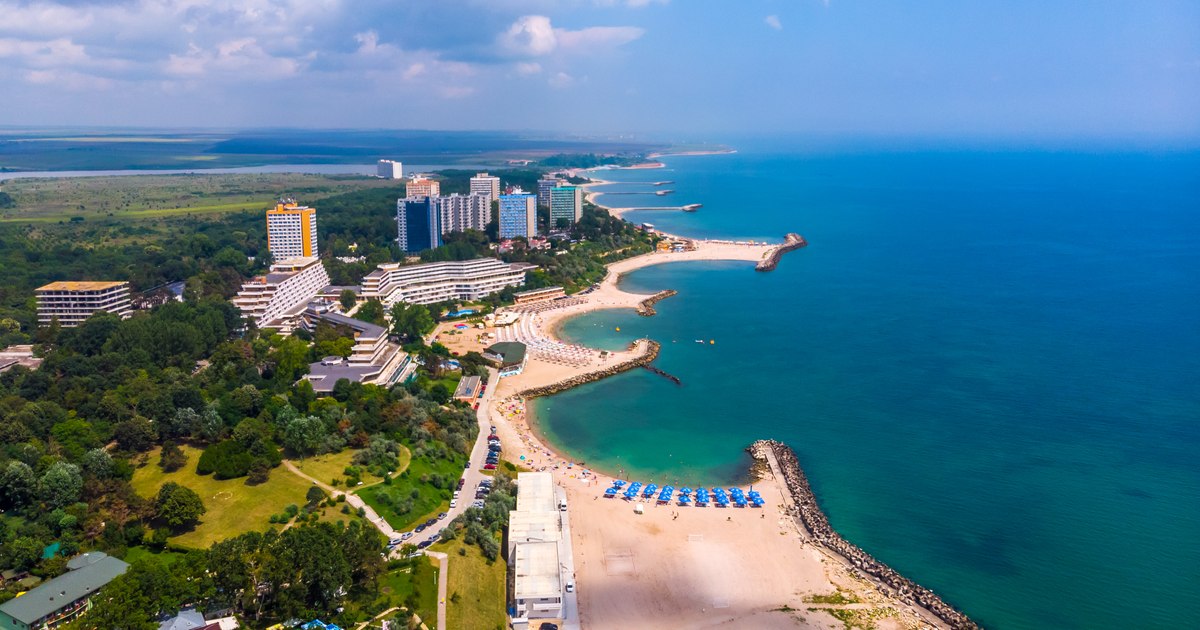
If there is a place where all these problems become visible, it is the Romanian coast. That is where investments, frustrations, comparisons and dissatisfactions are concentrated. “Either nothing happens, or it looks pretty bad, although investments have been made, and I’m not talking about hotels“says Burcea, moving the discussion from the private sector to the responsibility of the state. The beach, the main reason why people go to the sea, has paradoxically become the greatest vulnerability. “Romanians come to the sea for the beach”he points out. And here, the chain of wrong decisions seems endless: mismanagement, high prices, lack of maintenance and a constant conflict between authorities, operators and tourists.
The problem of seashells is emblematic of this inability to solve simple things – in this case, crushing them and turning them into fine sand. “DI’ve been talking to the people from Apele Române Dobrogea for three years and I tell them to buy an installation or two, because basically the money is recovered from the rents charged“, explains Burcea. “They say they will take it, but it never happens”. Although the technical solution exists and the costs are not prohibitive, the lack of interest paralyzes any initiative. “If they would take one or two clam crushers, the matter can be resolved, but nobody cares. Basically, neither of the two ministers is doing his job as a minister in the area he is in.”
Why is it cheaper at the neighbors?
The comparison with Bulgaria and Greece is inevitable, constant and, at the same time, painful. “Qin Bulgaria they are cheaper because simply the cost they pay to the state company that owns the beaches is much lower. It’s not something complicated“, says Burcea. The difference is not about economic magic, but about a completely different philosophy. “Dobrogea Romanian Waters boasts how much profit they made. This is a major mistake, because you don’t need to make a profit from the beach rental. You have to profit horizontally from everything tourism means”. In Romania, the beach has become a source of direct income for the state, not a tool to generate consumption, services and indirect taxes, and the effect is seen in prices. “There are hardly any sunbeds under 50 lei”says Burcea, and in many areas the rates reach 100 or even 200 lei. To these is added the parking – “about 100 lei per day” – so that, before entering the hotel, the tourist has already paid amounts comparable to a full day’s vacation in other countries. “In 7 days, you give 1,400 lei, but you haven’t entered the hotel yet” – this is a phrase that explains better than any analysis why the Romanian coast is losing regional competition.
In this context, there is also the persistent idea that seaside patrons want to “give guns”. An idea that Burcea rejects, linking it to an older mentality: “We come to a communist country and we still have to live with people born in communism, where whoever is rich must have stolen”. His explanation is awkward, but not meaningless. “No one knows that you have to pay taxes, you have to pay salaries”. In reality, the costs are enormous and difficult to amortize in a short season with changing rules. “You have, you don’t have customers, you pay two people anyway”says Burcea, referring to the minimum staff required to manage a beach. Added to these are high rents, lack of urban plans and difficult obligations. “In the Mamaia-Năvodari area, in certain areas, there is no PUG, there is no PUZ. Those who go to the beach cannot build a beach bar”.
The issue of toilets is another example of administrative absurdity. “They oblige you as a beach operator to have a toilet, but if I do a toilet, where do I dump it?”. Simple questions, but no answers.
Romania, the tail of Europe for tourists
Beyond the littoral, the problem is one of image and national strategy. “For promotion, Romania allocates 2 million euros. It is more than embarrassing”says Burcea, in a context where the HoReCa industry employs approximately 400,000 people and generates substantial income for the budget. The results can be seen in the statistics. “In the year 2024 it seems that we had 2.2 million foreign tourists, and in 1980 we had 3.4 million”. Bulgaria attracted 12 million, Albania, over 10 million. “We are the only country that, after ’90, has fewer tourists than we had during the communist period”. The explanation of the director of ANAT is harsh but coherent: “We don’t have a Ministry of Tourism, we don’t even have an authority for tourism, we are a ruined department in a ministry led by a minister who doesn’t care”.
2026, the year of forced adaptation
In this context, expectations for 2026 are minimal. “In my opinion, this year is going to be worse. It’s not going to be better“says Burcea. A year of austerity, with reduced consumption and political pressures, will test the adaptability of the industry.
At the agency level, the strategy is defensive and anticipatory. “We released the programs for 2026 very early, that is, from September 1. We managed to release rates that I admit we haven’t had for ten years”. The result: “In terms of number of people, we sold five times more people than last year”. However, it is not about discounts or offers. “I am not a follower of the idea of cheapness“, says Burcea, explaining that Romanians continue to look for comfort. “We are a little more Balkan, we want more comfort”. Hence the interest in new destinations, such as Montenegro, tested as viable alternatives.
Tourism fairs remain an important tool, despite skepticism. “There are always discounts. Otherwise the world doesn’t come”says Burcea. But the final decision is not dictated solely by price. “If you want to go to Antalya, even if you find in Montenegro cheap, don’t go to Montenegro”. The mentality of the Romanian remains clear: “I’ve been a servant for 50 weeks, in two weeks I want to be a noble.” And this desire for reward explains many of the Romanians’ tourist choices.
In the end, Romanian tourism does not lack potential, but coherence. “The littoral is neither great nor as bad as some say. It’s a good product”says Burcea, but one left to degrade due to lack of vision. 2026 will not be the year of great comebacks, but, at best, the year when the industry will have to prove that it can survive in spite of the state, not because of it.
