
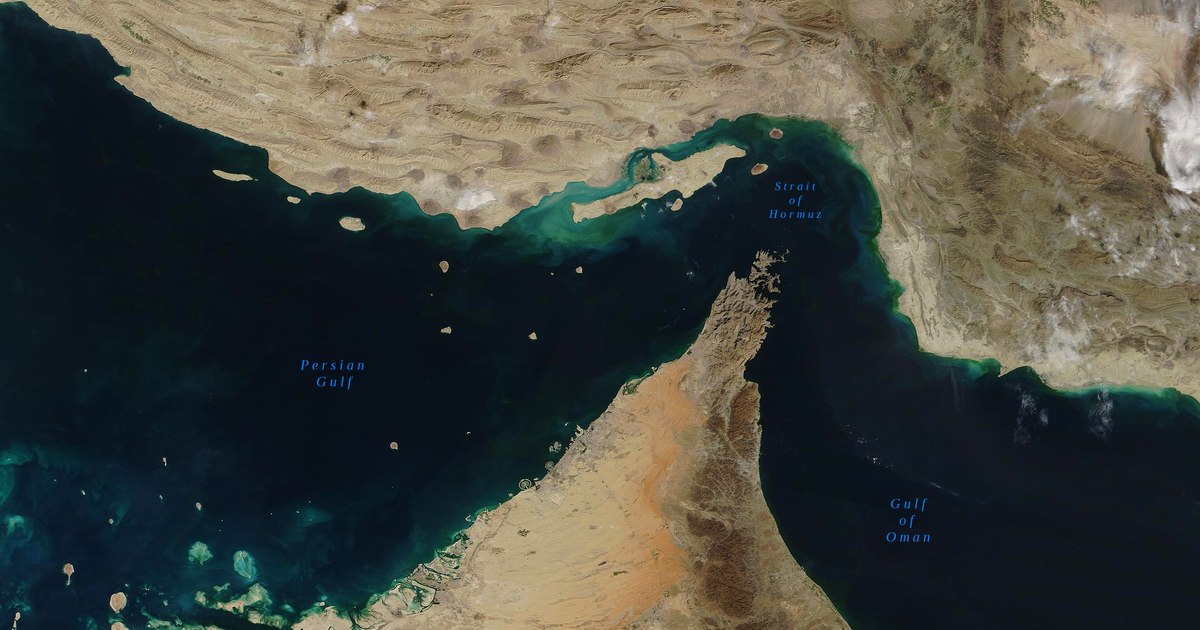
A global shortage of motor oil for luxury cars is looming because of the Strait of Hormuz crisis, analysts and industry groups say, warning that stocks could soon run out if the war in Iran drags on.
Continued disruptions in the Strait of Hormuz, a vital strategic area for shipping goods, have triggered what the International Energy Agency (IEA) has described as “the biggest threat to energy security in history,” although the supply shock extends far beyond crude oil, fertilizer and helium.
Base oils are the main component used to produce high performance lubricants for the production of motor oil and industrial fluids.
Group III and IV base oils, such as polyalphaolefins (PAOs), are key feedstocks for finished synthetic lubricants used for automotive purposes, with PAOs being particularly important for luxury vehicles.
Stocks will run out in a month if nothing comes in, and that will only reduce production of finished lubricants, said Gabriela Twining, head of base oil pricing at Argus Media.
The Gulf region accounts for up to 20% of global Group III base oil production capacity and 72% and 47% respectively of European and US Group III imports last year, according to Argus Media.
Supercars, which are especially prevalent in big cities like London, Monte Carlo and Los Angeles, rely on these niche products because they can withstand extreme heat, high revolutions per minute (RPM) and intense pressure.
“They’re basically the basis of all finished lubricants for automotive, industrial, aviation, marine…whatever you want, if something’s moving, it’s going to need a lubricant, and it’s made from a base oilGabriella Twining, head of base oil pricing at Argus Media, told CNBC.
In recent weeks, Argus-assessed base oil prices have skyrocketed, with Northern European Group III base oil prices up nearly 100% since the start of the Iran war.
It comes amid prolonged disruption to shipping through the Strait of Hormuz, damage to Shell’s pearl gas-to-liquids facility in Qatar due to Iranian missile attacks and declarations of “force majeure” by producers Bahrain and the United Arab Emirates.
South Korea, a world leader in base oil production and a major exporter of Group III base oils, recently introduced mandatory caps on the export of refined petroleum products in an attempt to shore up domestic supplies of base oils amid the crisis.
The European Commission warns of the risk of an aviation fuel crisis. Blocking the Strait of Hormuz could affect flights
“These historical price increases have to be paid for by someone, and this will be passed on to the finished lubricant and the buyer of the finished lubricantTwining said.
“Inventories will run out in a month if nothing comes in, and that will reduce the production of finished lube. You can put off an oil change, but it will only be more expensive and there will be less availability”she added.
Rico Luman, senior transport and logistics economist at ING, said the current oil market crisis and the strong footprint of base oils in Asia and the Middle East will “definitely” lead to a supply crunch.
There are stocks of these “products with relatively low turnover in the supply chain, but delivery times could certainly increase, jeopardizing resupply. And of course, prices will also feel the effect of Asian dependence, in addition to general increases in oil prices“, said Luman.
“Productive and Sober”
The Independent Lubricant Manufacturers Association (ILMA) described a recent meeting with US lawmakers regarding the severity of base oil supply disruptions as “both productive and disconcerting, with all parties recognizing the gravity of the situation and the lack of clear short-term solutions”.
The group, which noted that about 44 percent of the U.S. base oil supply typically comes from the Persian Gulf, said on April 8 that the impact on the market was already beginning to emerge, with disruptions spreading across multiple sectors.
ILMA, which represents independent lubricant producers, also said it expects the US base oil market to remain under sustained pressure until at least 2027, with members bracing for rising costs across the supply chain.
ILMA CEO Holly Alfano said the lubricants industry was currently facing three compounding pressures, noting that about 40 percent of global Group III supplies from the Persian Gulf were offline or unable to be shipped, South Korean refiners were constrained by a crude oil shortage, and refiners were diverting Group II feedstocks to fuels.
“Altogether, these dynamics put pressure on nearly three-quarters of U.S. Group III imports, while eliminating the industry’s ability to substitute Group II base oils“, stated Alfano.
“The risk is compounded by the fact that we’re entering hurricane season — even a single storm affecting the Gulf Coast could destroy 30-40 percent of U.S. Group II capacity and another 10 percent of Group III capacity, further tightening an already strained supply chain,” she added.
