
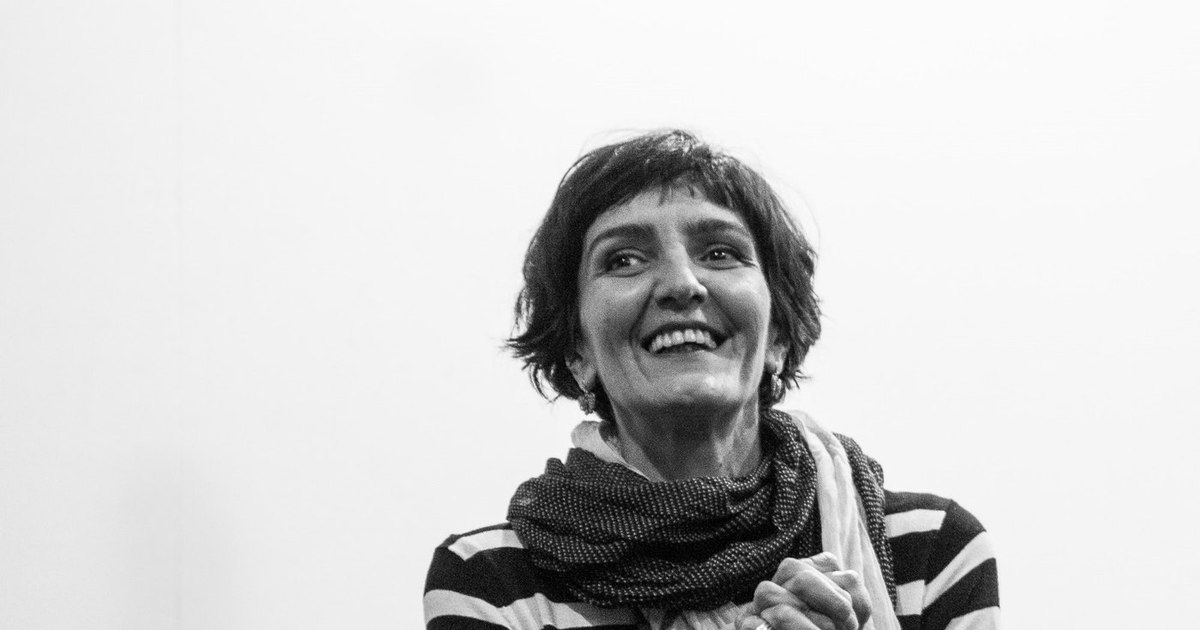
Dance is not usually at the center of the culture discussion. It appears less often in official strategies, is invoked rather in specific contexts, and often remains trapped in a label: “niche art”. However, beyond this perception, the dance scene in Romania has expanded visibly in recent years, with more artists, more shows and an audience that starts looking for direct experiences, different from the classic forms of cultural consumption.
On International Dance Day (April 29), “Weekend Adevărul” talked to Vava Ștefănescu, dancer, choreographer and manager of the Bucharest National Dance Center (CNDB), about the real place of dance in the cultural landscape, how the audience has changed, how precarious the infrastructure is, including the blockage related to Sala Omnia, about the relationship between dance and technology, but also about how artists continue to build an active scene, in despite the lack of institutional recognition.
“Weekend Adevărul”: At the moment, how would you describe the place of dance in the Romanian cultural landscape? Is it more in the front – is it visible art – or does it stay more in the back, in a niche area?
Vava Stefanescu: Lately I’ve talked to various people and most of them – whether they were from the dance sphere or the cultural area or not – said that contemporary dance is a niche art, a niche field. I don’t think it’s a niche field, it’s just a mentality that only depends on a button, a mentality that is formed by the action of the authority. That is, it is not understood, as it has not been understood for so long, why the authorities, i.e. the Ministry of Culture, respectively the cultural strategies do not include dance as an art, like all the others. This is just a gesture, like turning a cup from side to side, so that the dance is not perceived as something niche. In fact, if you look at how many shows, how many choreographers and artists there are, what is the activity, in general, of the field, you see that it is quite large; and that dance is part of the cultural life of the general public.
Dance, increasingly difficult to put in the drawers
If we are talking about the audience here, especially for contemporary dance, how have you noticed that it has changed in recent years? Who is coming to the shows today? What is the difference from 10-15 years ago?
I think that those who practice dance, those who dance, also come to dance performances. People who read books also come to dance performances, because they are interested in new perspectives, in different facets of an idea. This is, on the one hand, because dance is not only a ready-to-digest performance, only good to applaud, but it is something that gives you a kinaesthetic memory, and this transmission happens when you are present in the hall. It’s a one-to-one relationship between what’s happening on stage and you, the audience, the person watching. It’s a very intimate and very real relationship, that is, you can’t lie about it – you can’t mediate this experience, when you watch the dance, because it evokes in the viewer’s body sensations that he recognizes and makes him understand certain things.
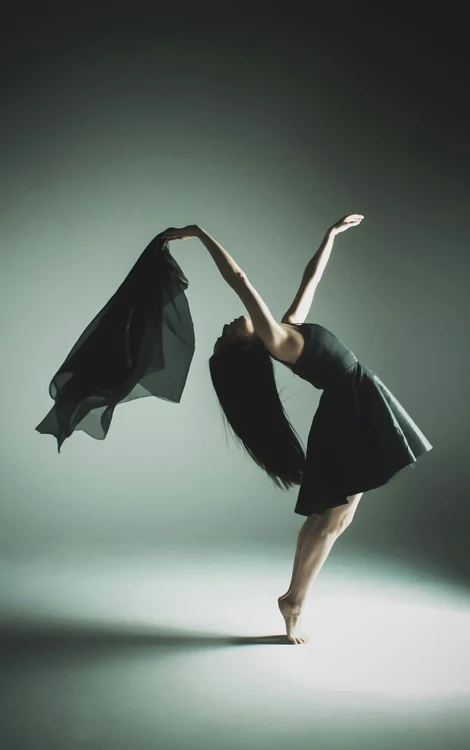
Feeling is part of it. That’s why we like to dance. I think that the fact that the artists did not give up and performed shows that they offered to the public in different settings led to a broadening of the dance scene in Romania: in Bucharest and Iași, in Cluj, in Timișoara and Craiova. I think that dance is already “visited” and “consumed” differently, in the sense that a lot more people are going to dance lately. The challenges that theater, for example, or classical music have, are the same for contemporary dance.
All things are changing now, as we speak, and that’s why it’s hard for us to analyze – how the need change, the show, and what kind of show. But I know that dance contains this uniqueness, and I think the audience comes for exactly that, for what is very personal and direct.
We have a lot of dance types, from classical dance to street dance. Do you feel that the boundaries are becoming more fluid or are there still some very big differences?
There are differences in experience and context. I mean, it’s one thing to go dancing at a club and another thing to do hip-hop. There are so many forms…even folk dances. The other day I saw an ad posted on a fence with popular dances for adults. The world dances and dances in different forms, they look for the places where they feel good, where they discover themselves, where they can establish some so-called social contacts, where friendships and more subtle, social understandings can be born.
I think that’s what dance, in all the forms it exists in today, is about. It is a social form and we can no longer put it in very limited and very rigid drawers. I think it has to do with the need for communication between people and I think it has to do with the need to go together, to live this thing together. It’s like theater, but dance is more direct.
A growing scene, but still behind the curtain
When we talk about dance, we also mean the independent zone. How did it evolve? Is there a real space for artists working outside of institutions?
I would put the situation with independence exactly in the first statement I made. Namely that I don’t think it should be considered independent. From a technical and fiscal point of view, sure, it is independent. The offer generated by the entire dance community, the entire segment of creators in the world of contemporary dance is very large. Thus, it should not be considered as something outside the system, but a consistent part of Romanian culture.
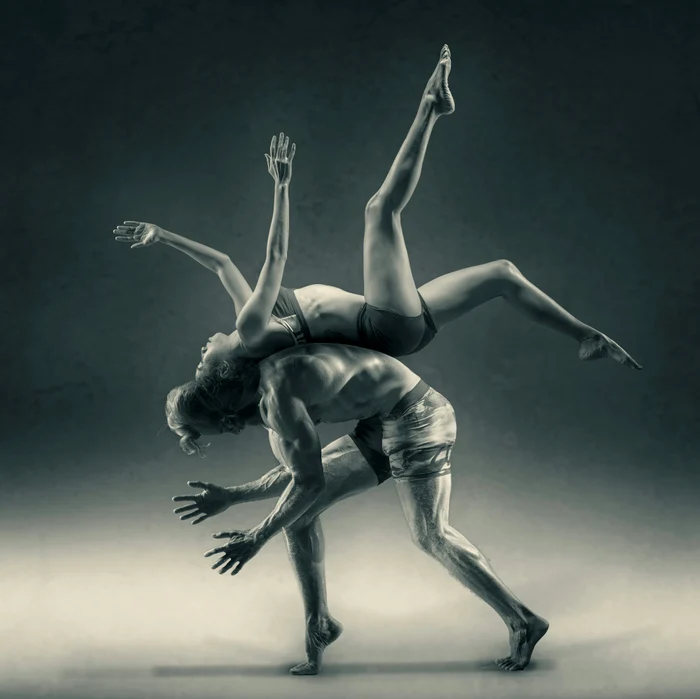
That’s why I was saying that it’s just a spin of the cup to recognize it as such or not. Because if you don’t recognize it, it remains in a marginal area. And that leads directly and immediately to the perception of the public, to the perception of people, as if it were a separate thing, outside. No, it’s not out, it’s in, the world is coming.
PHOTO Steps to success of an Olympian in choreography. “The hardest thing is to accept yourself as you are”
If 20 years ago we were talking about ten choreographers, now there are 200 choreographers who put their inspiration and expertise to the test. In addition, what they won, unfortunately, they also won this administrative expertise, which should not exist on the shoulders of some artists, in which there are also managers and tax consultants, how the new AFCN platform for non-reimbursable financing is transforming us, because everyone becomes a bureaucrat.
Another problem is that of a permanent place where the activity can be carried out. What about the Omnia Hall, the space that would later become the headquarters of the Bucharest National Dance Center?
I would not comment further on the Omnia matter, because it is hopeless. No answer was given. This is not allowed or acceptable. We all suffer from this abuse. To the Minister of Culture’s proposal for a solution, for the National Dance Center to have an adequate space, Mr. Bolojan does not respond nor is he interested. That troubleshooting memo was not responded to.
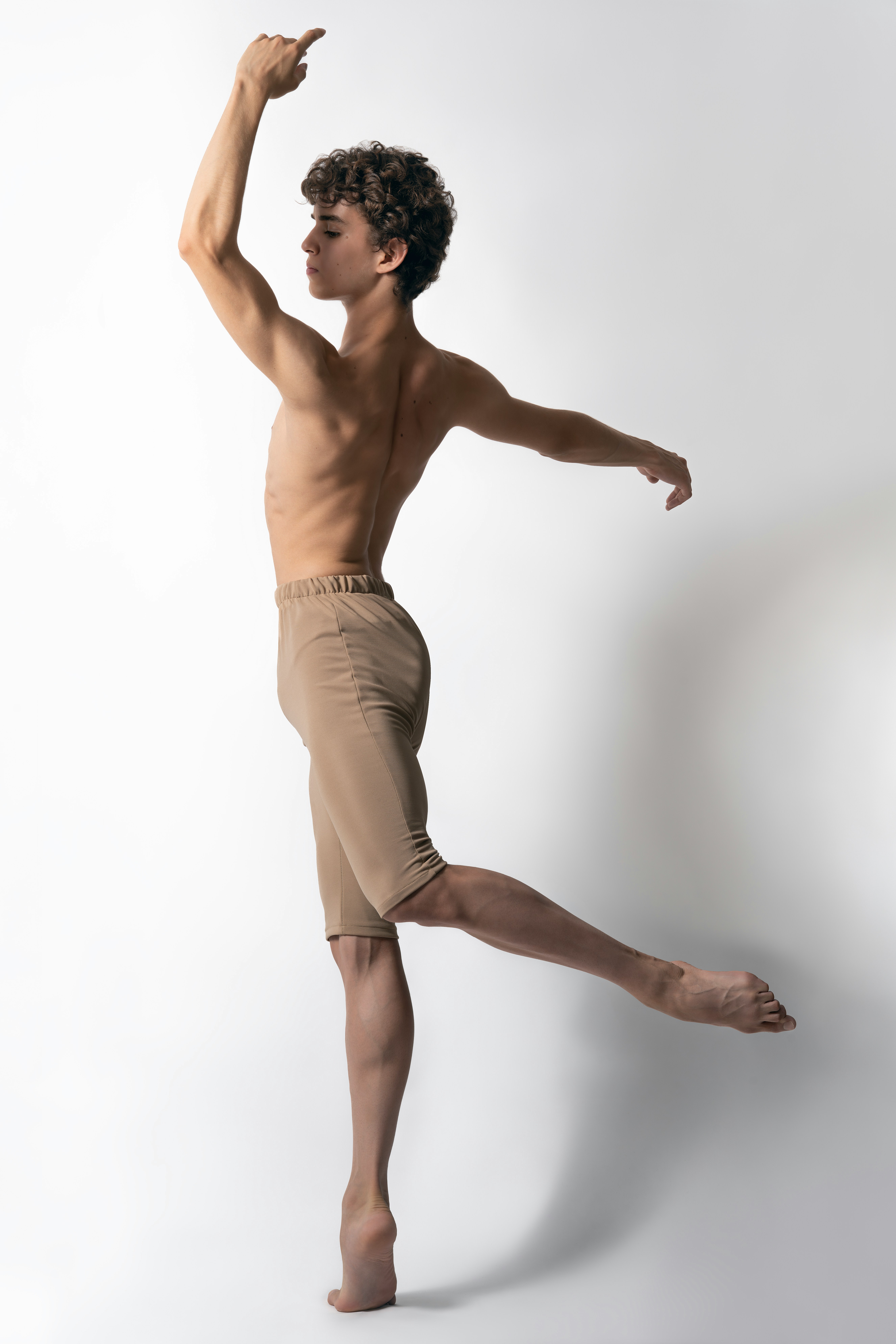
After eight or nine years of working for a space, you find that a ministry takes over the space, takes over the building, the funding is withdrawn. You get no explanation and nothing compensatory is offered. It is beyond comprehension. They are just words that we can discuss here, in our circle of dance, of culture, of the arts. We still see each other, fill out forms, pay our taxes and that’s it. That’s all we can do, in my opinion.
Romanian dancers are present abroad, where they are called to dance. Do you think Romanian dance is more appreciated outside the country?
The trust in awards, in distinctions, in a structured, strategic care for these things has dissolved. I don’t understand, if no minister who has a favorable vision of contemporary dance fails to introduce it into the Romanian culture with full rights, then who? It means that there is a people who do not want this thing. And then we continue as we are.
Dance, the art of all ideas
We have seen that in recent years, technology has started to be used more and more in the dance area, and dance acts are becoming performances. Do you feel that the way of dancing is also changing based on technology? Are we heading into a new era of dance?
I don’t think so. Technology is good up to a point. It contributes to the composition and delivery of the message in a certain way, in a certain medium. Technology is not a target, but a tool. If he does it in such a way that the thought of the man and the experience of the man who watches or who participates goes somewhere further, and generates other positive ideas, so be it. But I think that it fundamentally does not change the principle of the relationship between the dance and the audience.
Ballerina Tetiana, elite sniper on the Ukrainian front: “Every movement requires precision, just like dancing”
I don’t think it can be changed just by genetically modifying humans in general. Just like you can’t replace or change his perception with music. Technologies are tools that can refine the message and its delivery. I can refine it and put it in another plane, where you can see other perspectives, have other experiences, even bodily.
If you were to look at the future, in which direction do you think dance in Romania is heading and what does dancing in Romania still mean to you today?
I believe that dance must continue to do its job, that as we have been ignored for so many decades, we will continue to be ignored. But I think that the artistry and talent of dance artists will not stop because one politician or another wants it, but will continue. I see a development, regardless of what is happening politically in the field of dance. I have faith in Romanian artists active in the field of dance that we will be a force, as long as we manage to stay united and make it possible for our art to reach where it needs to go.
For someone who has not been very familiar with dance yet, but still wants to start entering this world, where do they start?
Let’s start with the lack of expectations. When he comes to a show, to come open, to happen to him, to understand or to be opposed, so I think that’s what it’s based on: to leave at home all the inertia of perception of a show, to come without the expectation of a story. To enter into a direct dialogue with the ideas proposed on the stage and with the things with which he can come in conjunction, that is, to refine his thinking, to ask other questions, which give other answers.
And in this way, the one who comes for the first time can take a step forward in this social experience that we all have. Otherwise, each person in the audience goes where they feel something resonates within them. But being open to other forms of communication seems essential to me. I think that’s the condition, whether you practice any kind of dance or not, I think that’s the condition: to stay open to ideas.
