
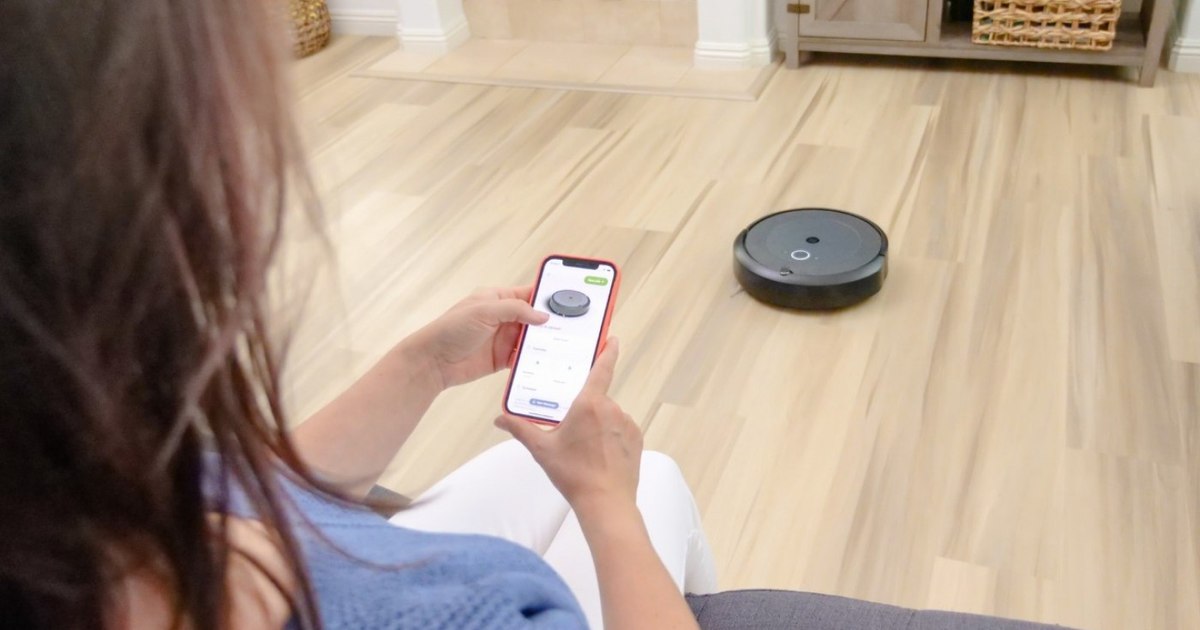
If until now you thought only your phone could track you, a computer engineer discovered that his smart vacuum cleaner was secretly transmitting a 3D map of your home to servers thousands of kilometers away.
A smart vacuum cleaner was sending 3D maps of the home PHOTO: Archive
Harishankar Narayanan, a computer engineer with a passion for electronics, made a disturbing discovery: his $300 robotic vacuum cleaner was transmitting confidential data about the interior of the house to external servers, writes Futurism. On his Small World blog, Narayanan recounts that after a year of use, he became curious about what information the device was collecting.
“I’m a little paranoid, but in a good way”he wrote. “So I decided to monitor its network traffic like I do with any device «intelligent»“. In just a few minutes, he discovered one “constant flow” of data sent to located servers “half a world away”.
“My vacuum was constantly communicating with the manufacturer, sending logs and telemetry data that I never agreed to share”he explained. “That’s when I made the first mistake: I decided to stop it”.
Device tampered remotely
After blocking data transmission, Narayanan still allowed firmware updates. The vacuum worked for a few days, but one morning it refused to start.
“I sent it for service. They told me: «It works perfectly sir». They sent it back, and miraculously it worked for a few days. Then it stopped again“, the engineer recounted. The service center finally refused to intervene, citing the expiration of the warranty.
Determined to understand what was going on, Narayanan took the device apart and began to study it piece by piece. After a complex reverse engineering process that included reprinting circuit boards and testing sensors, he discovered something shocking: Android Debug Bridge (ADB), a program that allows remote control of devices, was completely open to the world.
“Within seconds I had full access to the system. No hacks, no exploits. Just connect and use”Narayanan said.
A 3D map of the home in the hands of the company
Further analysis revealed something even more serious: the vacuum cleaner was using Google Cartographer, an open-source program that creates a 3D map of space, information transmitted back to the manufacturing company.
Furthermore, Narayanan discovered a line of code transmitted just as the device shut down. “Someone or something remotely sent a shutdown command”wrote the engineer. After reversing the change and restarting the vacuum, the device immediately came back to life.
“Not only did they have a remote control feature. They used it to permanently disable my deviceNarayanan concluded.The company had the power to remotely disable users’ products and used it against me because I blocked data collection. Whether it was an intentional punishment or an automatic measure of «conformity»the result was the same: a consumer device turned against its owner.”
A warning to all users
Narayanan warns that “dozens of smart vacuum cleaners” could work the same. “Our homes are full of cameras, microphones and sensors connected to companies we know very little about, all capable of being turned into a digital weapon with a simple line of code.”
His story is a clear warning: technology “intelligence” has a hidden price, and it doesn’t stop at the cash register.
