
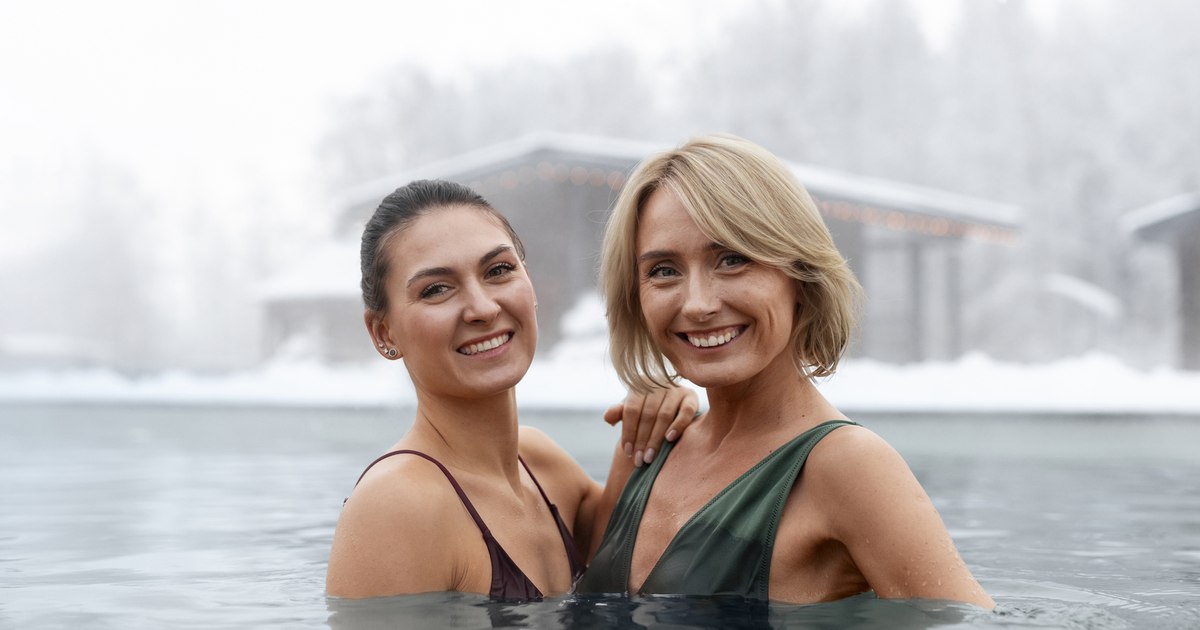
Baths in frozen waters have become increasingly popular in winter, being promoted as a method of revitalizing the body. Some specialists point out that such exercises are not without risks and must be done correctly and safely.
In winter, baths in frozen waters become popular again, being considered a way of revitalizing the body, embraced by many people. Some supplement them by exposing themselves to the natural cold, giving up their winter clothing, and by “bathing” in the snow. But such practices are not recommended for everyone and should be viewed with caution.
The benefits of cold water baths
Prolonged exposure to the cold can cause problems, and people with heart conditions or arterial circulation disorders should approach them with great caution, experts say. Scientists and trained athletes offer a number of recommendations for safe ice bathing.
Andrew Huberman, an American neuroscientist watched by millions of people on YouTube, says that, when practiced correctly, cold exposure can have positive effects on the health of the brain and body.
“Deliberate exposure to cold causes a massive release of epinephrine (adrenaline) and norepinephrine (noradrenaline) in the brain and body. These neurochemicals increase alertness and can produce feelings of agitation or the need to move or vocalize during exposure. After coming out of the cold, levels remain elevated for a while, leading to increased energy and focus, useful for mental or physical activities.”it shows on its platform, Huberman Lab.
Also, by consciously accepting cold stress as a self-imposed challenge, people develop resilience and mental strength.
“It’s a skill that transfers outside of the cold environment, helping you better cope with real-life stress and stay calm and lucid. In other words, the cold is great training for the mind.” notes the scientist.
Unlike other forms of stress, cold causes the prolonged release of dopamine, a powerful molecule that improves mood, focus, attention and goal-oriented behavior.
In the short term, the cold increases the metabolism, because the body uses energy to maintain its internal temperature, adds the specialist. Some research shows that submerging in cold water for up to five minutes can be used for recovery after intense exercise, improving muscle strength and reducing pain.
Hyperventilation, the mistake to avoid
Safety is a priority for anyone who wants to experience the sensations of bathing in ice-cold waters.
“Never enter a dangerous body of water. Also, never deliberately hyperventilate (no rapid, deep, repeated breaths) before or during exposure to cold water (or any type of water!). Start gradually (warmer before colder) as there is a risk of heat shock. As with weight lifting or other forms of exercise, it’s important to find the right temperature for you, always putting safety first.” says the scientist.
Cold tolerance differs from person to person, and there is no universal answer to the question of how cold the water should be.
“The key is to choose a temperature that makes you think, ‘It’s really cold and I’d like to go outside, BUT I can stay safe.'”adds the specialist.
According to him, the colder the water, the shorter the exposure time should be. A study cited on the Huberman Lab platform showed significant and lasting increases in dopamine in people exposed for about an hour to cold water (15 degrees Celsius), with water up to their necks and heads above water. Other studies show significant increases in epinephrine after only 20 seconds in very cold water (about 4 degrees Celsius).
“The good news is that as you practice deliberate cold exposure more often, your tolerance will increase and you’ll be able to use colder temperatures more confidently, just like in training.” adds this one.
The scientist recommends 11 minutes of cold exposure per week in total, which can mean two to four sessions of 1-5 minutes each, spread throughout the week as a minimum threshold to achieve consistent benefits. The water must be uncomfortably cold, but safe.
Before or during exposure to the cold, the mind will protest and thoughts such as “I don’t want it” or “get me out of here” may occur. Andrew Huberman argues that these reactions are triggered by adrenaline surges, a necessary stimulus for adaptation, and can be thought of as mental walls. They can be overcome by mind control, either by counting them or reporting them in time.
The body, allowed to warm up naturally
The scientist states that the movement of the limbs in the water has a stronger effect on the development of resilience, because the cold is felt more intensely without the need to lower the water temperature. When people stand still in cold water, a protective thermal layer forms.
At the end of the cold baths, the specialist recommends that the body be left to warm itself, in order to amplify the metabolic effects. And shaking can intensify these effects.
“To help this process, don’t curl up or cross your arms, don’t towel off and let your body warm up naturally. It’s difficult and I admit I often prefer a warm shower, but this limits the metabolic benefits.” says Huberman.
After exposure to cold, body temperature rises, promoting wakefulness. Thus, cold baths are recommended in the morning or during the day and not close to bedtime, so as not to affect sleep.
