
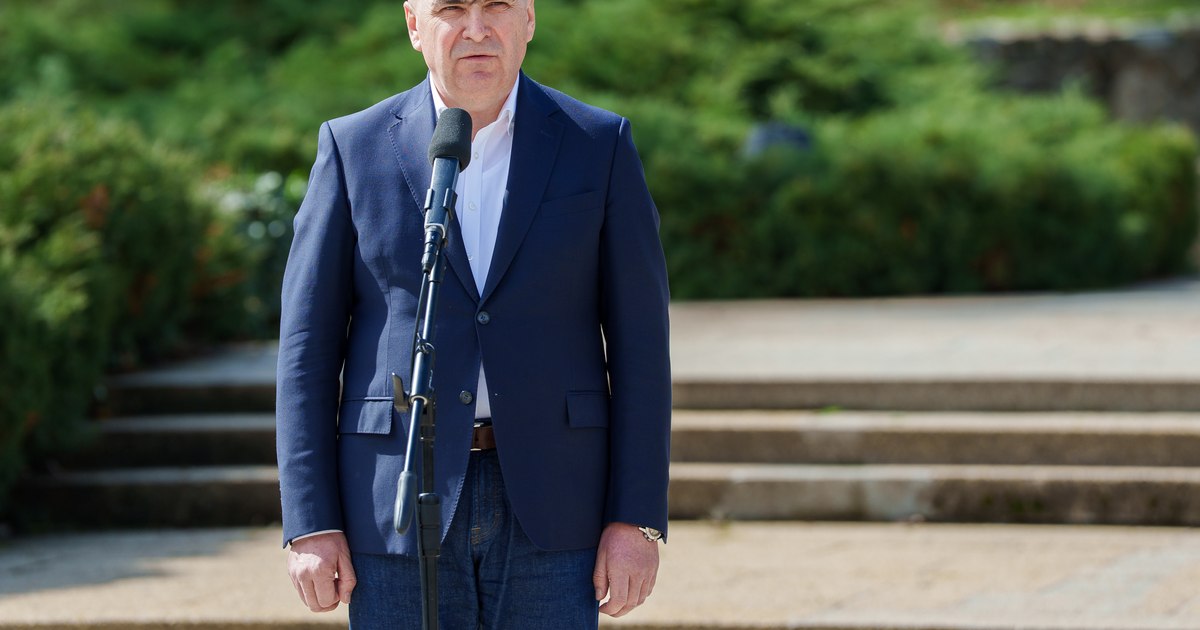
Interim Prime Minister Ilie Bolojan sent, on Saturday, a message on the 36th anniversary of the bloodiest Mineriad in Romania’s history, which took place between June 13-15, 1990. At the same time, the MAE is organizing an exhibition of declassified documents to mark this period.
UPDATE – MAE, commemoration through an exhibition of declassified documents
The Ministry of Foreign Affairs announced that it is marking 36 years since the June 1990 Mineriada with an exhibition of recently declassified diplomatic documents. Thus, on Saturday and Sunday, at the headquarters of the Information Office of the MAE (BiMAE), an exhibition dedicated to the 36th anniversary of the events of June 13 – 15, 1990, known in public memory as “June 1990 Mining Raid”.
The exhibition is organized in the context of the adoption of Government Decision no. 404 of May 21, 2026, by which the documents issued by the Ministry of Foreign Affairs between January 1 and December 31, 1990 were declassified, it is stated on the institution’s Facebook page.
“The public will have access to a selection of diplomatic documents and archival photos that illustrate the way in which the events in Bucharest were reflected and perceived internationally. Instructions sent by the Central Ministry of Foreign Affairs to Romania’s diplomatic missions abroad regarding internal developments during that period will be exhibited, as well as telegrams and reports of Romanian diplomatic representations in Western countries, which reveal the concerns expressed by international partners regarding the situation in Romania”the cited source shows.
According to the MAE, the documents highlight the reactions of the international community to the violence in Bucharest and the concern for the consolidation of the democratic process in a particularly fragile moment of the post-communist transition. International media reported the events extensively, and the broadcast images generated strong reactions in many Western capitals, including public demonstrations and actions of solidarity with the victims of the violence.
“Today I had the opportunity to study the documents, in the context of their preparation to be presented in the exhibition. The attempts of the authorities of the time to justify the brutal interventions against the protesters and the population of the capital were rejected, the international political environment resolutely supporting the return to a framework of democratic dialogue, as the only guarantor of the development of a free and prosperous society”said the Minister of Foreign Affairs, Oana Țoiu.
The exhibition can be visited on Saturday and Sunday, between 11:30 a.m. and 7:30 p.m., at the headquarters of the Information Office of the MAE (Calea Victoriei no. 88).
Initial news
“36 years ago, Romania experienced one of the most painful moments of its democratic beginning. The mining raid of June 13-15, 1990 meant violence against its own citizens. People exercising their right to opinion and protest were beaten, humiliated, illegally arrested and silenced by force. There were deaths, injuries and traumas that remain open to this day”Ilie Bolojan sent in a message posted on his Facebook page.
The secrets of the MAE after 1989. Historian Cosmin Popa: “Ion Iliescu governed through hybrid war before it was officially invented”
He emphasized that democracy “it means not only elections, but also respect for freedom of expression, for fundamental rights and for the dignity of every citizen” and added that, 36 years after those events, “we have the duty to keep the memory of the victims alive and to convey to the younger generations that the state must always be on the side of the citizen, never against him”.
“Truth, justice and acceptance of the past mean respect for those who have suffered and the consolidation of a democracy in which such abuses will never be possible again. Today we bow to the victims of Mineriada. In a democratic Romania, violence and repression can never be instruments of power”concluded Ilie Bolojan.
The bloodiest mining raid in post-December history
In the morning of June 13, the Police intervened in University Square, dispersing the demonstrators and making arrests. The police were later joined by groups of workers in solidarity with the state authorities. The demonstrators, mostly students, erected barricades, managing to break the law enforcement barriers and occupy Television, an institution accused of seriously distorting the truth and disinformation,
The days of June 14 and 15 were marked by the arrival of the miners from Valea Jiului in Bucharest, whom President Ion Iliescu urged to occupy and clean University Square. The demonstrators were beaten by the miners, and the University, the Institute of Architecture, the offices of independent newspapers and magazines and of some opposition political parties (PNL, PNŢCD) were devastated.
June 13: 36 years since the most violent mining raid in post-December Romania
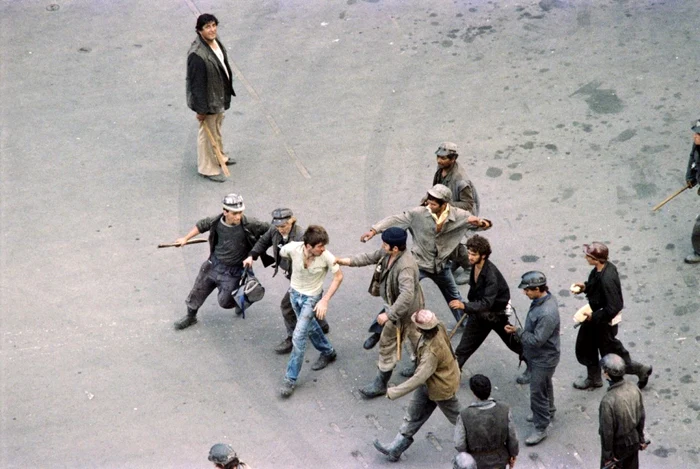
Also, law enforcement resorted to arrests, while international public opinion and leaders from around the world asked the leadership in Bucharest to end the repression in the Square. Before the miners left Bucharest, Ion Iliescu thanked them for restoring order in the Capital.
On June 15, 1990, the Superior Military Committee of the Ministry of National Defense demanded the abolition of the Action Committee for the Democratization of the Army (CADA), citing the fact that it played the game of political forces that aim to destabilize social-political life. The government meeting of June 16, 1990, in which the development of the violent events of June 13-15 was examined, ended with the release of a press release that talks about “state destabilization scenario”a borderline situation in which the elected president and the government requested armed intervention and the support of the population.
