
After a mission that took them further from Earth than any other human crew in decades, the astronauts of the Artemis II mission are preparing to return home. The landing in the Pacific Ocean will take place on Saturday, and the moment will be broadcast live by NASA.
Video source: Facebook/NASA
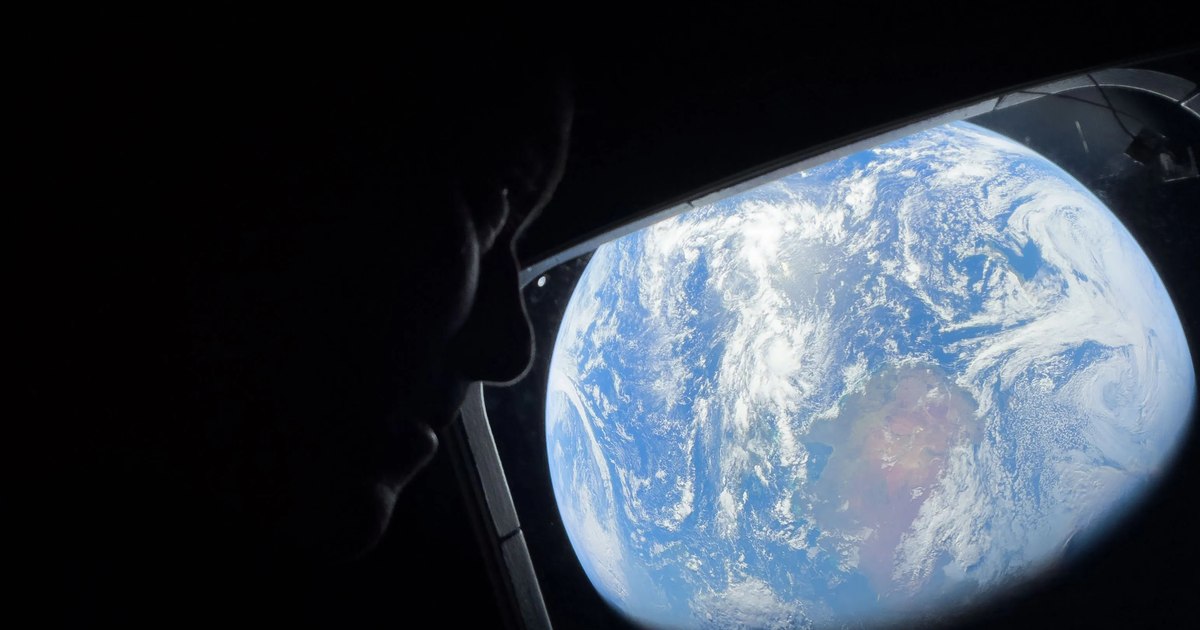
The eighth day of the Artemis II mission is one full of emotion and reflection for the four astronauts aboard the Orion capsule, named “Integrity.” With Earth visible through portholes, the crew pack up and reminisce about the unique experience of flying around the Moon.
The ten-day mission, which launched on April 1, is the first manned test of the SLS system and the Orion spacecraft. The four astronauts – Reid Wiseman (commander), Victor Glover (pilot), Christina Koch and Jeremy Hansen (mission specialists) – traveled a record distance, surpassing the limit last reached in 1970 by the Apollo 13 mission.
Although they didn’t land on the Moon, they did fly over the unseen side of Earth’s natural satellite, observing first-hand regions we’ve only seen through satellite images – giant craters and lava fields.
“All good things come back with us”
In an intervention from space, the pilot of the mission, Victor Glover, said that the crew can’t wait to share everything they have discovered, according to the BBC. “We have to go back. There’s so much data you’ve already seen, but all the good stuff is coming back with us.” He added: “There are so many other images, so many other stories.”
The astronaut emphasized that the experience will mark him for the rest of his life: “I’m going to think and talk about all these things for the rest of my life.”
The Orion capsule is scheduled to land in the Pacific Ocean, near the coast of San Diego, at 20:07 (US East Coast Time), which means Saturday, 03:07 Romanian time. The event will be broadcast live, and audiences around the world are invited to watch the crew’s return.
The Artemis II mission marks a critical step for future lunar exploration and preparation for human missions to Mars, providing valuable data on deep space conditions and the performance of the technologies used.
