
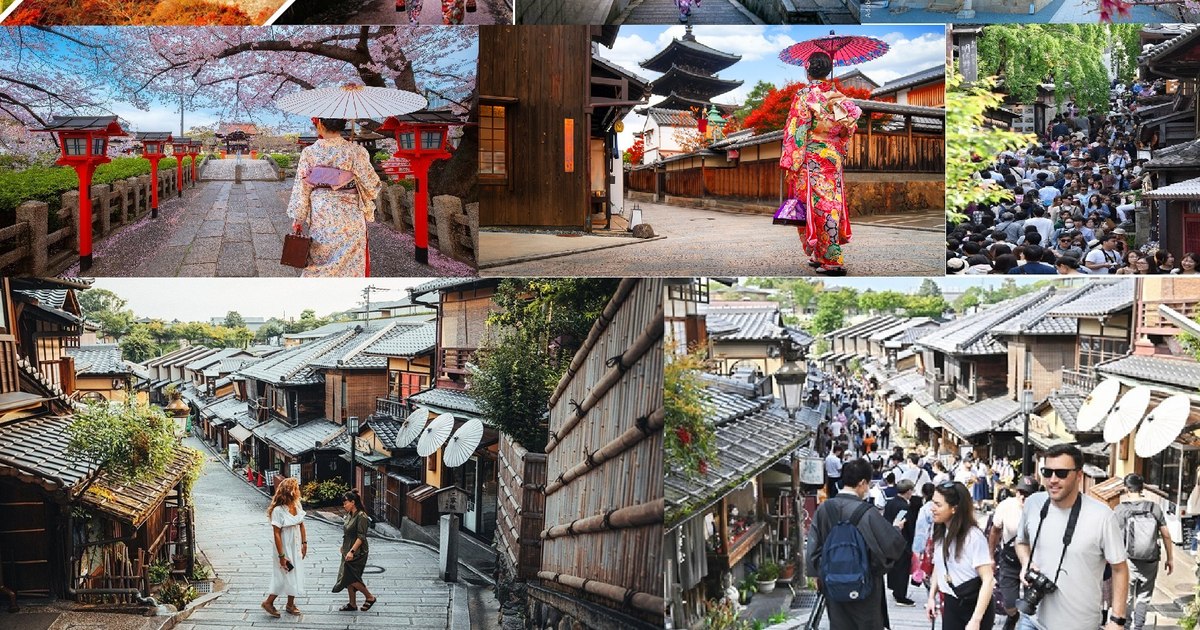
Kyoto, one of the most visited cities in Japan, has decided to significantly increase the tourism tax to reduce the wave of tourists invading the city in recent years.
Tourists from all over the world are attracted as a magnet by Kyoto Japan collage DMS
Thus, from March 1, 2026, the tax on hotel stays will reach 10,000 yen (almost 61 euros) per night, ten times more than the current limit of 1,000 Yen (6.15 euros). This measure is part of an initiative of local authorities to combat massive tourism growth, after Japan has registered a record of 37 million tourists in 2024.
The introduction of this tax system, as a measure against excessive tourism, started in 2018, with a ceiling of 1,000 yen per night, but the new system will include five levels of taxes. Thus, the stays of less than 6,000 yen (36.78 euros) will pay a fee of 200 yen (1.23 euros), and for more expensive rooms of 100,000 yen (almost 640 euros), the tax will reach a maximum of 10,000 yen. It is estimated that local revenues in this tax will increase significantly, from 5.2 billion Yen in 2023, to about 12.6 billion Yen (77.55 million) annually.
This fee will become the largest of those adopted by the 11 Japanese municipalities that have implemented similar measures to reduce the impact of mass tourism, in a period when Japan faces a record number of foreign visitors.
Kyoto, the third most visited prefecture in Japan, follows the example of other popular destinations such as Tokyo and Osaka.
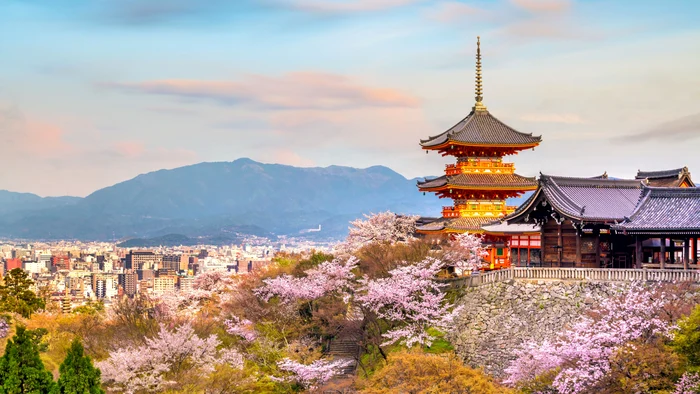
Cherry blossomed in kyoto japan photo blog Hertz
What special Kyoto has to attract tourists like a magnet
Kyoto, one of the most visited cities in Japan, attracts tourists worldwide due to its unique combination of impressive history, culture and landscapes. Former imperial capital for over a thousand years, Kyoto is considered a true center of Japanese traditions, retaining much of the country’s cultural heritage.
The city is famous for its historical temples and Șintoist sanctuaries, including emblematic places such as Kinkaku-Ji (Golden Pavilion), Fushimi Inari and Kiyomizu-Dera. These are not only religious monuments, but also remarkable examples of Japanese traditional architecture.
Kyoto is also the place where tourists can experience the authenticity of Japan through traditions such as tea ceremony and old crafts, such as Kiyomizu-Yaki ceramics.
In addition to cultural richness, Kyoto is also noted for its spectacular natural landscapes. The city is surrounded by mountains, and Zen gardens, Arashiyama bamboo forests and the amazing visions of the fall or spring sky complete the tourist experience. Each season brings a new facet of the natural beauty of the city, from the flowering of the cherries, in the spring, to the vibrant colors of the maple leaves, autumn.
Local gastronomy is another important reason why Kyoto attracts visitors. The city is known for its traditional preparations, especially Kaiseki – a refined table with several types – and Yudofu, a tofu -based dish, giving tourists a true foray into the authentic Japanese cuisine.
In addition to these attractions, Kyoto stands out for his calm and authentic atmosphere. Unlike other more crowded Japanese cities, such as Tokyo, Kyoto offers a slower pace of life, being the perfect place to truly understand Japanese culture. With landscapes that invite reflection and an atmosphere of tranquility, Kyoto remains an irresistible tourist destination, which harmoniously combines tradition, nature and gastronomy.
Even in the face of a significantly increased tourist tax, Kyoto retains his magic, offering an open window to Japan’s traditions and values. The city attracts visitors from all over the world, fascinated by its authenticity. Kyoto remains a place where every corner tells a story, and this mixture between the past and present is probably the key to its attraction.
