
If the independence of magistrates lies mainly in the retirement age and the amount of a pension equal to the salary, it means that we have the most independent magistrates in Europe, or practice shows us that this is not quite the case, argued Law professor Florin Streteanu, president of the UBB Senate.
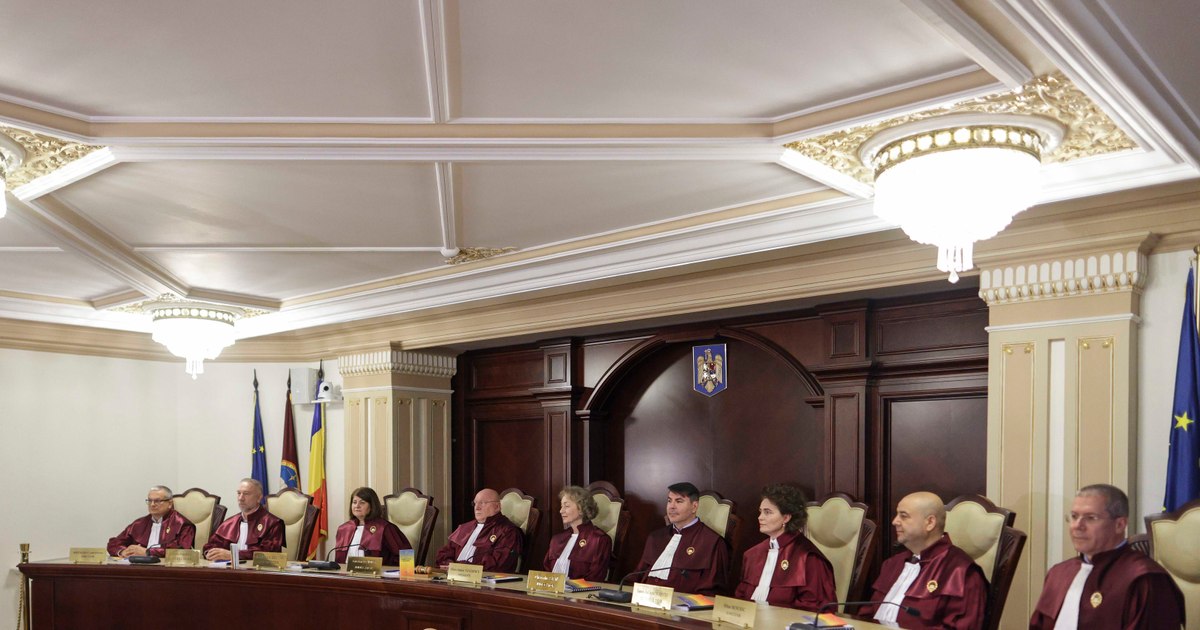
The judges of the Supreme Court decided last week, with unanimity of votes, to refer to the Constitutional Court in connection with the new project regarding the reform of magistrates’ pensions.
The magistrates were summoned by the President of the Supreme Court, Lia Savonea, to express their position, within the United Sections, in relation to the new project of special pensions for judges and prosecutors. All the 102 judges present at the meeting voted to refer the CCR.
The spokesperson of the Supreme Court, Victor Alistar, explained that, in the opinion of the judges, the law in question was built “on a counterfactual reality” and there is no data of any kind to show the economic impact of the application of this normative act.
The Supreme Court issued a press release listing the reasons why it considers this law unconstitutional: it discriminates against magistrates compared to other categories of service pension beneficiaries; brutally violates the independence of justice; de facto eliminates the service pension for magistrates; violates the international standards established by the jurisprudence of the CJEU and ECHR; violates the binding character of the decisions of the Constitutional Court; uses ambiguous and unclear terms and presents normative gaps that make the law incompatible with the standard of clarity and predictability in a rule of law.
“If I can have brain surgery by a 65-year-old neurosurgeon, I can certainly be divorced by a 65-year-old judge”
Florin Streteanu, president of the Senate of Babeș-Bolyai University (UBB) and former dean of the Faculty of Law of UBB, a respected professor of Criminal Law, associate professor at the International Faculty of Comparative Law, Strasbourg, visiting professor at the University of Limoges (2002-2013), expressed his point of view regarding the retirement of magistrates:
“The other day I saw a statement by a distinguished member of the Superior Council of the Magistracy who said: why would you want to be judged by 65-year-old people? So it seems that the CSM’s perspective is that from a certain age a person is no longer suitable to exercise this function. I do not share this idea in the slightest. If I can be operated on the brain by a 65-year-old neurosurgeon, I can certainly be and divorced by a judge aged 65. So I don’t think it’s a problem“, Streteanu claimed on the Horia Nasra Show podcast.
Asked how he comments on the whole “telenovela” of the retirement age of magistrates, the professor claimed: “The telenovela is older, it comes back with new episodes or new seasons from time to time, sometimes around the elections, sometimes after the elections, and it’s really a shame that things are approached in a much too political note. Now, certainly, rationally speaking, it seems absolutely natural to me that the magistrates benefit from a special status. The issue that I think should have been discussed from the very beginning is the extent of this status.”
The issue is the content and scope of this statute. “Because, for now, from this perspective of the retirement age and the existing amount of the pension, we have the most favorable status for magistrates in the European Union, combining the two. I repeat, I don’t think the discussion should be whether magistrates deserve this status or not. They probably do. The problem is how much a state can afford to offer at a given time”explains the teacher.
“If France or Germany can’t afford it, neither can Romania”
“If France or Germany cannot afford to offer this status, he says, we must understand that Romania cannot offer it to the extent it has today and cannot offer it in the long term”he points out.
And then, somewhere a solution should be found, he points out. “Unfortunately, two hard stones collided. On the one hand, the government that comes and says we have to cut, we have to make savings and the magistrates who say ‘we can’t give anything up, it’s about the independence of the judiciary here.’ Forgive me, sure yes, the independence of the judiciary is extremely important and we all want it and certainly the magistrates are the first to want it and it is normal for them to want it. But I have certain reservations that this independence lies mainly in the retirement age and the amount of a pension equal to the salary”the teacher claims.
“The whole battle of the magistrates’ body revolves around these two ideas”
If so, we find that we have the only independent magistrates in Europe, he says, ironically: “We don’t really have systems in which we have retirement immediately after 48 years and a pension equal to the salary. Practice has shown that we don’t even have the most independent magistrates in Europe at certain times, and in a way, it is difficult for public opinion to understand that the whole discussion and the whole struggle of the body of magistrates revolves around these two ideas.”
He claims that he saw no protests even when the protocols of a few years ago were declared unconstitutional; he did not see many protests related to the working conditions of the magistrates, and there are magistrates who work in conditions where perhaps many of us would not agree to stay 24 hours.
“Years ago, in various contexts, I reached the High Court, you could barely pass through the hallway among the files, you passed like that, in a stripe. These are not conditions in which a supreme court and the magistrates of the supreme court can carry out their work. I have not seen a fight by the CSM for this. We have been discussing for 20 years, we are building the district of justice, we are building a new headquarters for the High Court. We are not doing anything. But I have not seen such a fight either it’s hard for me to understand. It’s even harder for someone who has no connection with the system.” shows the teacher.
“The magistrates did not give themselves these rights, they tried to find arguments that it is normal”
The president of the UBB Senate emphasizes that he agrees that magistrates must enjoy a special status. “SI am absolutely convinced of this. But the extent of this statute and the content of this statute can be debated. If from the beginning we start from the idea, “we don’t concede anything”, in this way we end up antagonizing public opinion and the body of magistrates sometimes on some things that are not the fault of the magistrates. We have reached a point where the pension is higher than the salary. It was not the fault of the magistrates. The magistrates did not ask for this. It was a stupid thing that the politicians did when the contributions went from the employer to the employee and the basis of calculation changed. It did not occur to those who then made that change to see that this would result in the special pension being calculated in relation to the gross salary. The magistrates did not ask. Neither the CSM nor the High Court asked for this. No one asked for this. Good. If it was given to them, they got it. Of course, I haven’t seen anyone come out and say, “Sir, it’s not quite right.” They tried to find arguments that it is good, that it is normal.“
Streteanu admits that the magistrates did not ask for these conditions, but their refusal to negotiate “doesn’t bode well”.
“If we had examples of good practices in this regard in the areas we are referring to, it would be much easier to accept. To the extent that we do not have them, we probably need to find wisdom on both sides, to find a solution that is financially sustainable, that respects this need for a special status of magistrates, but it seems that it is difficult to reach a dialogue”. the teacher concluded.
