
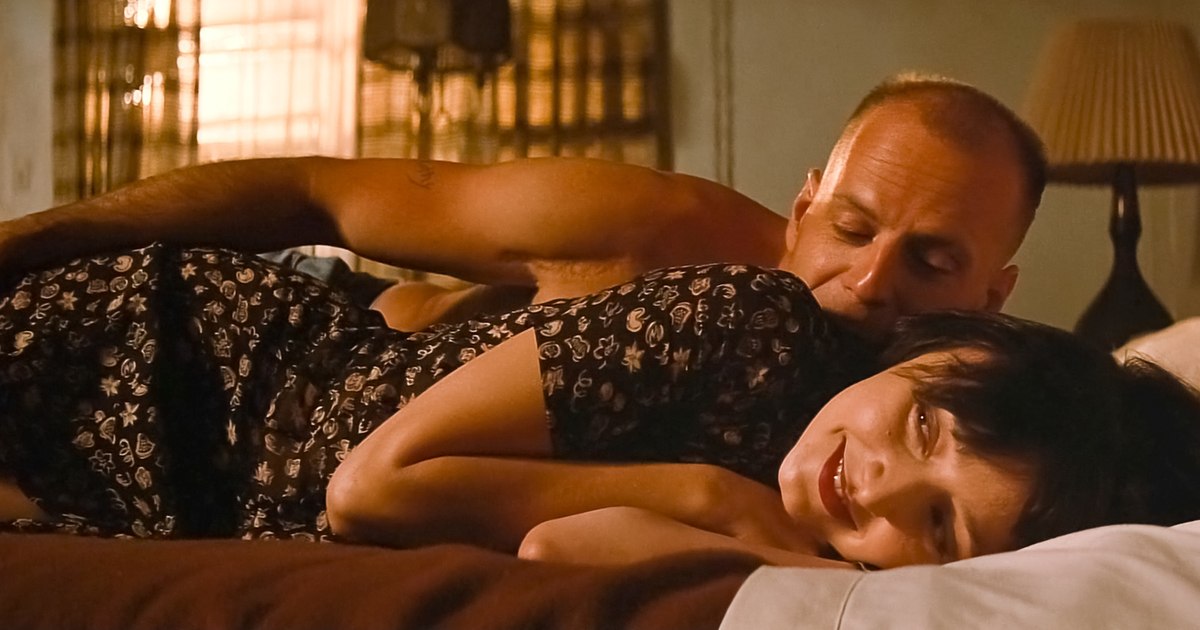
“Who is this motorcycle?” It is the reply from the “Pulp Fiction” with which the actress Maria de Medeos will probably remain in the history of the cinema – an unfair thing in the conditions in which the artist has played excellent roles in numerous films and directed one of the most popular Portuguese films.
Maria de Medeos and Bruce Willis in Pulp Fiction. Photo: Profimedia
At the age of 15, he debuted in the cinema, at 29 he became famous for the role of “Pulp Fiction” and at 35 he directed a monumental film that he worked for more than a decade. Now, at 60, Maria de Medearos can boast an extraordinary career of actress, directors and even singer.
In 1994, Maria de Medeiros won the “Volpi Cup” in the category “Best Actress” at the Venice Film Festival, for the role of “Two Brothers, My Sister”. In 1996 he obtained the Golden Globe in Portugal for the best cinema actress, for the role in the movie “Adão E Eva”. In the same year she was nominated for the Genie Awards for best supporting actress, in the movie “Le Polygraphe”. In 2005, Maria was nominated for the David di Donatello awards for the best actress, with the movie “Il Resto di Niente”. In 2013, her documentary film “BEM Repair” won three important prizes at the Gramado Film Festival (Brazil): Dom Quixote Prize, Critics Prize and the best foreign film. In 2021 he won the GDA Cinema Award for the best main actress, for the role of “Moral Ordem” by Mário Barroso.
Polyglote, open to the culture of the world and always attentive to the role of art in society, Maria de Medeiros became the first Portuguese woman designated “artist for peace” by UNESCO. In more than four decades of career, he managed to combine elegance, courage and artistic commitment, remaining one of the most respected figures of European cinema. Invited by honor in this year’s TIFF, the actress spoke for “Weekend Adevărul” about what the transition from acting to director means, how the quentin tarantino career influences, but also what the cinema means today and how it is suffocated by the achievement of the blockbusters.
“Weekend Adevărul”: What convinced you to come to the Transilvania International Film Festival?
Maria de Medearos: I know it’s a very important festival. And then, I had never been in Romania and I really like Romanian cinema. So I was very curious to come, to discover and to talk to the people here and to find out more about this country. I feel welcome. People are so hot, cute and wonderful, so I’m very happy to be in Cluj.
As for the Romanian cinema, I saw that the Romanian films about the communist period are very successful. Why do you think this happens? How do you see movies about that time?
I directed a film about the Portuguese Revolution (NE – the Garoafe Revolution, from April 1974), “April Captains”, and I think it is related to the situation in Romania. We, living in democracy, are interested in understanding what was before, to understand the dangerous things that remain in our society after we get rid of such regimes. I feel that I understand this need to talk about that period very well, to reflect on our present.
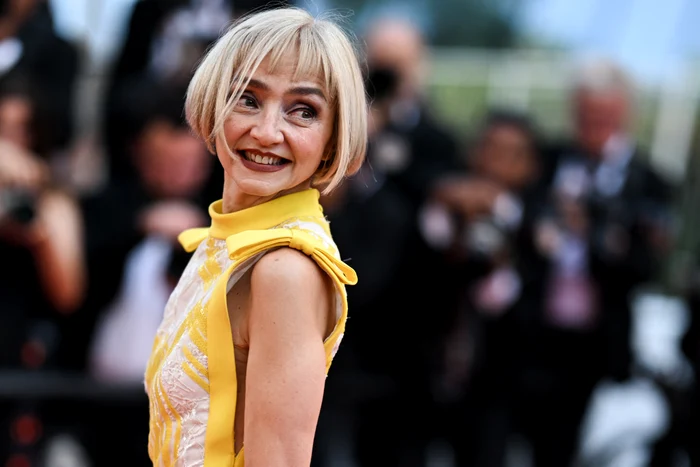
Maria de Medeos at the Cannes Festival. Photo: Cannes festival
The zero moment of feminism
“April Captains”, the first feature film you directed, involved important logistics and artistic resources. What were the challenges of making this movie?
Yes, it’s the first feature. When I started playing in movies, at the age of 15, I was already directing experimental films. I really liked the cinema, from both perspectives. But “April Captains” was a huge war film, with huge logistics and four co -production, all Latin countries: Portugal, France, Spain and Italy, with actors from all these countries. I had no collaboration with Romania, it was a little far away. I think that was my moment of feminism. I was 21 when I started documenting myself for this movie, it took me 13 years.
Did you write the script too?
Yes, I wrote the script. I interviewed all the protagonists of the Portuguese revolution. In fact, my mother was a political journalist so I had already met all those people, because she interviewed him when I was a child. When I grew up, I returned to them and continued the documentation. For me it was a statement of assuming a challenge: “I am a young woman and I want to make a war movie.” No one could understand this and I was extremely criticized at the time. But I think it is our freedom, as women, to make any kind of movie.
How did you manage to convince the manufacturer to finance?
I started in France, where I live, the French producer being the main. The Portuguese revolution has completely changed the destiny of Portugal, but it has attracted the attention of the whole of Europe. It was a kind of political tourism to Portugal-everyone came to see this incredible, non-violent, humanistic revolution that brought democracy to a country in the middle of the Cold War. This revolution was based on the consciousness of the young Portuguese military and, for a while, in the country was total freedom. It was an important event for Europe and the producers were interested in telling that very original historical story.
Fascinating is the fact that it was a revolution with very few victims …
There were four victims, killed by the fascist political police in the street. But the revolutionaries themselves did not make any victim. That was extraordinary.
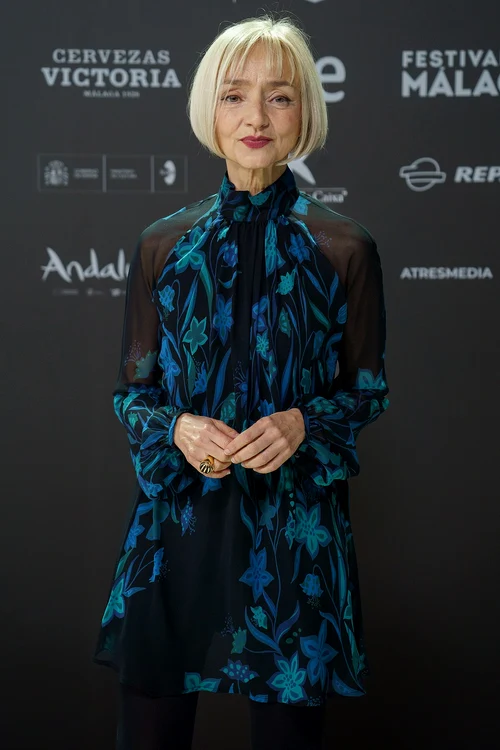
Maria de Medeiros directed several award -winning films. Photo: personal archive
“Those who lead the conflicts today has no conscience”
Today we see wars, very violent conflicts. Given that you have greatly documented this revolution, which do you think were the ingredients that made that important change of regime possible?
Conscience. They had consciousness. And the coup was made by very young military, young captains, the oldest was 30-31 years old. These very young people came after 13 years of colonial war. Tired of violence. They had lived a very violent period and returned to Portugal with the loaded consciousness. Because they lived such experiences, they were determined to make a revolution without violence. And they managed to respect their decision.
Do you think that today we no longer have this kind of consciousness to the leaders who lead us, as it was 50 years ago at the Portuguese Revolution?
Those who lead the conflicts and wars today have no conscience. They give orders to be killed civilians. Where are consciousness and respect for human dignity? It seems to have been completely lost. Only consciousness can bring peace back.
Does these tragic events inspire you through which we are going to make a movie about consciousness?
I have already done it, it’s about “April Captains”. But it is difficult now to put the ideas together when you see so much violence daily. I feel paralyzed. It will probably inspire with themes of thinking art and the creative process, but for the moment it is shocking. Every day, more and more violence, shock and horror are becoming more and more violence. It’s paralyzing.
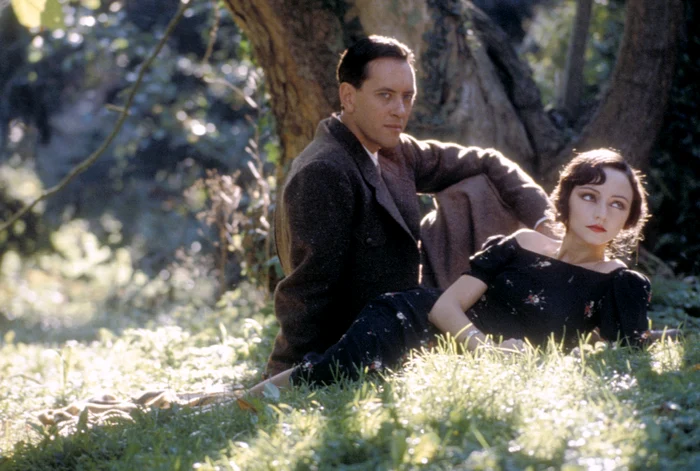
Maria de Medeiros has played in several award -winning films. Photo: Profimedia
“I thought that” Pulp Fiction “will be a brilliant masterpiece”
You have played various characters in many movies. What was the most difficult role?
The roles always come. It’s hard to say. This year I played Queen Maria I of Portugal, in a Brazilian film directed by Elza Cataldo. It was about the first Portuguese queen to run the country. It was at the time of Napoleon’s invasion in the Iberian Peninsula, and her family fled to Brazil – that was the beginning of the Brazil’s independence. The film presents the arrival of this old queen on the old continent, which was very angry, because she wanted to fight Napoleon. It also presents the way he discovered the tropics, the beauty, the power of Brazil. I couldn’t say that it was the most difficult role in my life, but it was very challenging and beautiful. There were many other roles, I liked to interpret Anaï Nin, in “Henry and June” (1990) or the Portuguese film “Two brothers, my sister” (1994), by Teresa Villaverde, awarded in Venice. I liked the roles in the films directed by women. I also liked the Mexican movie “Dos Fridas” about the assistant of Frida Kahlo. All were fantastic and challenging roles.
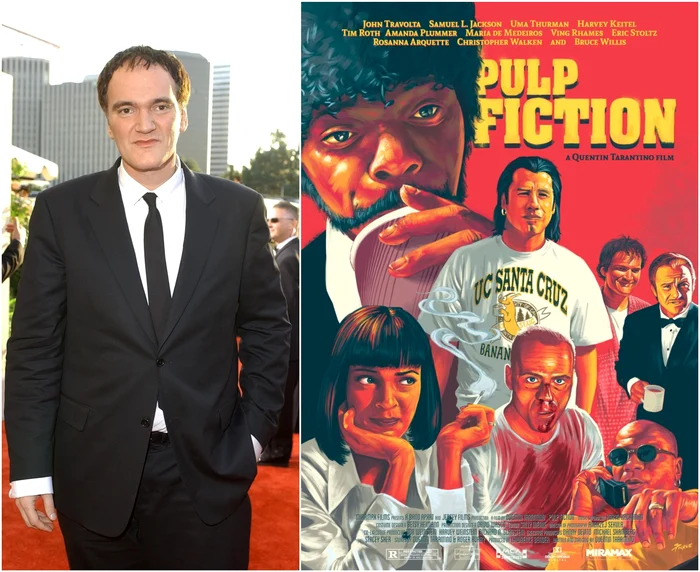
Quantin Tarantino inspired Maria de Medeos. Photo: Miramax
“Cinema is the place where you can be completely free”
What is the most annoying question you receive about your role in “Pulp Fiction”?
Fortunately, I like “Pulp Fiction” and Quentin Tarantino. Yes, it’s the movie that always comes back to my biography, but I always enjoy talking about it. Tarantino has done something incredible. When I received the scenario, I read it with huge interest, it was different from anything else I read in the cinema. I remember saying, “I want to do this role.” I did not know who would see the movie, because I thought it would be an obscure brilliant masterpiece, but Tarantino’s genius was that, through something so personal and different, which although it went against all the codes on how a scenario should be written, managed to conquer the world. It is the proof that you do not have to do the same thing to thank, on the contrary, sometimes inspiring yourself from your personal creative world you can conquer the public.
Do Tarantino inspire you as a director?
Very much. Like Manuel de Oliveira or the directors of the films I mentioned. All these people taught me that cinema is the place where you can be completely free, where everything is possible.
I saw an interview in which you said you met Tarantino when he was doing “Reserve Dogs”, his first movie. How were the movies made then compared to now?
In the kind of movies I do, not much has changed. We always fight with small budgets.
So that never changes? Did even “Pulp Fiction” have a small budget?
Does not change. “Pulp Fiction” was a small budget movie. All the big actors participated because they considered Tarantino a genius. It was a bet on his talent. It was like an investment in his talent.
How do you see today’s blockbusters who are produced with hundreds of millions of dollars and get even more money? Do they offer what the public requires?
The desire is made, as an enemy is made. You invent an enemy and then you start at war, so much factories in public and then films are made for those made desires.
