
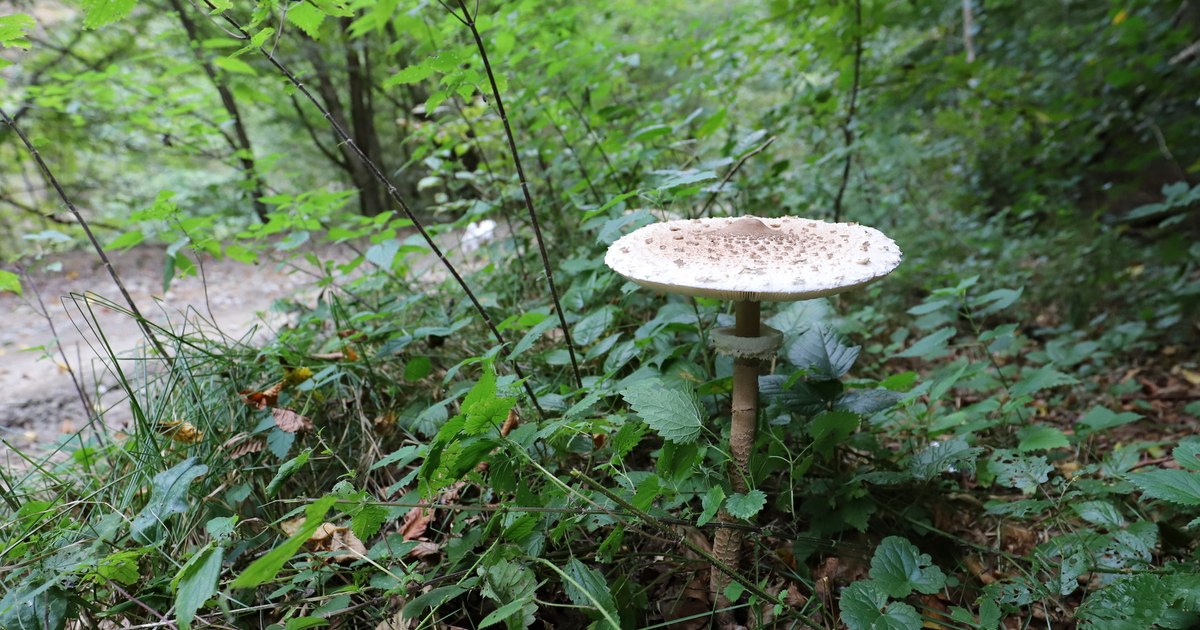
The snake sponge, a large-sized mushroom that adorns many meadows in Romania, has been included by some scientists among foods beneficial for health. It grows in the wild, and the risk of being confused with other poisonous species is not negligible.
Wild mushrooms sometimes pose health risks. Photo: Daniel Guță. TRUTH
The snake sponge (Macrolepiota procera), one of the most appreciated species of mushrooms in Romania, adorns the meadows, clearings, forests and many of the places where sheep and cows roam during this period.
The mushroom from Romania’s meadows
Many Romanians consider it a delicacy, others prefer it only as a photogenic aspect, integrated into the landscape around it, and public health specialists are more reserved about it, but also about other attractive mushrooms for Romanians, sought by Romanians in nature.
The snake sponge has received many names over time: parasol, snake’s hat, snake’s head, snake’s hat or cuckoo’s hat.
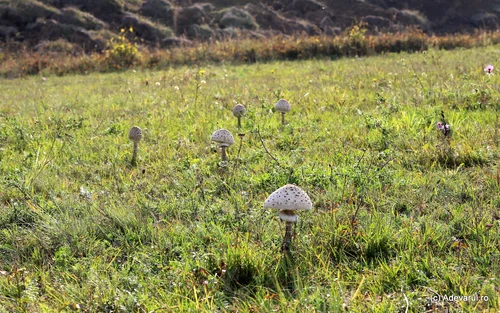
Image 1/7:
Snake sponge Photo Daniel Guță THE TRUTH (4) JPG
The edible mushroom species is widespread, in the wild, in all regions of Romania and makes its appearance from summer to late autumn, before the frost stops the vegetation. Sometimes, like other fungi, they form in meadows the so-called “witches’ circles”, distinct rings of vegetation and fungi, which appear when their underground part, the mycelium, develops radially. It is rarely found in cultures, in Romania.
Individually, the sponge snake is easy to recognize, especially because of its hat in the shape of an open umbrella, with a diameter of 10 – 30 centimeters, cream or gray in color, covered with brown scales and darker in its center. Its lamellae are thin and irregular, of colors similar to the surface of the hat. The leg of the mushroom rises up to 40 centimeters.
Sponge snakes, on the list of healthy foods
Romanians have found many uses for it, it can be cooked by frying, baking in the oven, boiling or transformed into aromatic sauces. In addition to its nutritional value, some scientists have also discovered remarkable therapeutic qualities.
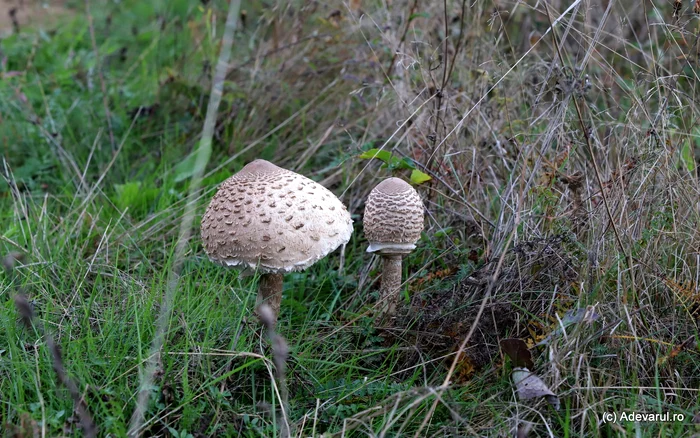
The mushroom on the meadows. Photo Daniel Guță THE TRUTH
A detailed analysis carried out at the West Pomeranian University of Technology in Szczecin (Poland), entitled “The possibilities of using the mushroom Macrolepiota procera in the production of foods with beneficial effects on health and in medicine”, shows that this type of mushroom can be included in the category of foods with beneficial effects on health, because it fulfills the two main scientifically proven functions, one nutritional and one with a positive (prophylactic) effect on the body.
“The fruiting bodies of the Macrolepiota procera mushroom are a natural material that meets the requirements of a healthy diet. They are valued for their high protein content, richness in minerals and low fat content. They are considered low-calorie, and due to their delicate taste and aroma, they are an ideal alternative to meat”, show the authors of the research.
Researchers claim that the beneficial effect on health of a diet that also includes this mushroom cannot be ignored.
“Macrolepiota procera contains numerous bioactive substances with a wide range of positive effects. Preparations and products that include the fruiting bodies of this species can support therapeutic processes — for example, in the treatment and prevention of depression, in antibiotic therapies or in balancing the intestinal flora. They also have a prophylactic effect, being useful in slowing down cellular aging processes and in reducing the risk of chronic diseases”, states the study published by the United States National Library of Medicine (NLM).
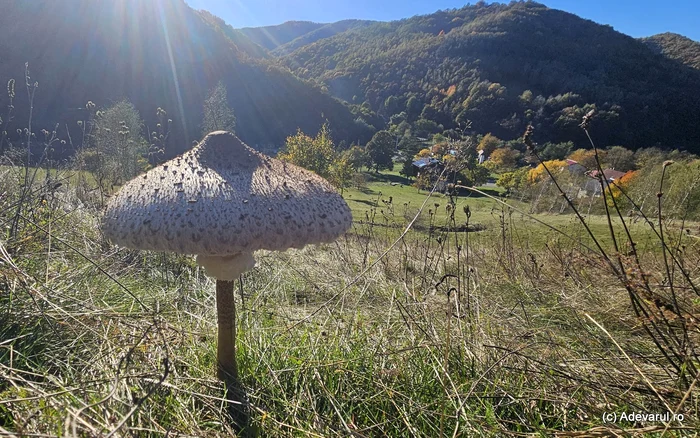
Mushroom. Photo Daniel Guță, THE TRUTH
Cultivating these mushrooms under controlled conditions also allows them to be enriched with selected minerals and nutrients. For these reasons, the researchers say, Macrolepiota procera should occupy a permanent place in the daily diet.
The specialists who conducted the study point out that, when picked by inexperienced people, the snake sponge can easily be confused with poisonous mushrooms, such as those of the genus Amanita (especially A. phalloides and A. pantherina), Chlorophyllum (C. rhacodes and C. molybdites), but also Lepiota (L. aspera, L. brunneoincarnata, L. helveola and L. pseudolilacea).
False snake sponge is toxic
The latter contain amatoxins, substances that can cause serious, often fatal poisoning.
“The toxin with the strongest effect on the human body is α-amanitin (α-AMA). It is resistant to all forms of culinary processing: it is not inactivated by frying and is not enzymatically degraded. About 30 minutes after ingestion, the toxin passes from the digestive system into the blood, being then distributed throughout the body. About 60% of α-AMA accumulates in the liver, where it causes damage severe”the research shows.
A common confusion is between the snake sponge and the false snake sponge (Chlorophyllum molybdites), which are similar in appearance but toxic. The latter has greenish hues and a shorter leg, without the scaly appearance found in the snake sponge, and its odor is unpleasant. Eating the fake parasol causes vomiting, diarrhea, abdominal pain and fever, sometimes requiring hospitalization.
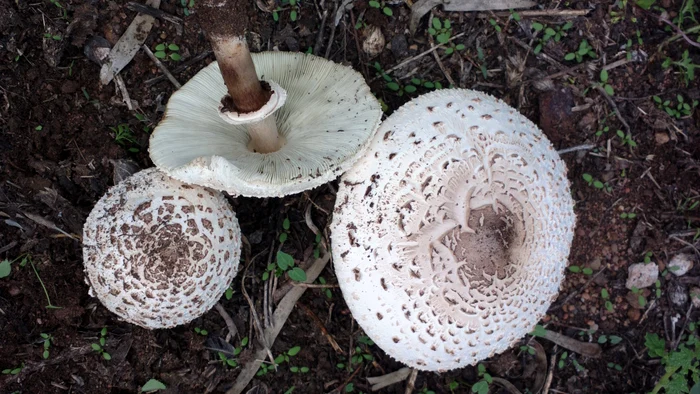
Chlorophyllum molybdites. Source: Wikipedia
“It is recommended that only mature specimens be collected. The young fruiting bodies of many mushroom species, including those with a lamellar hymenophore (i.e. the lamellae under the cap), do not yet show all the well-developed features that allow a safe and correct identification. Therefore, the risk of confusion is high, which is why it is not recommended to collect young specimens.” explain the authors of the study.
Mushroom poisoning can be manifested by digestive disorders (nausea, vomiting, abdominal pain, diarrhea, acute toxic hepatitis and liver failure), but also by neurosensory disorders, such as miosis (shrinkage of the pupils) or mydriasis (dilation of the pupils), agitation, temporal-spatial disorientation, confusion, delirium, visual and auditory hallucinations, convulsions or even coma. In some cases, cardiovascular disorders may occur (bradycardia, tachycardia, hypotension or hypertension), hydroelectrolytic disorders with risk of severe dehydration in children and the elderly, but also renal disorders.
General symptoms include chills, fever, sweating, dryness of the mucous membranes or, on the contrary, salivary and urinary hypersecretion. Mushroom poisonings are considered medical emergencies and can be serious, sometimes fatal. That is why it is mandatory to call the emergency number 112 and immediately present yourself to an emergency medical service, draw the attention of public health specialists.
The viper’s sponge is lethal
The most dangerous mushroom in the forests of Romania is more difficult to confuse but has a name similar to the snake sponge.
The viper’s sponge or white mushroom, with the scientific name Amanita phalloides, is distinguished by its sticky cap (in wet weather), with striations on the upper face, greenish or olive in color, with scaly plates, especially in the middle. His foot has a developed volva and a white ring. There are also varieties with brown or yellow hats, biologists show.
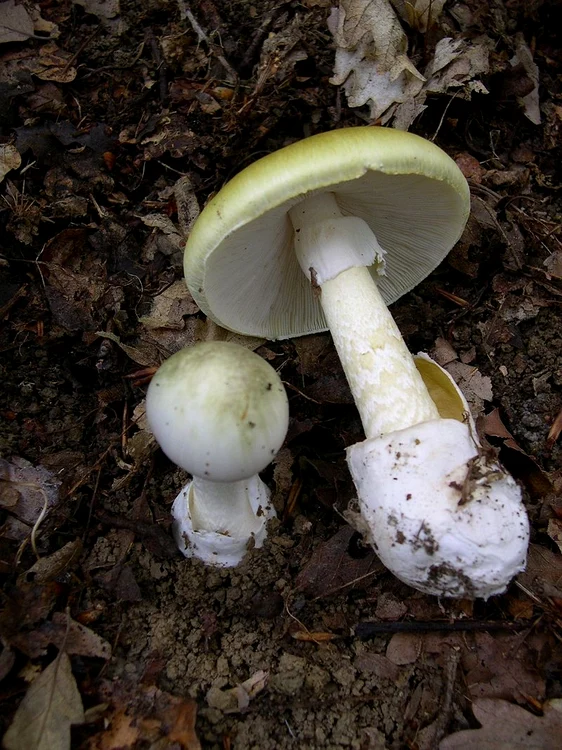
Amanita phalloides Photo Wikipedia
Amanita phalloides has a changeable color: when young it is green and can be confused with bread mushrooms (Rusula virescens), and when mature it becomes white, like the common mushroom (Psalliota campestris), both of which are edible mushrooms. Amanita phalloides was the cause of 95 percent of fatal cases of mushroom poisoning in the past. Amanita citrina (lemon sponge) and Amanita verna (spring mushroom) are almost equally dangerous.
“Characteristic for these mushrooms are the remains of the universal veil, which remain stuck to the surface of the hat, giving it the appearance of a geographical map. These two mushrooms are easily recognized by the characteristic smell of baked potatoes.” showed the biologist Mitriţa Bahrim, in Revista Padurilor (1963).
She states that the mushrooms that cause death contain a very violent toxic substance, discovered in Amanita phalloides, which is called phallina and is soluble in water. Phallina dissolves the hemoglobin in the blood cells, producing hemolysis, so that death occurs by slow and fatal asphyxiation. A single specimen of the mushroom contains enough phallin to kill two or three people, added the biologist scientist.
In the case of phalloidal poisoning produced by Amanita phalloides (Viper sponge), Amanita citrina (Lemon sponge) and Amanita verna (Spring sponge), the symptoms appear quite late, about 10-12 hours after ingesting the mushrooms, the patient’s life depending on the speed with which the necessary treatment is applied.
“The first symptoms give nothing serious to suspect, the patient feeling only sleepiness and numbness, which are followed by cramps and heartburn and then a feeling of suffocation and an unquenchable thirst. Cold sweats, violent vomiting follow. The stomach region is so sensitive that it cannot be touched, and the skin takes on the yellow color known as phalloidal jaundice.”observes the biologist.
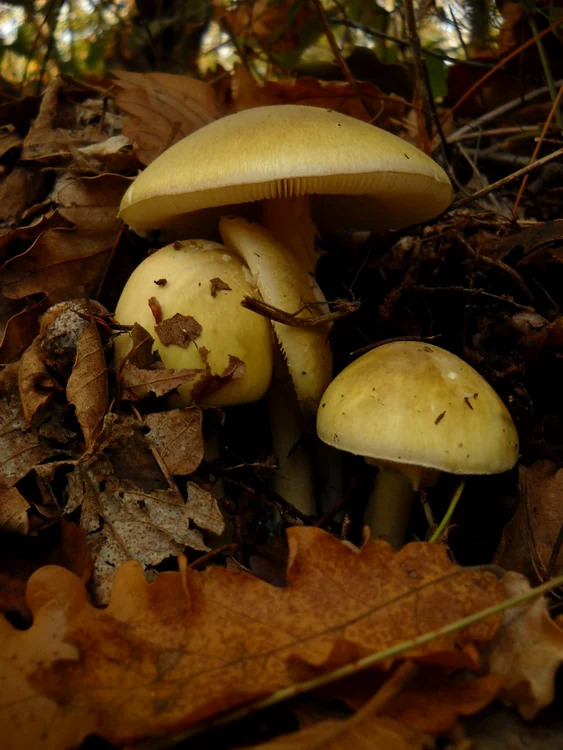
Amanita phalloides Photo Wikipedia
After a few hours, the patient looks tired and it seems that the first crisis has passed, but the lull only lasts about two hours, after which the crisis returns, but much more violent, the pains are greater, then lull again.
“This alternation of crises and lulls is repeated several times. The general condition worsens and after 5-10 days, frequent fainting occurs. Uncertainty in movements, paralysis, gradual weakening of the pulse is often observed, the patient seems exhausted, but is still lucid. If the patient escapes alive, he remains weak for a very long time”. added Mitriţa Bahrim, in Revista Padurilor (1963).
Beware of eating mushrooms in the wild
The Ministry of Health advises Romanians not to consume mushrooms bought on the street corner or picked from the forest, even if they know how to distinguish the edible ones from the poisonous ones.
“Avoid eating mushrooms or sponges from traders who cannot provide proof of phytosanitary approval. Avoid picking and eating mushrooms or sponges from the forest, even if you know them to be edible, because many edible mushrooms from the spontaneous flora of our country have undergone mutations and become poisonous. Since young children are more sensitive than adults and can form very serious, even fatal poisonings, don’t feed them mushroom-based food”, inform the Ministry of Health, through the public health departments.
