
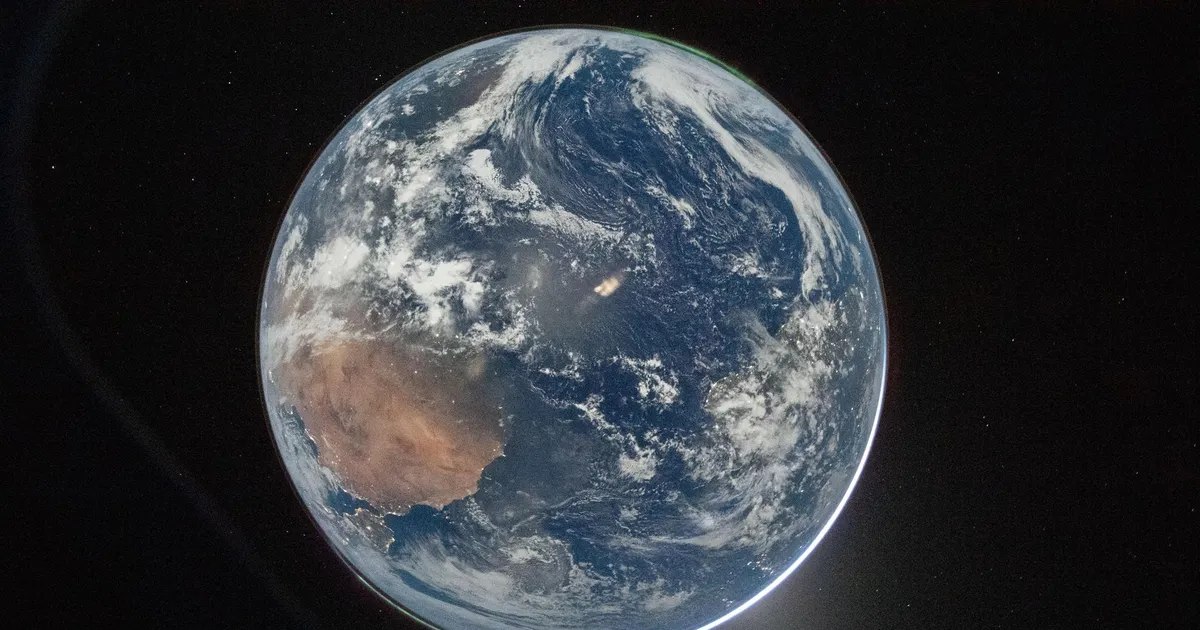
An image captured during the Artemis II mission has gone viral globally after revealing a rare detail that is hard to see at first glance, even for the keen eye.
The crew aboard the Orion capsule, as part of the Artemis II flight, has already started transmitting images of Earth as seen from space, and these have quickly gone viral on social media. However, the most spectacular detail can easily go unnoticed when the photo is viewed on small screens, such as a mobile phone, reports Digital Camera World.
The image taken on April 2 by mission commander Reid Wiseman captures an impressive perspective on the cloud-shrouded “blue planet”. On closer inspection, two bright green lines can be seen at both poles of the Earth.
Specifically, the photo that went viral captures, in the same frame, both the aurora borealis and the aurora australis.
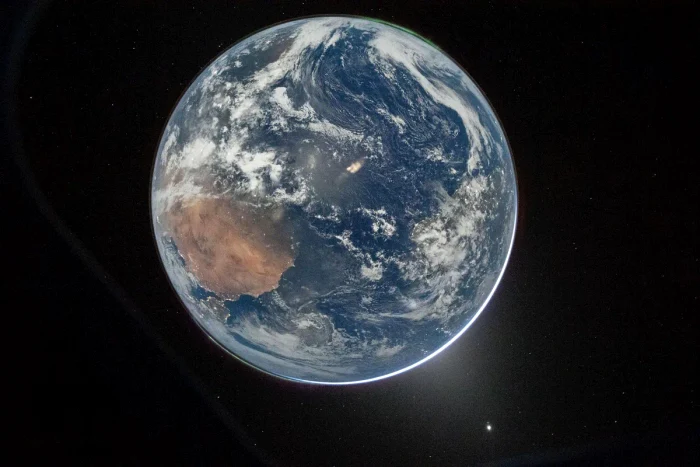
Another rare phenomenon appears in the image: a band of zodiacal light visible in the lower right of the planet. According to NASA, this is the result of Earth’s eclipse of the Sun, as seen from the Orion capsule.
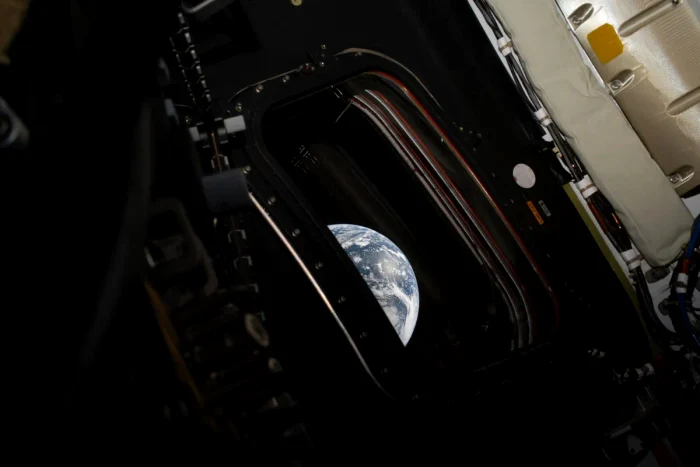
The four astronauts on board – Reid Wiseman, Victor Glover, Christina Koch and Jeremy Hansen – spent part of Friday practicing photography techniques. The preparation comes in the context of the key moment on Monday, April 6, when they will have about six hours to observe the surface of the Moon.
The crew has already trained with the cameras used on the mission — including the Nikon D5 and Nikon Z9 — but the moon photography will take place in microgravity, in a confined space comparable in size to two minivans, according to NASA. 80-400mm and 14-24mm lenses will be used for this stage.
NASA estimates that astronauts — the first to leave Earth’s orbit since 1972 — will be able to see about 20 percent of the surface of the far side of the Moon, a region not visible from Earth.
