
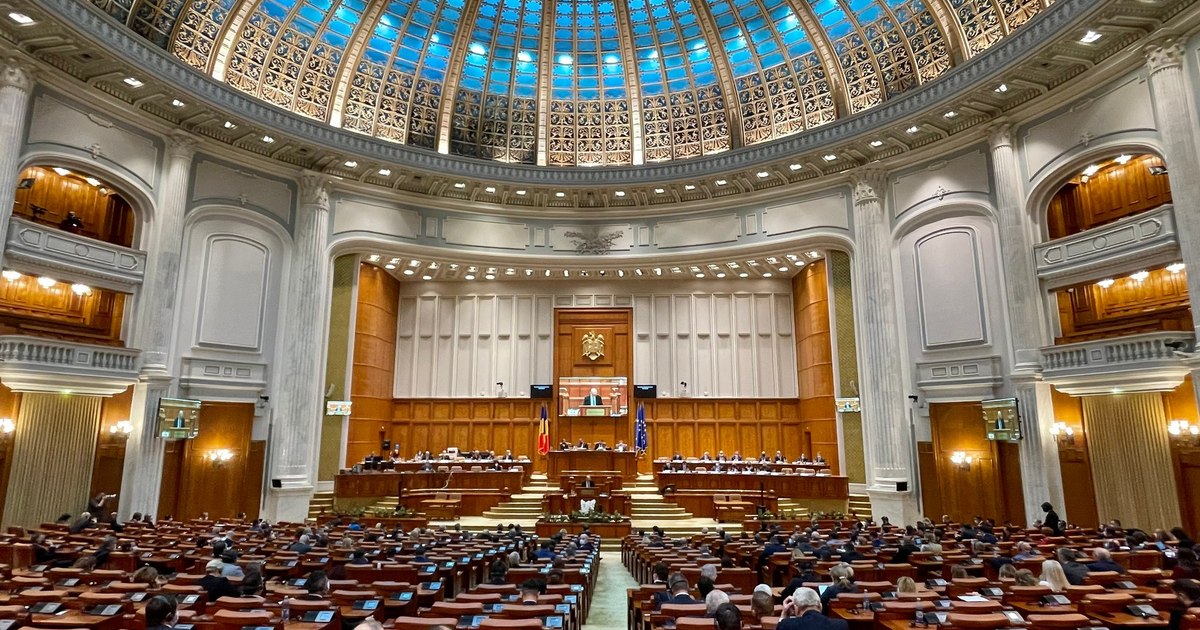
A legislative proposal to eliminate the special pensions of mayors, vice-mayors, presidents and vice-presidents of county councils is in public consultation at the Chamber of Deputies until the end of January.
The proposal, initiated by USR MPs Claudiu Năsui and Cristina Prună, provides for the repeal of the article in the ordinance on the Administrative Code that regulates these rights: “Article 210 of the Emergency Ordinance no. 57/2019 regarding the Administrative Code, published in the Official Gazette of Romania, Part I, no. 555 of July 5, 2019, with subsequent amendments and additions, is repealed.”
Article 210 of GEO no. 57/2019 refers to the allowance for the age limit granted to mayors, vice-mayors, presidents and vice-presidents of county councils, informs Agerpres.
Under what conditions is the allowance currently granted?
According to him, “persons who since 1992 have held the position of mayor, vice-mayor, president or vice-president of the county council and who meet the conditions of the standard retirement age, of the reduced standard retirement age as provided by the legislation on the public pension system or those provided by other special laws are entitled, upon termination of their mandate, to a monthly allowance for age limit”. The age limit allowance represents the amount of money granted monthly to persons who have exercised the capacity of mayor, vice-mayor, president or vice-president of the county council.
The amount of the allowance for the age limit is granted within the limit of three mandates, provided that the mentioned persons have exercised at least one full mandate as mayor, vice-mayor, president or vice-president of the county council. Also, the amount of the allowance for the age limit is calculated as the product of the number of months of the mandate with 0.40% of the gross monthly allowance in payment, the same article provides.
According to the statement of reasons, the legislative repeal proposal represents “a necessary and urgent action, justified by the critical macro-financial context of Romania and the obligations assumed at the European level”.
How much does such a pension amount to?
The initiators add that, for example, a former president of a county council would be entitled to a special pension between a minimum of 6,260 lei per month and a maximum of 18,780 lei per month, almost seven times higher than the average pension in Romania, of only 2,816 lei.
“The current economic situation requires the Government and the Parliament to adopt immediate and decisive measures to limit public spending in order to ensure the sustainability of finances. We are facing a budget deficit that has escalated to a level of around 9% of GDP, while public debt has reached over 50% of GDP. (…) Despite the fiscal emergency, until now, the political class and the governing coalition have preferred to balance the budget through austerity measures imposed on citizens, resorting to new increases in taxes and fees, instead of demonstrating a real restriction of the state’s own expenses. Although the repeal of the special pensions of local elected officials would not have an immediate impact of reducing current budget expenditures (since the right is suspended), this bill represents an essential and absolutely necessary political signal sent to the electorate. By cutting this privilege which, although not in force, is provided for by law, the political class finally demonstrates that it is indeed ready to give up its own privileges and not just put the burden of the created deficit on the shoulders of taxpayers. Given that this right is not active, it represents, from a technical and financial point of view, the easiest privilege to cut, thus becoming the credibility test of the assumed commitment to put the public interest above any form of sinecure”argue the initiators in the statement of reasons.
