
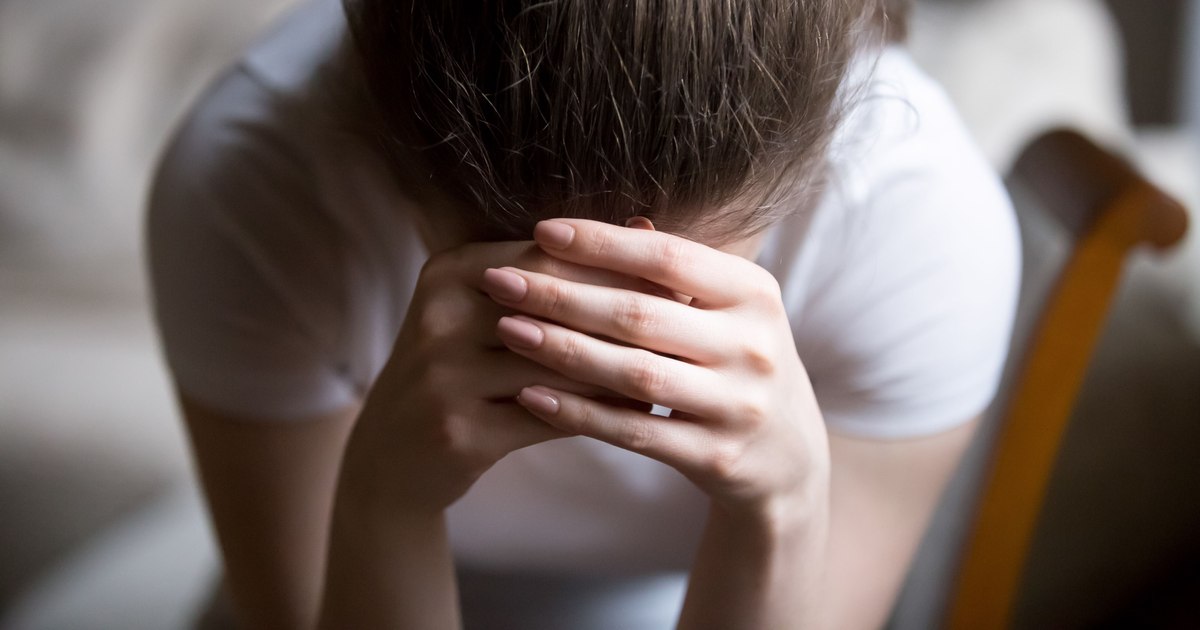
Mental health is not a fad, and patients have understood this and are more accepting today than years ago of asking for help. Women are doing it more and more often too.
Depending on their age, women go through changes that can make their mental health vulnerable. It is important to know the factors that influence this aspect, characteristics of each age stage, and to recognize the alarm signals. The good news is that, in recent years, patients, women and men alike, have begun to realize the importance of help and to stop being afraid to ask for it, says psychiatrist Amalia Săndulescu.
A woman’s health is influenced by biological factors – mostly hormones, psychological – identity, self-esteem, but also social – the roles she has throughout her life, relationships, cultural pressure.
Adolescence is mostly marked by hormonal changes, which in turn cause changes in attitude, and behaviors learned harmoniously or, on the contrary, in a disharmonious way.
Young adulthood is when women are career-oriented, enter into relationships, and these relationships can help shape their personality or bring them disappointments that leave them vulnerable to anxiety disorders and even depressive disorders.
Between 35 – 40 – 45 years is the period when most burn-out disorders and anxiety disorders appear. It is also the period of perimenopause and, subsequently, menopause, which disrupts the hormonal balance and causes somatic changes and more.
In the period of late maturing, over 65 years, most disorders in female pathology are related to depression. There are diseases caused by anxiety, cognitive decline and disorders caused by the need to adapt to life without a life partner or without friends.
What are the warning signs?
“Things have changed a bit lately and we accept more easily that we need help. As a woman you have a lot of roles that come with worries, with responsibilities, with expectations, with the desire to be strong. To be strong for children, for family, for work, for everyone else. And we have this feeling that everything has to be perfect. We postpone our tiredness, we hide our tears, we tell ourselves that it will pass, that it is not so serious and slowly, slowly we exhaust ourselves. There is a tiredness that doesn’t go away with sleep, an apparently inexplicable restlessness appears, sadness appears, the feeling that nothing makes us happy anymore, that everything becomes an obligation, that we feel alone even though we are surrounded by people”the doctor described the picture that must worry.
They are the first warning signs that something is not as it should be and that specialist help is needed.
Things can get worse and rebellious insomnia can also appear, which ends up preventing women from carrying out their activity during the day. Feelings of loneliness and withdrawal may occur. Usually, such behaviors are accompanied by a collapsed self-esteem. The woman loses or gains weight, she may feel worthless. He blames himself for any trifle, which can already betray a depressive episode, which has crossed the limits of emotional imbalance easier to solve.
“Here the entourage can also intervene to raise some alarm signals and say that it is time to call for help. Or you see that you are actually collapsed, exhausted and that you need it. (…) Other hormonal imbalances and even the area of psychotism can also appear, that is, severe depressive episodes with psychotic elements, in which the feeling of guilt is so deep that it reaches the level of delirium”. the doctor explained.
The situation in which great exaggerations are reached and the patient transposes herself into an unrealistic plan is a peak and a clear signal that the immediate intervention of the specialist is needed.
Gabriella Bondoc, primary psychiatrist, at Interviews The Truth: From emotional suffering to personal development, without miraculous recipes
The first signs usually send patients to a completely different specialist than the psychiatrist. Episodes of tachycardia, sweating, palpitations, shortness of breath can alert patients, but if we talk about mature women, the first thought is that they are experiencing symptoms of perimenopause or menopause, so the psychiatrist is not the first to turn to.
If panic attacks no longer occur every few months or once a month, but become frequent, the anxiety can become disabling. “Hormonal disruption, hormonal imbalances in perimenopause, make us vulnerable enough that they chain. It’s a very fine balance between the neuroendocrine system and all the psychiatric pathology. There are some subtle hormonal imbalances there that at some point drop the serotonin, dopamine and noradrenaline levels a lot. That’s why brain fog occurs in perimenopause.”the doctor explained.
If we are at the first alarm signals, it would be best to contact the family doctor. Depending on the intensity and predominance of certain symptoms, the doctor will be able to refer the patient either to an endocrinologist, to a gynecologist, or to a psychiatrist.
What to do for good mental health
Certain simple gestures, but of which we can make a habit, can prevent us, on the other hand, from reaching the point where we need help. If we devote only 10-15 minutes a day to practicing a hobby, the situation can change a lot, says psychiatrist Amalia Săndulescu. Another lesson that women should learn is that of tolerance. To learn to overcome stressors more easily, to set healthy limits in relationships and in professional life, to clearly delimit the time for work from that allocated to family or personal life. Spending time connecting with family members also helps maintain good mental health.
“The time spent with others, socializing – that is time spent with the children, with the husband, with the mother, with the sister, with the brother – I scored that we were energetically charged. Hearing your kids tell you something about their birthday, or your husband telling you something special happened, all count. The way we ask the questions is also important, never limiting ourselves to just – how was your day? – because that’s where the dialogue ended. It is important to have a quiet, pleasant conversation, or to have certain games that we can play with the children. How many of us stay up every night to play something? This would be quality time”the doctor also indicates.
Poverty, a trigger for alcohol consumption and depression. “The thought of where to get money for the children, that has no cure”
The small habits and activities that we create in the family over time are also rewards, explained Dr. Săndulescu.
“That doesn’t mean they’re any less strong or showing signs of weakness”
When alarm signals such as those mentioned appear, the natural gesture is to request specialized help. The family doctor is the first person you can turn to, as he is the one who can correctly direct you to another specialist, if necessary.
“We must know that this does not mean that they are less powerful. It is a sign that an imbalance has occurred and that outside help is needed. In general, in psychiatric pathology, the treatment of choice is a combination of drug therapy and psychotherapy. In mild phases, depressive episodes, and mild to moderate anxiety disorders, only psychotherapy may work. In moderate and severe episodes, we are talking about the need for drug treatment and psychotherapy. It didn’t mean we were crazy, it didn’t mean we lost control, it didn’t mean we were less valuable. It means that our body, our mind, our brain is more vulnerable and needs to restore that balance in order to function. To work primarily for us, so that we can also help others. Because most of the time they start from that, from the idea that others need more help. (…) Lately, being exposed to everything that means information from the media, I see them slightly more open. We are beginning to understand that psychiatric pathology and psychological imbalances are just like any other somatic illness.” concluded the doctor.
