
Federal safety authorities are again investigating Tesla’s self-driving mode, the latest in a seemingly endless line of investigations into the technology’s safety.
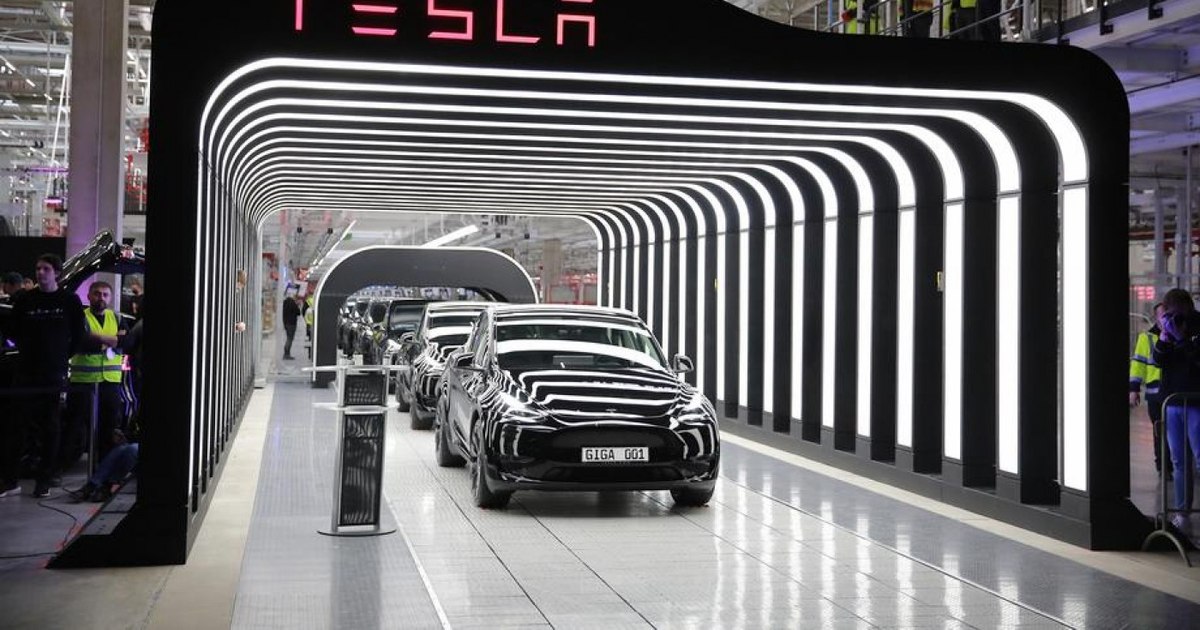
Tesla is being investigated again PHOTO EPA-EFE
Last week, the National Highway Traffic Safety Administration (NHTSA) announced at least the sixth investigation into Tesla vehicles using the company’s feature “Full Self-Driving” (FSD) or other driver assistance features. That investigation covers dozens of dangerous driving incidents, including running red lights, driving in the wrong lane and three crashes that left five injured, CNN reports.
But there is relatively little NHTSA or any other federal regulator can do to regulate the new features Tesla is introducing as part of its ambitious plans to fill the country with self-driving cars and “robotaxis”.
That’s because it’s not a regulator’s job to approve the technology – only to step in if it causes problems. US laws are ill-equipped to handle CEO Elon Musk’s fast-paced ambitions, and Washington appears in no rush to regulate his company.
NHTSA has already had several investigations into Tesla’s self-driving technology, including incidents that resulted in fatal crashes, for both FSD and the less advanced assist feature called “Autopilot”. But many of these investigations began several years ago and are still ongoing, even as more Teslas with FSD and Autopilot hit American roads.
“I call it the hammer and mouse game of regulation”said Bryant Walker Smith, professor of law and engineering and research associate at Stanford Law School’s Center for Internet and Society. “This process takes a very long time. It’s the first step of several steps required for an actual recall. It’s a regulatory process that’s not necessarily well aligned with the pace of technology.”
“Guinea Pigs in the Real World”
Tesla is not a unique case. Despite what most drivers think about the safety of the new cars they buy, much of the regulation doesn’t happen until after the cars are already on the road.
The United States has what is called a self-certification regime. NHTSA sets specific standards and auto manufacturers self-certify ie “promise that their vehicles or systems meet these specific standards”Smith explains.
But “if there is no specific standard for a particular technology, then there is nothing to self-certify. And NHTSA has no specific performance standards for many advanced driver assistance systems”he added.
But Smith pointed out that the problem is not just with cars with driver assistance features, but with all cars on the road. “We are all guinea pigs in the real world, in the century-long experiment that introduces two-tonne vehicles traveling at speeds faster than we can comprehendhe said.
Safety regulations are limited
NHTSA could set stricter safety standards for vehicles, Smith says. But its ability to test vehicles and features before they’re allowed on the road is limited by law and regulation.
For the agency to have the authority to approve or reject a vehicle or feature before it goes into service, as the Federal Aviation Administration (FAA) does with commercial aircraft, Congress would need to change the law.
Smith says that change won’t happen anytime soon. In addition to the power of the auto industry, Americans have become accustomed to the tens of thousands of road deaths each year. He says people are more likely to blame drivers than to demand stricter regulations.
“This kind of approval applies to scary things like nuclear power plants, airplanes, haircuts, or initial public offerings”he said.
Growing ambitions for autonomous driving
Musk is betting Tesla’s future on self-driving technology. But despite names like “full self-driving” and “autopilot”the company recognizes that owners using these features need to be behind the wheel, ready to take control.
However, Tesla is starting to plan to offer a fully autonomous car without a human behind the wheel.
The company launched its long-awaited robotaxi service in Austin, Texas, this year, although after starting with a Tesla employee in the right front seat, local authorities demanded that the employee move to the driver’s seat. But Musk promises that the service will soon have no employee behind the wheel, as well as a real one “Cybercab” fully autonomous, no brakes, throttle or steering wheel.
Tesla did not respond to CNN’s request for comment. The company has claimed that its cars with self-driving technology are safer than human drivers.
But safety experts say Tesla hasn’t produced the data to prove it. And even a driver behind the wheel of a car with FSD is at risk.
“There is a big, big concern that people, simply as a matter of psychology and physiology, will lose their attention if they do nothing but look, while their machines do the rest”Smith said.
