
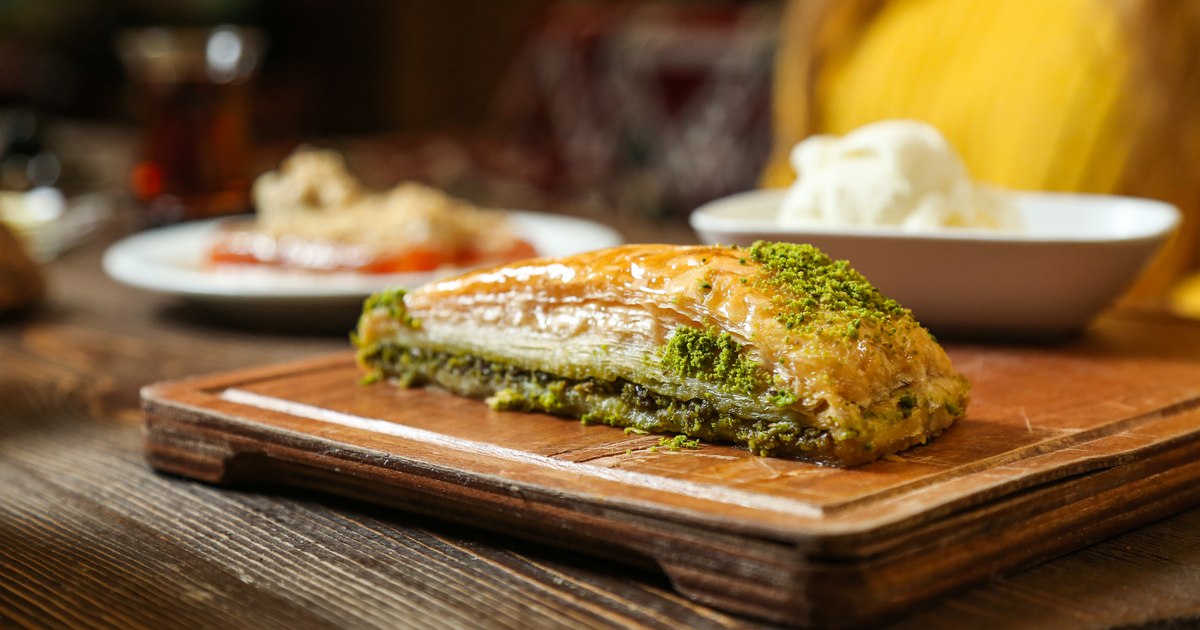
Gaziantep is considered the gastronomic capital of Turkey, and among its most prized products are pistachio desserts, the ingredient that defines the culinary history of the southeastern Anatolian city.
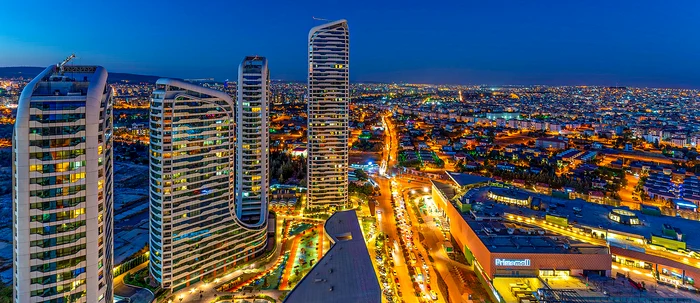
Gaziantep, one of the world’s oldest continuously inhabited cities, with a history of more than six millennia and a population of more than 1.7 million people, is considered the gastronomic capital of Turkey, known for its culinary culture and centuries-old traditions.
The culinary capital of Turkey
The region is proud of the diversity of fruits and vegetables grown here, and local products include Antep pistachios, olives, tomatoes, peppers, eggplants, cucumbers, radishes, carrots, pumpkins, tarragon and saffron, as well as numerous varieties of grapes.
The location of the city on the Silk Road and on what was also called the Spice Road contributed to the richness of the local cuisine. Inns, baths, and caravan stops brought culinary influences from many regions. Gastronomic knowledge from Iran, India, China and the Arab world, especially from Aleppo, has left a strong mark on the city’s cuisine, notes the region’s official website.
“The food of Antep differs in many ways from that of other regions of Turkey, due to the influences of the Oghuz Turks, the Armenians and the culinary traditions of Aleppo, an important center during the Seljuk and Ottoman Empires. The differences are easy to see and can be felt in every bite. These influences are seen in rice dishes, in soups (çorba), in kebabs, in all types of köfte (no meatballs), but also in lahmacun (no stick with meat and spices) and in different types of dolma (no stuffed dishes, similar to sarmals)”, shows travel blog Kasiasteps.
Gaziantep’s traditional cuisine is renowned for its intense flavor and heavy use of spices, with many dishes flavored with Aleppo pepper, a mixture of hot peppers and paprika.
The desserts of Gaziantep
Desserts occupy a special place in the city’s culinary tradition, and the most popular ingredient is the pistachio. The Antep pistachio, known for 4,000–5,000 years, is one of the most important products of the region and an important source of income for the city.
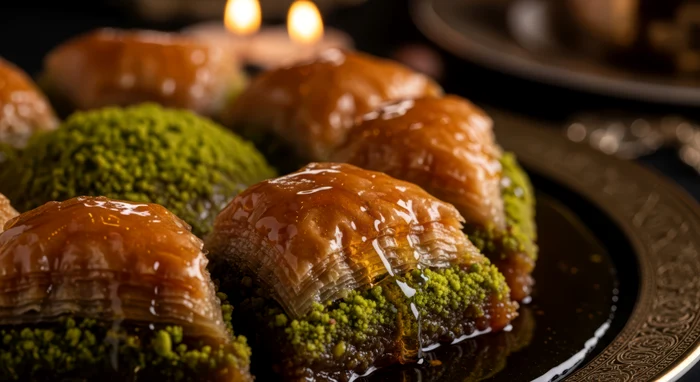
“Desserts in Antep are in a class of their own. Bowls full of fresh baklava, burmalı, künefe, kadayıf, şöbiyet and more await you in the windows of cafes, restaurants and patisseries. The smell of fresh sweets, made with pistachio and honey, wafts through the streets and tests your will to not take another bite.” notes the travel blog.
The Turkish city’s most famous specialty is baklava, a dish made of many thin layers of dough filled with ground local pistachios, sourced from the vast plantations that surround the city. Along with baklava, another local specialty is Antep’s katmer, a crispy pie fried in butter, filled with lots of ground pistachios and sprinkled with another layer of pistachios on top.
The city is famous for its pistachio plantations
Gaziantep is the main pistachio-producing region in Turkey, but its fame is not due to quantity, but to quality, notes the Turkey Travel Center platform.
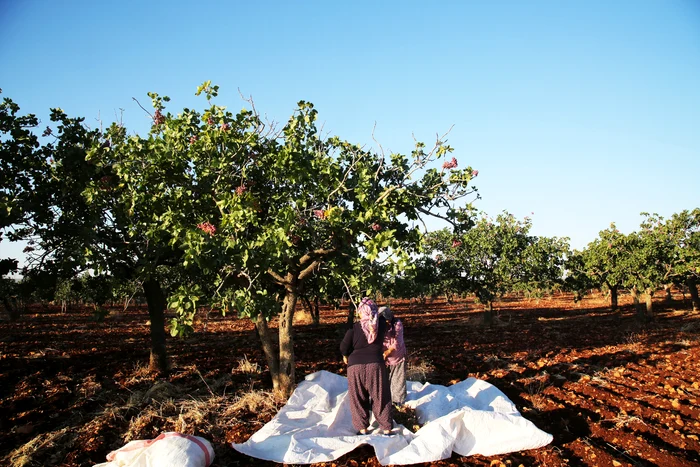
“Pistachios in Gaziantep grow very well due to the ideal climate and particularly suitable soil. Local farmers usually harvest pistachios in September, but when they are intended for baklava, the harvest is done about a month earlier because the fat content is lower and the protein content is higher“, says the website dedicated to tourism.
The flavor of the Gaziantep pistachio is more intense and the natural green color does not need dyes or additives to be highlighted.
“Many believe that the intense green of the kernel is achieved with food coloring, but any respectable grower in Gaziantep would consider this statement an insult. The locals are proud to have preserved the quality of pistachios through the generations, and this pride is also evident at Gaziantep’s annual pistachio festival, held every year in October.” Turkey Travel Center also informs.
How to make baklava, the famous sweet in the Balkans. The recipe of the famous Sanda Marin
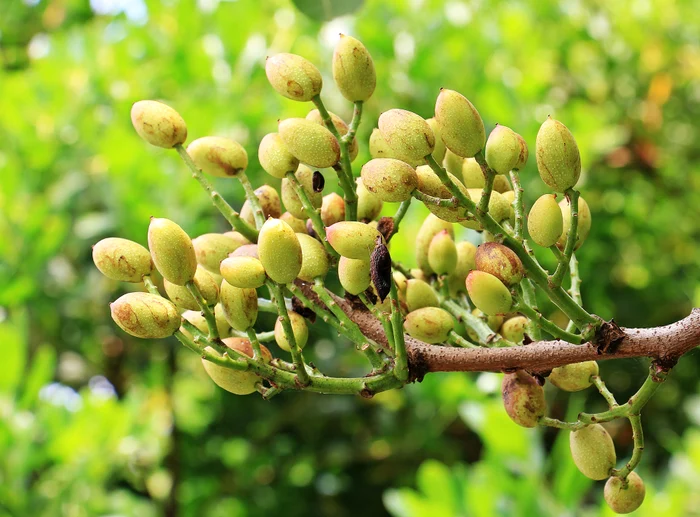
In Turkey, the largest pistachio productions are made in the provinces of Gaziantep, Şanlıurfa, Siirt, Kahramanmaraş and Adıyaman. Pistachio trees can reach 3–10 meters in height and are generally dioecious (male and female flowers are on separate trees). The fruit has a structure with outer skin, hard inner skin and edible core. When ripe, the shell cracks and reveals the pistachio.
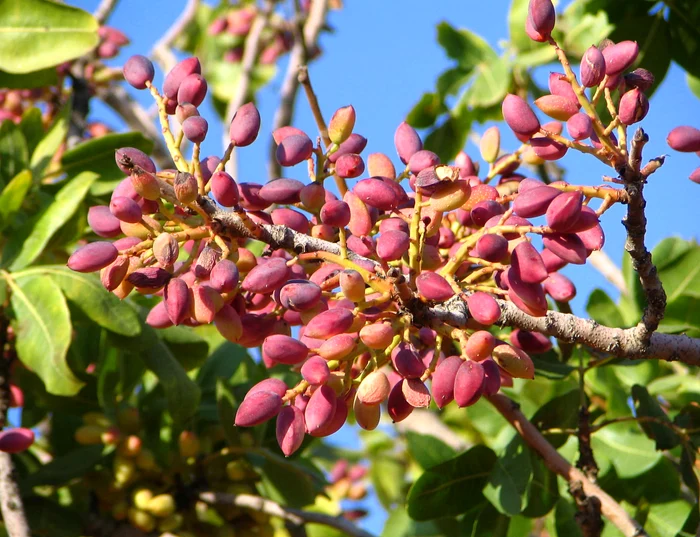
Antep pistachios are rich in healthy fats, proteins, fibers, vitamins and minerals.
“It is eaten as it is, but it is also used in many traditional dishes and food products. It is the basis of famous desserts, such as baklava, künefe, şöbiyet or katmer, but it is also used in ice cream, chocolate, rahat and halva. Pistachio is also present in many pastries, in some traditional dishes, but also in the form of paste or pistachio oil, ingredients valued for their intense flavor“, notes the official page of the region.
Journey to the Pistachio City
BBC journalists traveled to Gaziantep to find out the story of the most important ingredient in Turkey’s gastronomic capital and symbol of the city. Although it is usually harvested in September, some of the pistachios are hand-picked almost a month earlier, when the fruit is still small and has an emerald-colored core.
“Pastry owners go from tree to tree and taste. When the harvest is almost ready, they buy the produce of an entire orchard on the spot”says Aylin Öney Tan, editor of the Gaziantep cookbook A Taste of Sun and Fire, according to the BBC.
The reason is simple: the early pistachio, renowned for its exceptional flavor, is essential for sweets such as katmer (creamy breakfast pies) and baklava, considered by many to be the best in Turkey, which have made Gaziantep a place of pilgrimage for dessert lovers. For the locals, these dishes are more than just sweets; they are part of everyday life in one of the oldest continuously inhabited cities in the world.
“Here sweets mean more than just desserts – they mark almost all important moments in our lives”, says Hatice Pekmez, an associate professor at Gaziantep University who studies gastronomy and culture, quoted by the BBC.
The sweet tradition accompanies people from birth to death: families welcoming a newborn share trays of baklava with pistachio syrup, and at funerals, mourners taste soft semolina halva fried in flavored butter.
The traditional Romanian preparation with ancient origins, indispensable for holidays. It was the delicacy on the Romanian tables
“Sharing these meals is one way we strengthen our community bonds,” adds Pekmez.
Before sunrise, bakers fire up oak wood-fired ovens, prized for their clean, smokeless heat, and rise early to prepare katmer – thin sheets of dough folded around a rich filling of sweet pistachios and thick cream.
“Newlyweds eat katmer for their first breakfast. The idea is that in their new life they will eat sweet and talk sweet,” says Mehmet Özsimitçi, the third-generation owner of a bakery, quoted by the BBC.
The city’s Pistachio Museum is housed in a pistachio-shaped building surrounded by pistachio growers. Here, tourists learn that pistachio remains dated to the 3rd millennium BC. were discovered at Oylum Höyük, an archaeological site about 50 kilometers from Gaziantep, where there are traces of continuous habitation since around 3400 BC.
“Today, travelers can spend days following a veritable ‘pistachio road’. Nuts are sold in pyramidal piles in shops in the city’s old covered bazaars, both fresh, still in their pink, petal-like shells, and roasted, ready to be eaten. Stalls in Bakırcılar Çarşısı (Boilers’ Bazaar) offer pistachio-studded Turkish shit and sweet pistachio rolls, perfect for put in the luggage, and the bright advertisements at the bakeries display the word «fıstık» (pistachio) in bright green letters”informs the BBC.
Locals celebrate the pistachio harvest at the annual GastroAntep festival, held every September, with special workshops and dinners. More than 70 percent of Turkey’s pistachio production comes from this region, where the rocky soil forces the trees to develop deep roots and the summer heat ripens the fruit to perfect maturity.
