
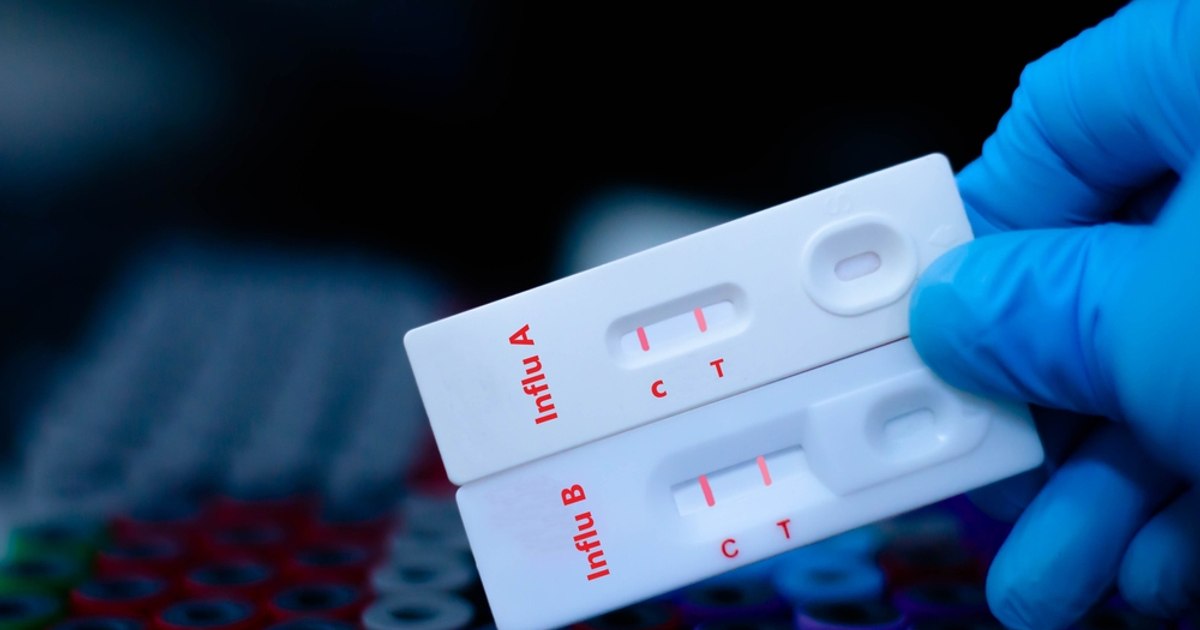
Epidemiologist Emilian Popovici explains what is actually behind the so-called “super flu” that has caused concern in the UK. He admits that the number of illnesses could also increase in Romania and comes with recommendations.
What type of flu is circulating in the UK?
“It’s not a super flu. (…) It is the A(H3N2) subtype of the flu virus, which is also contained in this year’s flu vaccine, so from the 2025-2026 season. (…) The fact that it is contained in the vaccine shows that there is nothing new and nothing mutated. A(H3N2) has been circulating for many, many years. It’s a classic, established subtype of the flu virus,” says Prof. Dr. Emilian Popovici, vice-president of the Romanian Society of Epidemiology.
Regarding the increase in the number of cases in Great Britain, it states:,Last week’s growth rate was 17%. What does this mean? That of the total flu tests performed, 17% came back positive. The increase is from 11% to 17%. The biggest increase is among children between 5 and 14 years old, where the growth rate is over 40%”.
Emilian Popovici admits that we could have more cases in Romania as well. This is because, from an epidemiological point of view, past experience shows that what happens in the UK can predict developments in the rest of the continent: “In general, things repeat themselves. As it was in the southern hemisphere, it is almost every flu season in the northern hemisphere as well. As it was in Great Britain, it will be in Europe and it will probably be in Romania at some point.”
But, according to the epidemiologist, this subtype is no more dangerous than others and circulates both in humans and in animals and birds. The symptoms are typical of the flu, ,, namely fever, rhinorrhea, persistent cough, sneezing, muscle pain, joint pain. The most frequent complication is pneumonia”.
How to tell the difference between a virus and the flu
The epidemiologist draws attention to the importance of differentiating between influenza and common respiratory viruses, because in the case of influenza the incidence of complications is significantly higher.
“The fever in respiratory viruses rarely exceeds 38, in most cases it is somewhere around 37. While in flu the values are 38, 39, even 40 degrees Celsius.
Cough is present in all cases of influenza and is persistent, sometimes passing the acute period and convalescing as a lingering cough for a significant period of time, while in respiratory viruses it occurs in rare cases and when it occurs it is transient. That means it takes two to three days at most.
Muscle pain and joint pain are present in almost all cases of influenza and are intense, persistent, while in respiratory viruses they appear only in some cases, few and are transient, as is the cough.” explained the doctor.
Which categories are most exposed?
The most vulnerable to the flu remain the elderly, whose immune system is weakened, and “people with various chronic pathologies, such as chronic respiratory diseases, cardiovascular diseases, diseases of the immune system, diabetes“. For these groups, vaccination is strongly recommended. As in the case of children, where the disease is much more frequent, as the situation in Great Britain shows us.

Debunking a vaccination myth
Epidemiologist Emilian Popovici dispels the myth that you can get the flu even if you’ve been vaccinated and explains where the confusion comes from.
“The vaccination is best done in October so that you are already protected in November and in the winter months. But that doesn’t mean the vaccine we’re making now wouldn’t be protective. It is protective, only we have to keep one thing in mind: we don’t vaccinate today and from today or tomorrow we are protected. Protection from the flu shot occurs about two weeks after the vaccine is given. This is the time required for a protective antibody titer to build up.
So in the period immediately after vaccination it is important that people take some extra precautions, so that they don’t have the misfortune of meeting the flu virus and getting sick. They have been vaccinated, two weeks to avoid particularly human crowds. (…) This error appeared due to lack of information. People were getting vaccinated, they were unlucky enough that two or three days after the vaccination they met someone with the flu, got sick and then said <
The doctor also states that, unlike other serums, the flu vaccine does not only prevent serious forms:
“The flu vaccine prevents illness. From COVID we have learned that the vaccine prevents particularly serious forms and less the disease. In the case of the flu, it prevents illness and, as a consequence, also prevents serious forms, because if you don’t get sick, you don’t have complications”.

How can we protect ourselves from the flu?
In addition to vaccination, the epidemiologist also refers to other means of protection against the flu virus, already known, such as washing hands or keeping a distance from those who show symptoms. And using a protective mask can help, says Emilian Popovici:
“Wearing a mask is not prohibited and is even recommended in human agglomerations, starting with public transport. So those who want to take an extra precaution can certainly wear a mask. It’s not imperatively necessary or mandatory, but it’s a precaution that people can take, especially those who are at additional risk.”
