
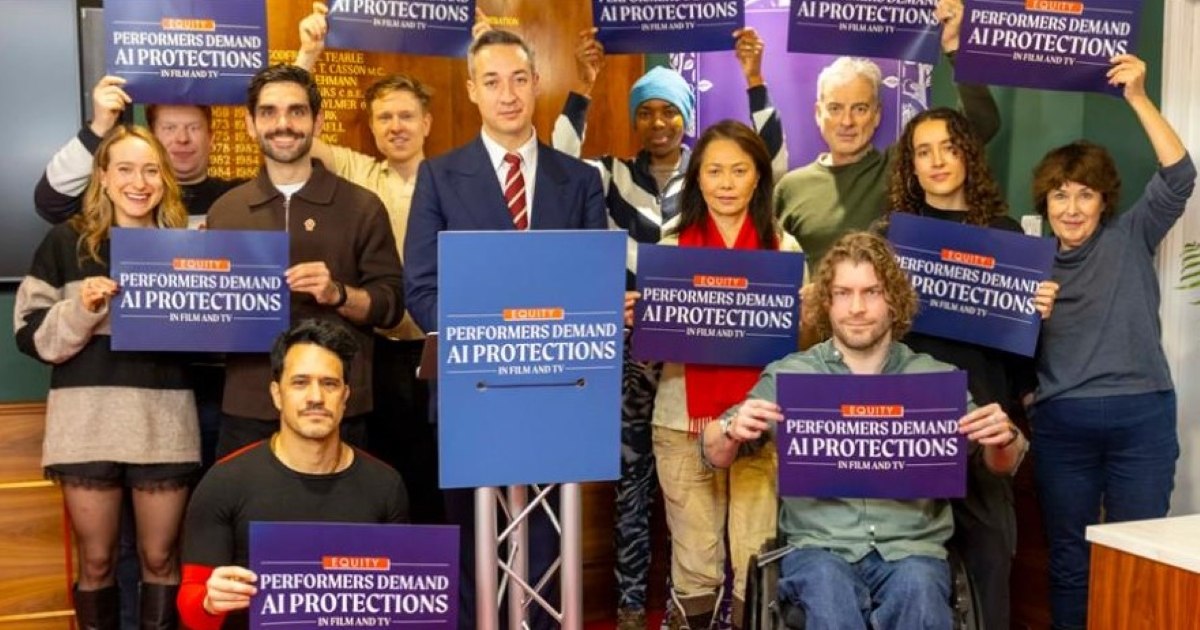
British actors are opposing the use of digital body scans on film sets without clear AI safeguards, warning that a lack of protection could lead to a general strike that would shut down the UK’s film and television industry.
British film and television actors, along with other artists in the creative industries, have overwhelmingly expressed their opposition to the use of digital body scans in audiovisual productions, in the absence of additional safeguards against artificial intelligence.
The announcement was made on Thursday, December 18 by the Equity union, following an advisory vote highlighting artists’ growing fears about control over their own image and voice.
According to Equity, its members are increasingly concerned about how their voice and image are being used, including through digital scans taken on film sets, without sufficient guarantees of consent, transparency and fair pay.
Thus, the artists’ union works to protect its members based on clear principles, which include explicit consent, transparent contractual terms and fair remuneration for any form of further use of the digital material.
Why digital body scans are a threat
Digital body scans are increasingly being used in film and television productions, particularly for crowd scenes, stunts, character rejuvenation or virtual performances, with the technology allowing the creation of highly realistic “digital doubles” achieved by capturing detailed facial and body features of the actors.
In Equity’s advisory vote, 99% of participants were in favor of unionisation, with around 75% of the more than 7,700 actors, stuntmen and dancers represented by agreements with PACT, the organization that negotiates on behalf of most UK production companies, taking part in the consultation.
Although the vote is not legally binding, the union has warned it could call a vote to trigger a general strike if negotiations, due to resume in January, fail to reach a satisfactory outcome. Such a strike could affect up to 99% of UK film and television production.
On the other hand, PACT said it has proposed terms on the use of artificial intelligence that are aligned with agreements in other countries and stressed that it will continue dialogue with unions as the technology evolves.
However, the actors’ vote highlights growing fears that artificial intelligence could be used to create digital doubles of artists without their consent or additional financial compensation.
The situation in the United Kingdom is reminiscent of a similar conflict in the United States, where the SAG-AFTRA union launched a four-month strike in 2023 over claims related to AI, which is said to have cost the California economy more than $6 billion and forced studios to accept clear limits on the use of artificial intelligence.
“We need adequate safeguards against AI that build on, and not simply replicate, the agreements reached after the SAG-AFTRA strike in the US more than two years ago.” said Paul Fleming, general secretary of Equity, noting that the union is also calling for protection against the use of explicit content, contractual transparency and fair remuneration.
