
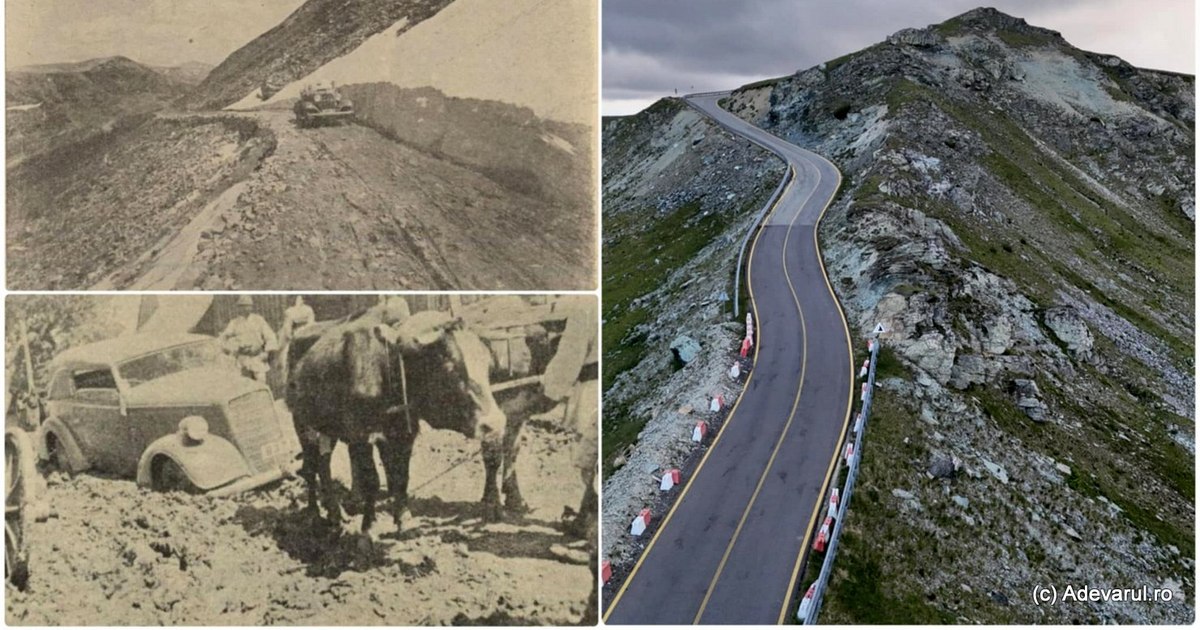
Transalpina, the road that cuts the ridges of the Parang Mountains at over 2,000 meters altitude, has turned 90. Her route has been a real challenge for lovers of strong sensations, often surrounded by satisfaction.
Transalpina in 1936 and 2025. Photo: Weather / Daniel Guță, Adevărul
The road of almost 150 kilometers crossing the Carpathians, through the Parang Mountains, was inaugurated in the summer of 1935 by King Carol Second, being called “the King Road”.
The only road reaching 2,145 meters
Decades in a row was considered one of the most risky roads in Romania. The dangers on the road reaching the altitude of 2,145 meters in the Urdele Pass were diminished with the modernization works of the 2000s, but the route in the Alpine area (Obârșia Lotrului – Rânca) remains open only during the summer and still needs modernization works.
The national road 67C, also known as Transalpina, links Novaci (Gorj county) and Sebeș (Alba county). The most attractive area it crosses starts from the Lotrului Valley, climbing into the coil to the Rânca mountain resort.
After leaving behind the coniferous forests, the route crosses the alpine meadows from which the large panorama of the Parang, Lotrului, Cindrel and Șureanu mountains are opened, with over 2,000 meters, with numerous relief shapes modeled.
The glacial lakes of the Parang remain hidden from the gaze; In contrast, the sheep, archaic sheep, founded in distant meadows, surrounded by forests, and the most modern, close to the road and transformed into stop places, welcomes their guests into a picturesque atmosphere.
No bears but with flocks of sheep
On Transalpina, bears are rarely encountered, but the landscape of the area is wild, slightly affected by the interventions of people, except for the Rânca mountain resort, also established in the 1930s, along with the road.
Until the beginning of the 20th century, the mountain road through the Urdele Pass, extremely difficult and dangerous, was used only by the shepherds in transhumance and sometimes by the military troops trained on the mountain. It was practically a wider path, but inaccessible and risky for those who did not know the area.
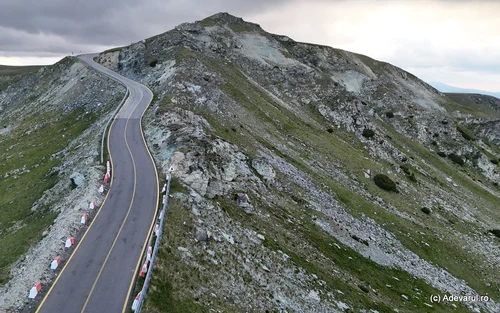
Image 1/15:
Transalpina, June 2025 Photo Daniel Guță Adevărul (71) JPG
In the summer of 1935, King Carol Second and his son, Mihai I of Romania, were among the important guests who inaugurated Transalpina, traveling by car from Saliște (near Sebeș) to Novaci (Gorj).
“This road, which is of great economic and military importance, binds the north of Oltenia with the south of Transylvania and the Mureș Valley, crossing the Sebeș and Lotr Mountains, ascending to the height of 2,200 meters. It has a length of 130 kilometers and cost only three million lei, as it was built,” the publication “the world of the villages” in 1935 showed.
The road on which the drivers of the 1930s ventured
After the inauguration, the road had become an attraction for the adventurers, but the locals warned the few travelers who were traveling on it to return from the road, due to steep slopes, difficult curves bordered by the gaps and the sharp stones in the road. The villagers also sometimes removed the drivers who were stuck in the mud or in the mountain.
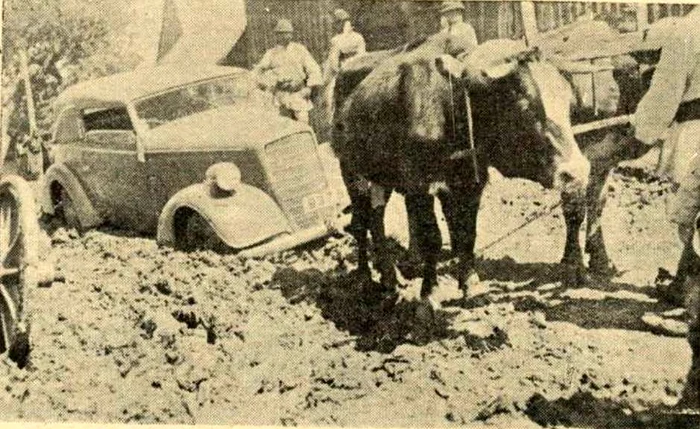
Car stuck on Transalpina. Source; The newspaper Weather, 1936
“” As I get out of Jina, the road becomes really dangerous. The gaze is lost in deep valleys and grows endlessly by the mountains you have to pass. Repentine and often stop your breath and make you pay your attention to the road that has narrowed. It is struggling to give you apparent safety. inform the publicist C. Donescu in “Weather” (1936).
The dangers of the king’s road
Once he left the villages, entering the wild, the road remained only a road that, in the mountains, full of boulders, added the traveler. From Obârșia Lotrului, the road began to climb a difficult to climb, to the goals of the mountains.
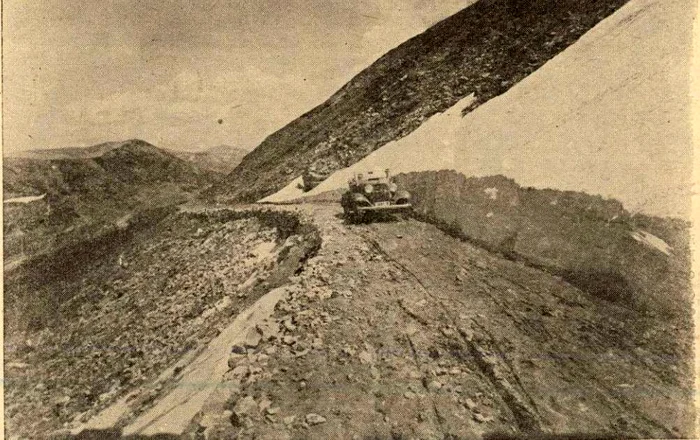
Transalpine. Source; The newspaper Weather, 1936
“” The vegetation is suddenly and, as it remains, it is pepper. The road is always drawn up, like a belt that curls the tips that have become increasing, the closer you get. The valleys do not find the end, deepening wherever you throw your eye. recalled the traveler.
At over 2,000 meters, below the Păpușa peak, the car was struggling hard with the narrowness of the road. No parapet separated her from the danger that was always held by her, and the changing weather emphasized the feeling of danger, complete the publicist.
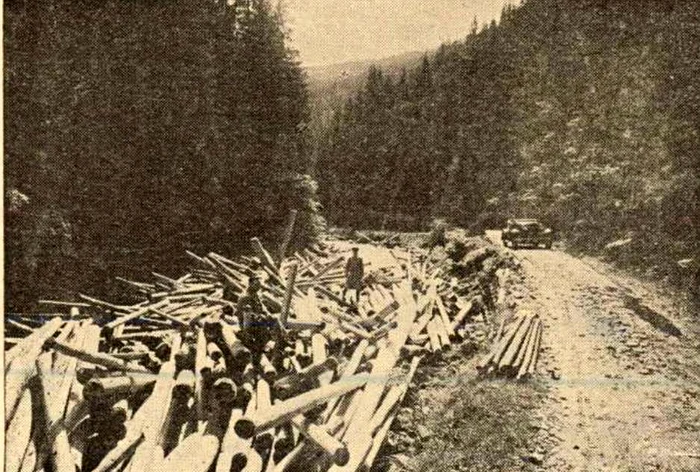
Transalpine. Source; The newspaper Weather, 1936
“He is endlessly, and at every step he gets crashed by the edge of a bottomless emptiness. The last tip is gentle and friendly, but a thick cloud wraps it completely. Sitting the road, the cloud would make you lose the road line. The tip of the mountain could not be dark. admiration.“, The publicist recalled.
Parângul, admired from Transalpina
In the following decades, Transalpina continued to be used most often by the shepherds in the Sibiu and Oltenia region, by the hunters and tourists who were in love with the Rânca resort and at the Parang’s ridges and lakes.
“It should be emphasized that this great road is our work, of the Romanians. After we passed the hardest part, at 2,200 meters, we leave the road, we climb a peak and, with all the release of nature – a torrential rain – we do not stop, but we go to reach our target. of crystalline that you have the impression that you see its bottom, deeply about 14 meters ”, informs the publicist Mauriciu Stefan Nicolescu in the magazine “Romania”, from June 1938.
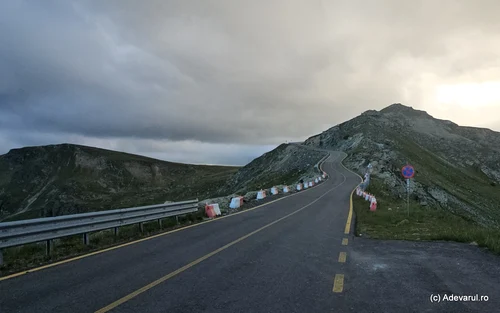
Image 1/15:
Transalpina, June 2025 Photo Daniel Guță Adevărul (33) JPG
Transalpina was completely asphalted only in the late 2000s, but the mountain road modernization works are not completed in some portions. Although it remains open only a few months a year, it is increasingly sought after by travel lovers.
