
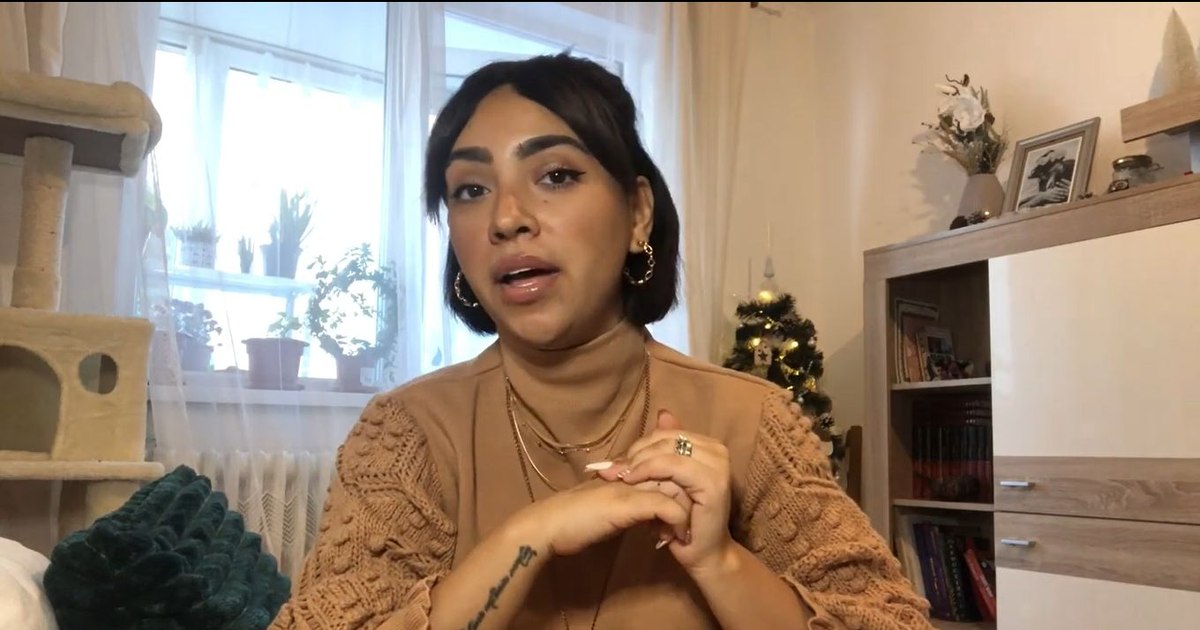
Yelna, a young Iranian who married a Romanian, described her experience in Romania and talked about the similarities between Romanians and Iranians. She explained the culture shock experienced here, but also the reasons for these similarities.
Yelna moved several years ago to Romania, to Timișoara, and the adaptation was not very simple. The young woman who is half Iranian, half Bengali, lived for many years in Malaysia, and in Romania she had a little culture shock. However, he managed to adapt, and at one point he decided to narrate his experiences on You Tube, in short videos in which he punctuates what he experienced here.
In a video, the young woman talked about her first experiences in Romania. In another, she referred to the similarities, surprising to many, that exist between Romanians and Iranians.
“The first impression I made in Romania when I moved here – I didn’t know the language, I didn’t know anything about the people, so I was looking at them carefully and I told my husband Alex that they were some Turks trying to act like Italians. That was simply my first impression. Because Romanians look a lot like people from the Middle East. I’m not talking about being blond or not. For that even in the Middle East we have people with blond hair, but the facial features, the eyes, the nose, the eyebrows, they all looked like those from the Middle East, but the spoken language sounds more like Spanish or Italian“, she told.
In the second clip, Yelna explained why the Romanians and the descendants of the ancient Persians, the Iranians, have a lot in common, without them being aware of it.
“I’m half Iranian and half Bengali. I lived in Malaysia for 11 years, so when I talked about culture shock, my comparisons were mainly between Romania and Malaysia”, she began.
“As I stayed here and got to know Romania better, and thanks to your comments, I realized how many similarities there are between Romania and Iran because of our history. That’s when my “light bulb” turned on and I said: “Oh my God, yes! I really find many things familiar and similar to Iran and my culture from the time I lived there.” The reason I didn’t notice this right away is because I haven’t lived in Iran long enough to fully adapt to the culture and everything about it. I have also traveled a lot since childhood, and for the last 10-11 years of my adult life I have lived in Malaysia. Therefore, it was not logical for me to notice the similarities between Iranian and Romanian culture. But thanks to you and my husband’s love of history, I became curious about our origins and wanted to see how much history we have in common.”said the young woman.
Where we sow
This was followed by a brief introduction to history, which attempted to clear up some of the confusion many Europeans have about Iran and Iranians. “If you’re not interested in history, you can skip to the part about Romania and modern Iran. But if you’re here for history, it’s going to be a long video, so grab some snacks and popcorn and let’s get started. I’ve done my research, but I’m not a historian by profession.”she added.
Most often, people confuse Iran with Arab countries and think that Iranians, who have embraced Islam, are also Arabs. Nothing more fake, Yelna clarifies.
“If sometimes people are confused about Iran, sometimes they confuse it with Arabia, asking, ‘Are you Arab? Are you Persian? Do you speak Farsi?’ These terms are confusing to some. The first thing I want to make clear is that Iranians are not Arabs. We are not Arabs, Arabic is a language. We are very different in ethnicity. This does not mean that there are no Arabs in Iran – I will explain later“, she promised.
Why many refuse to be called Iranian
Currently, many Iranians refuse to call themselves Iranian to avoid being identified with the clerical regime in power in Tehran.
“Sometimes you have heard the terms ‘Persian’ and ‘Iranian’. Today, some Iranians do not want to call themselves Iranian because of the association with the Islamic Republic of Iran and the way the country is perceived in the world. So we say we are Persian, referring to the Persian Empire that existed a long time ago. Our ethnic origin is from the Persians, so we identify ourselves as Persian. Not all Iranians are Persian, only some. Farsi is the name of the language“, explained the young woman.
Furthermore, she spoke about the common Indo-European origin of the two languages, Farsi and Romanian, but also about other similarities.
“Persians are a group of people who traveled from southern Europe and Central Asia and found Iran (the northern and southern parts). These people were called Aryans and spoke an Indo-European language. This explains why many of my subscribers have noticed similarities between Iranians and Romanians: we are both part of the Indo-European family. However, the Indo-European family refers to language, not ethnicity. Some Farsi words are similar to Hindi or Urdu.Farsi also has Turkish influences due to the Ottoman invasions that ruled Iran for 600 years“, said the young woman.
An empire left in history
There was also information about the Persian Empire, one of the longest-lasting and most powerful in history.
“The Aryans split into different tribes. One of these tribes ruled the country for a long time: the Persians. The Persians formed the Persian Empire. The map shows that the Persians were the majority, but all the ethnic groups in Iran are part of the Iranian nationality. My mother is not Persian, but belongs to the Lori ethnic group. Research shows that the Aryans came from Central or Southern Asia and spread widely.” Yelna also stated.
Here her husband, who is Romanian, Alex, intervened in the discussion.
“Historically speaking, Iranians are part of the Aryan family. Modern Romania claims to come from a family of Nordic and Balkan tribes that traveled a lot. Probably the same situation is for the Aryans: they migrated a lot from the area of Iran.”
The Persian Empire reached this far
It was immediately filled in by Yelna, who tried to clarify a controversial point.
“The modern Western understanding of ‘Aryans’ was created late in the 19th-20th century by the Nazis to promote their idea of superiority“, she also told.
“In Romania and Iran there are also similar elements of national propaganda that glorify the past”, Alex intervened again.
Yelna remembered Cyrus the Great and talked about when the Persian Empire came this far.
“Cyrus the Great, the Persian king, after conquering Greece, reached the present territory of Romania. Thus, in addition to the Indo-European family and the Turkish influence, we also have the ancient Greeks who interacted with Persia and the shores of the Black Sea. The ancient Greeks traded with my people and had city-states near the Black Sea. Persia also interacted with Greek culture. Alexander the Great conquered one of the Persian empires and continued to move to the region”, Yelna also said.
