
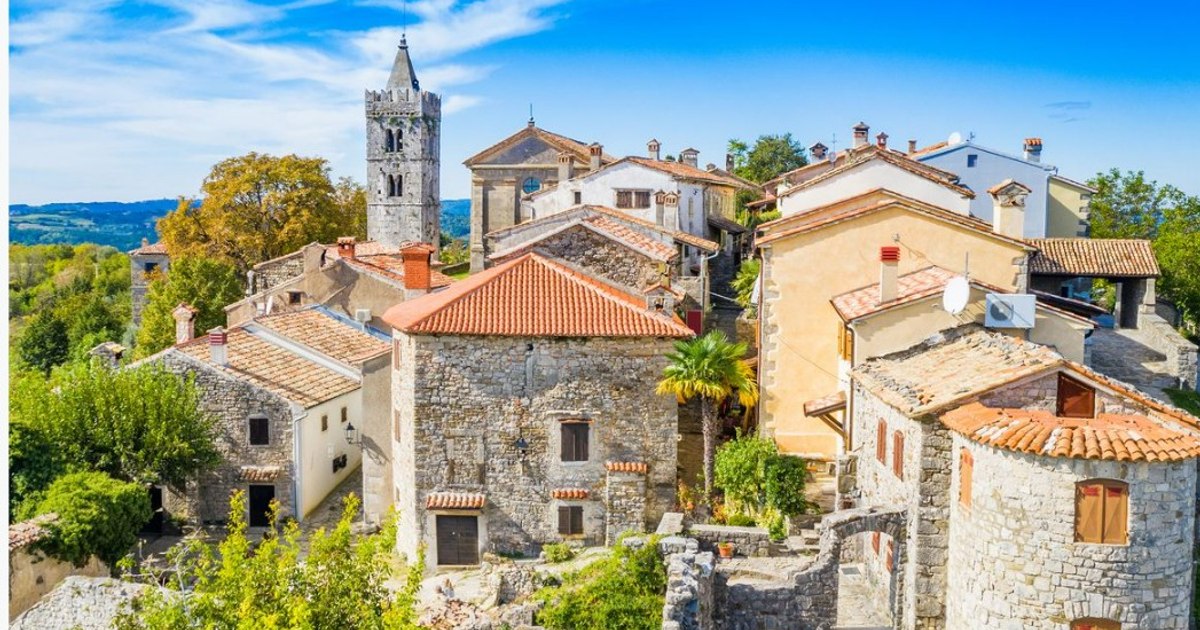
With a population of only 52 inhabitants and an area smaller than a football field, the medieval settlement in the Istrian region attracts thousands of tourists every year, fascinated by its almost a millennium old history, preserved traditions and local gastronomy.
The town of Hum is a 13-hour drive from Romania, in northwest Croatia, and is considered the smallest city in the world. The charming town is completely surrounded by medieval walls. Nothing was built outside of them, which allowed it to keep its original appearance for centuries.
Hum measures about 100 meters long and 30 meters wide, with only two cobbled streets, according to themirror.
According to local legend, Hum was built by friendly giants who used stones left over from the construction of other villages in the area. Beyond the legend, historical documents show that the locality is mentioned for the first time in 1102, under the name of Cholm.
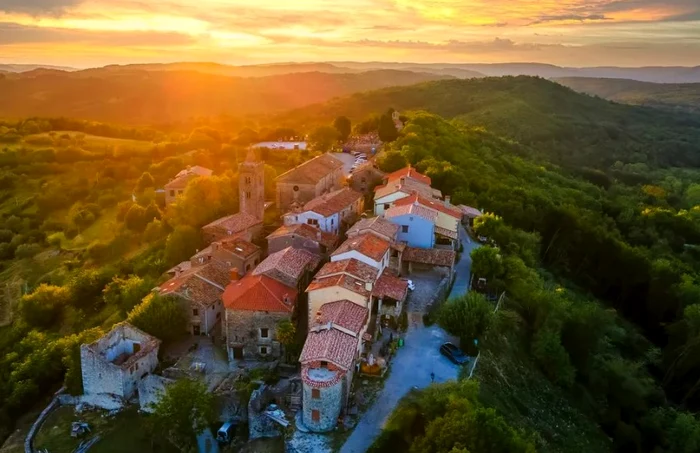
The castle inside the defensive walls was built by Count Ulrich I, and the settlement developed around it. In 1552, a watch tower and a belfry were erected, located near the city loggia, to strengthen the defense system.
Why Hum is considered a city, even though it has only 52 inhabitants
As of the 2021 census, Hum had 52 inhabitants, an increase from the previous census of 2011, when the population was only 30 people.
Although extremely small, Hum is officially considered a town as it has its own local council and a large parish church – the Church of the Assumption, built in 1802 on the site of an older church.
Rare heritage: Glagolitic alphabet and Romanesque frescoes
The city houses a valuable cultural heritage. The church houses Glagolitic exhibits, some of the earliest known examples of the Slavic alphabet and medieval Croatian literary culture.
Visitors can also see ancient writings and Romanesque frescoes in the Chapel of Saint Jerome. Another attraction is the Glagolitic Alley, a route that connects the village of Roč with Hum and is decorated with stone monuments dedicated to the Glagolitic alphabet.
Traditions are still alive in Hum. Every year, on June 11, the City Day takes place, when the mayor is elected. The process is symbolic and unique: the local judges carve their votes in a wooden stick, in the historic building of the municipal loggia.
2,000-year-old brandy
The city is also known for its traditional gastronomy. Local dishes include Istrian vegetable stew made from barley, beans, potatoes and corn, pasta with beef sauce, ombolo (smoked pork loin), local sausages and sauerkraut. The favorite dessert is krostule, a fried dough, and the area is also famous for truffles, especially thanks to the nearby town of Buzet, nicknamed the “City of Truffles”.
A popular local specialty is biska, a type of brandy made from fermented grapes, mistletoe and four herbs. The recipe is about 2,000 years old and was allegedly created by the Celtic Druids. In October, tourists can participate in the Istrian Rakija Festival, where they can taste locally produced drinks. At the same time, the Industrial Hemp Festival takes place in August, which promotes hemp-based products such as oil, flour, tea, seeds and foods.
“You feel like you’ve traveled back in time,” say tourists
Access to Hum is easiest by car, public transport in Istria being limited. Parking costs around 3 euros per day, and the town is also included in some organized tours.
Hum is also a popular stop for tourists hiking or cycling in the region.
“Do you need a reason to visit what is considered the smallest city in the world? We were completely charmed by this place. When you enter the imposing gate, you feel as if you are transported back in time. It doesn’t seem like much has changed here in centuries.” wrote a visitor who left a review on Tripadvisor.
