
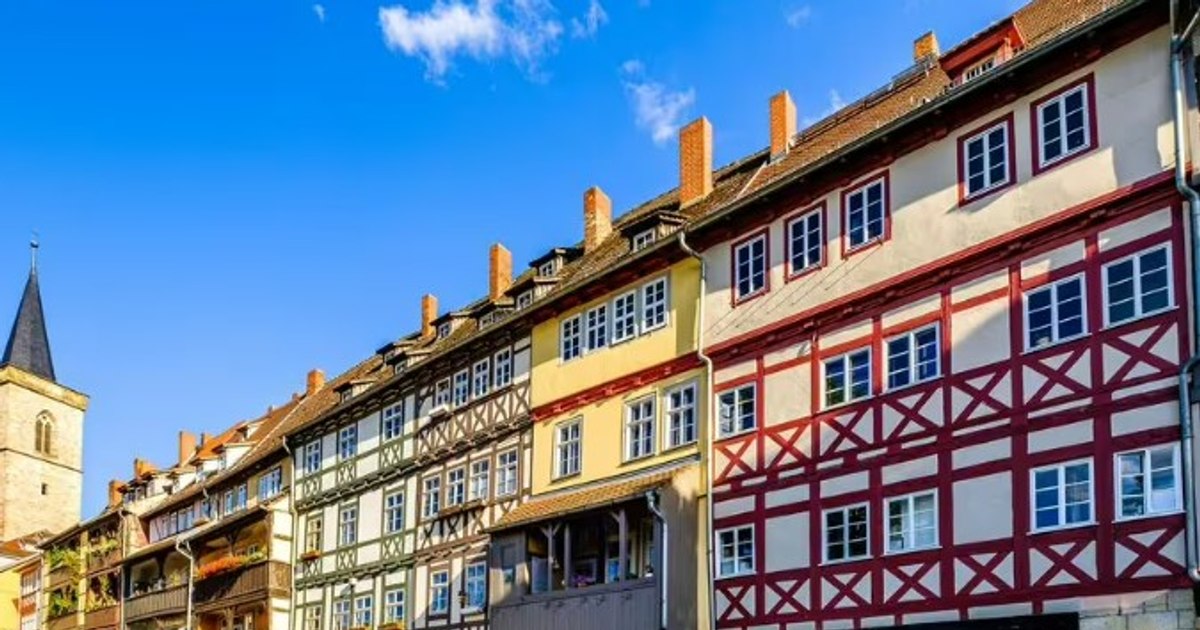
A bridge in Europe built in the Middle Ages continues to be inhabited today: 80 people live and work on Germany’s Krämerbrücke bridge among medieval houses, art galleries and cafes, turning this historic monument into a living community
Located in the German city of Erfurt, the Krämerbrücke – also known as the Merchants’ Bridge – is the longest and oldest inhabited bridge in Europe. With a length of 125 meters, it not only connects two parts of the city, but was and continues to be the home of dozens of residents.
Originally built of wood, the bridge was rebuilt in stone in 1325. Throughout history, it housed up to 62 narrow houses. Over the years, following renovations and repeated fires, their number has dropped to 32, according to Express.
The structure of the bridge impresses with its six tiled arches and cellars hidden under the foundation, the architectural mix including Gothic, Renaissance and Baroque influences.
In the Middle Ages, the bridge was an important trading center where merchants sold fine fabrics, spices and jewelry in small wooden houses.
At the ends of the bridge were two churches, St. Giles to the east and St. Benedict to the west, but only St. Giles has survived to this day, offering a spectacular view of the bridge from its 33-metre tower.
Over the centuries, the bridge has been damaged by fires and wars, requiring numerous restorations.
Today, the bridge houses not only residents’ homes, but also galleries, cafes and boutiques promoting traditional crafts, ceramics, glass, and local delicacies, thus becoming a special cultural attraction for tourists.
