
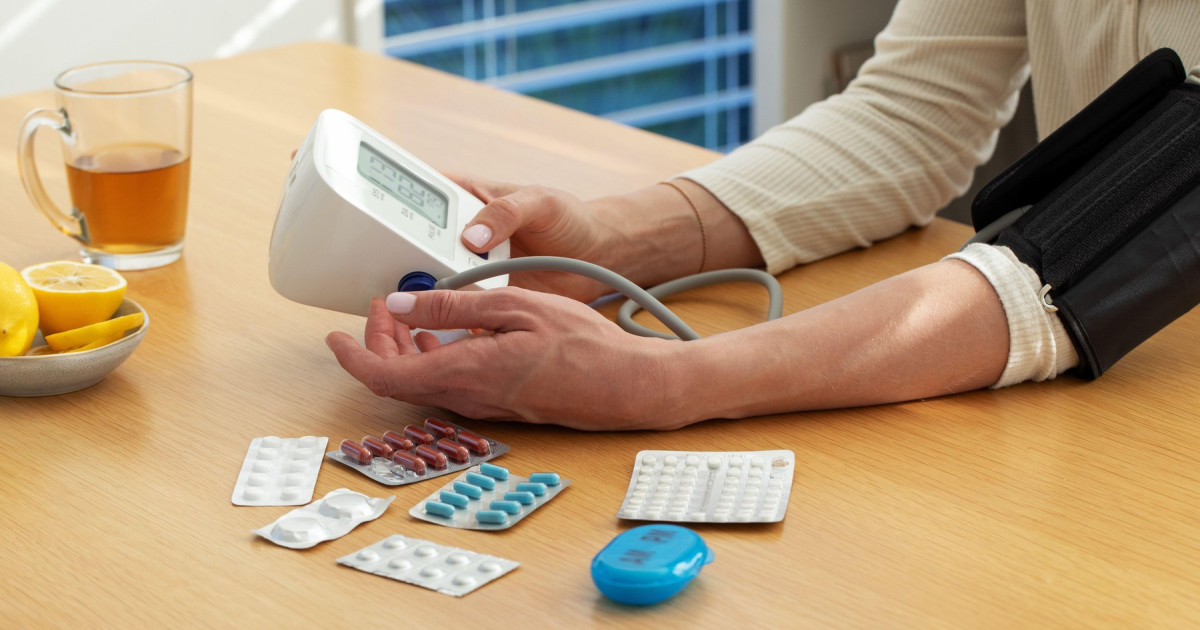
People who do not take their high blood pressure medication regularly risk losing much of the protection provided by the treatment against heart attack and stroke (stroke). This is the conclusion of an analysis that included more than 91,000 people and whose results were presented at the European Society of Cardiology (ESC) Congress in 2026.
High blood pressure affects approximately 1.4 billion adults between the ages of 30 and 79 worldwide, and is one of the main risk factors for cardiovascular disease, writes Science Daily.
Although antihypertensive drugs have been shown to be effective in reducing the risk of complications, approximately half of patients do not fully comply with the prescribed treatment.
A new analysis carried out by researchers at the University of Oxford, in the UK, shows how irregularly taking medicines can influence the effectiveness of treatment.
What the researchers discovered after analyzing more than 91,000 patients
The specialists analyzed individual data from 91,339 participants, included in nine clinical trials.
In these, the effectiveness of blood pressure-lowering treatments was compared with that of a placebo or less intensive regimens.
Participants were divided into two categories based on treatment compliance.
The first category included people who administered at least 80% of the prescribed medication, and the second category, patients who took less than 80% of the allocated doses.
The results showed that adherence to treatment gradually declined over time, even under the monitored conditions of clinical trials.
In the first year, 88% of participants were at least 80% compliant. After five years, the percentage dropped to 79%.
The risk of heart attack and stroke. Important differences between patients
The researchers observed that people who adhered better to treatment achieved greater reductions in blood pressure.
In their case, the difference in systolic blood pressure between the group receiving the investigational treatment and the comparison group was 5.2 mmHg.
In contrast, for patients who took their medication less regularly, the difference was only 3 mmHg.
The scientists then looked at whether these differences were also reflected in the risk of major cardiovascular events, such as myocardial infarction, stroke, ischemic heart disease and heart failure resulting in hospitalization or death.
The results showed that among people who adhered to the treatment, the administration of antihypertensive therapy was associated with an 11% relative reduction in the incidence of major cardiovascular events compared with the control treatment.
In contrast, no statistically significant reduction in these events was identified in the less adherent group.
In other words, irregular medication administration can greatly diminish the cardiovascular benefits of the treatment.
Why it’s important not to stop your blood pressure treatment
Qianqian Yang, a researcher at Oxford University and presenter of the results at the ESC 2026 Congress, explained that the data confirm the importance of consistent medication administration.
According to her, patients who did not sufficiently adhere to treatment achieved little or no statistically detectable cardiovascular benefit, while people who took their medication regularly experienced greater reductions in blood pressure and better protection against cardiovascular events.
The researcher emphasized that the results confirm a simple principle: drugs cannot produce their expected effects if patients do not take them as directed.
However, the study does not establish that accidentally missing a single dose negates the benefits of the treatment. The analysis looked at long-term medication adherence.
What solutions do doctors propose for patients who forget to take their pills
The authors of the review believe that doctors should pay more attention to the difficulties encountered by patients in complying with antihypertensive treatment.
Proposed solutions include simplifying regimens, combining multiple drugs in a single tablet, and using long-acting treatments that could reduce the consequences of the occasional missed dose.
Specialists also recommend periodic evaluation of how patients take their medications.
Professor Felix Mahfoud, chairman of the Communication Committee of the European Society of Cardiology, pointed out that non-compliance with treatment has long been insufficiently considered as a cause of uncontrolled hypertension.
He believes that monitoring medication adherence should become a routine component of hypertensive patient care.
The doctor also emphasized the importance of open, non-judgmental discussions between patients and medical staff to identify problems that prevent them from following treatment.
The researchers’ conclusion is that regular administration of antihypertensive drugs is an essential factor in reducing the risk of heart attack, stroke and other serious cardiovascular complications.
Patients should not stop or change their treatment without a doctor’s recommendation, and in case of a missed dose they should follow the instructions specific to the prescribed medicine.