
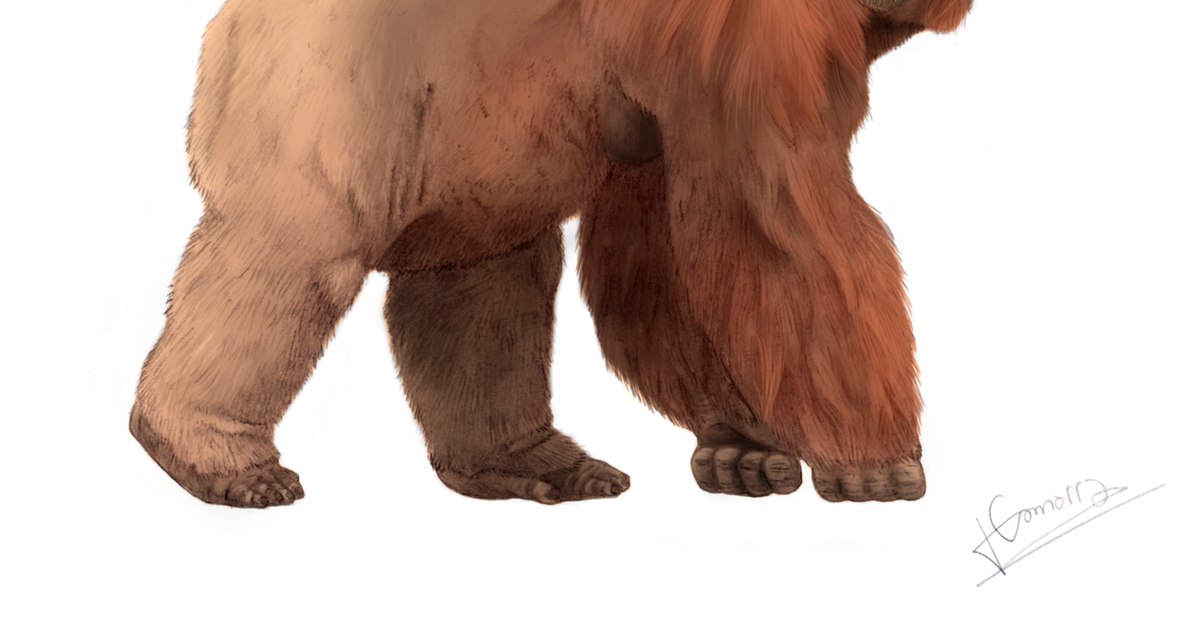
“Gigantopithecus blacki”, a direct cousin of the orangutan, became extinct around 250,000 years ago, a victim of climate change. This animal was three meters tall, and 250 kg.
No other primate has ever reached such dimensions, writes Le Monde.
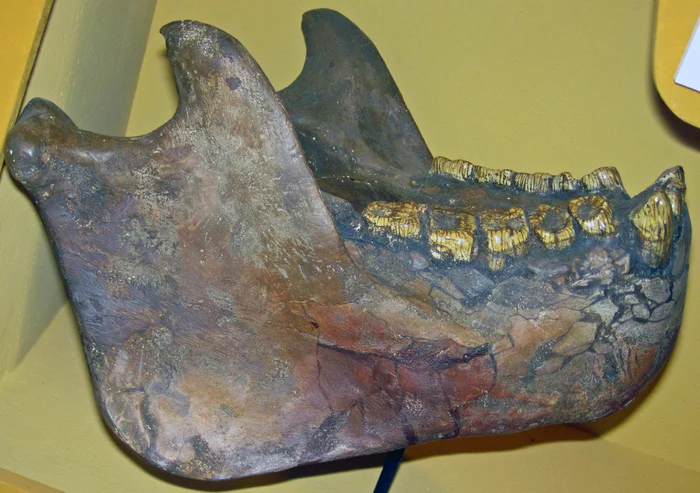
In 1935, the German researcher Gustav von Koenigswald named it Gigantopithecus blacki. The mystery of the disappearance of this species is given, first of all, by the extreme rarity of fossils discovered from the first tooth found by a Chinese pharmacist at the beginning of the 20th century.
In total, about 100 teeth and four partial mandibles were discovered, but no skull and no body. Yingqi Zhang, of the Beijing Institute of Paleontology, has searched hundreds of caves in southern China for the past 10 years to no avail.
Also in 2020 the gene tree issue was clarified: Giganto is a direct cousin of Pongo, commonly known as orangutan.
Our common ancestor dates back 15 million years.
A third mystery that followed the animal was revealed by Yingqi Zhang and colleagues from five Australian institutions in 2024 in the journal Nature.
“Why did it go extinct when all the other great apes survived?asked Kira Westaway, a sediment dating specialist at Macquarie University in Sydney.
To answer, the research team applied no fewer than five different dating techniques to both the teeth found in the caves and the surrounding sediments. 22 caves were investigated.
The result is a rough chronology, from the appearance of gigantopithecus about 2.2 million years ago, to its extinction about 250,000 years ago. A theory that humans were responsible for the extinction of the giant was disproved: at that time, no Homo had yet appeared in Asia.
Gigantopithecus blacki, a direct cousin of the orangutan, has become extinct due to climate change. About 700,000 years ago, South Asia changed from a constantly humid climate to a seasonal one with dry and monsoonal periods.
Unable to climb trees, gigantopithecus fed on bark and branches, and its population gradually declined to extinction. The lesson: even the strongest can be vulnerable, and understanding species’ survival factors can help protect today’s great apes.
