
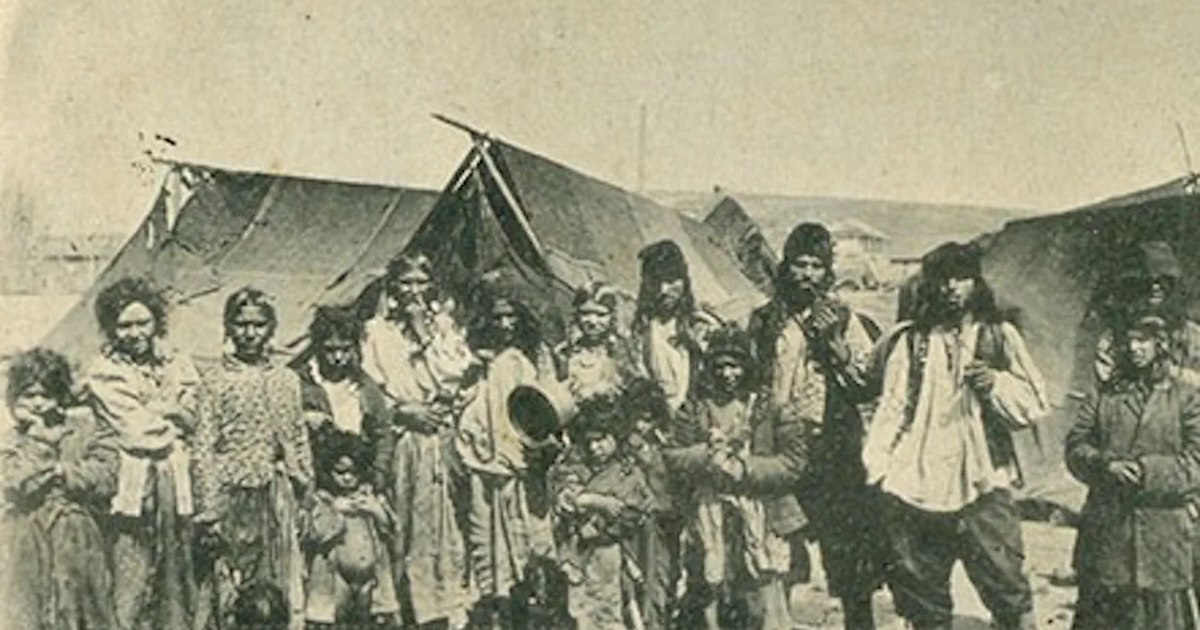
For 500 years, the Roma were slaves on today’s territory. And it’s not the only horror they went through. However, their history is too little mentioned in textbooks. To compensate, an association that promotes inclusion comes with a game through which students can learn more about Roma and the events that have marked them.
19th century postcard MNAIR Source
For today’s children, life is not more different from that of 500 years ago. Few of them know what it was like to be born.
“The Roma were also changed on goods. We have transactions in which Roma girls were sold, 10-11 years old, on horses or cows. So there are documents that show us how much a slave was worth. A woman was generally bought with 7 yellow, and a man between 10 and 12 yellow, depending on the job.says historian Valentin Negoi.
500 years of slavery and a disorder that has rewarded masters
The life of a rom slave was by no means easy. Historians say that they were used in whatever the master or boyfriend wanted, from work to stump to agrarian. Argaţi, animal breeders, chefs, women in the house, the Roma were good at all. And in some cases it was reached even further. “In the Romanian space there was this tradition, the right of the first night. The boyars took advantage of the Roma girls or the Roma women at will”says Valentin Negoi.
And the documents of the time show other condemnable practices.
“A foreign traveler from the first half of the 19th century tells us that certain slave owners were cutting the hands of Roma slaves and they were asking them. There are not many cases, but there are also slave owners who did this.”shows Valentin Negoi.
After finishing their duties towards the master, the Roma could work additionally for the peasants, for a fee. That’s how some of them managed to raise money and goods. However, they did not have full rights.
“If the owner was selling him, the goods that the ROM slave gathered remained the owner. After he was decommissioning, in 1856, those who were rewarded were the slaves.emphasizes the historian.
The history of Roma, treated superficially in textbooks
Although the Roma represent the second largest minority ethnic group in Romania, their history is superficially treated in textbooks, say associations that promote their rights.
“The disobedience is presented as a Romanian heroic element of Romania, but there have been no Roma slaves for a long time. Now it is mentioned, but not so hard, because history teachers are still in the nationalist pattern and they are ashamed to say that Romania has once held slaves.”says the sociologist and Romanian activity Ciprian Necula.
In fact, a 2018 research shows that 42.7% of the teachers who responded to a questionnaire said they would not want Roma neighbors. Students would have a lot to learn from the history of this ethnic minority and could develop their critical thinking, believes Ciprian Necula:
“All nationalist myths must be put under doubt. We must think when someone is in an economically precarious situation why he has come to that situation. Regarding Roma, they want to be in poverty or is it an effect of public policies for centuries?”
The first game of society about the history of Roma
In order to compensate for the goals in the textbooks, the association other words (CUAC) has launched a society game about the history of the Roma. The “ring of time” is called and teaches children about the most important events and personalities in the history of Roma.
“The game has the following component: a playing board, with 12 territories, pawns, has 120 playing cards that have historical information and have some indications, because the game is collaborated. If in other games there is this competition between players to get a score, in this game the maximum four players cooperate to get a high score. Purluca“, Details Minodora Cerrest, project coordinator.
“What I think we manage to show through the game is that their status of slaves did not just summarize it. The Roma had an important contribution to the economy of this Carpatho-Danubian-Pontic space, but also in the culture. We promoted promoting promoting Roma ethnicity, who have contributed a lot to the Romanian culture. of Romania.states the historian Valentin Negoi, responsible for the content of the game.
The “ring ring” will be distributed free of charge in several schools and libraries, through 800 teachers from the Roma Education Fund network. At the same time, the game is available online and can be downloaded for free from the association’s website in other words.
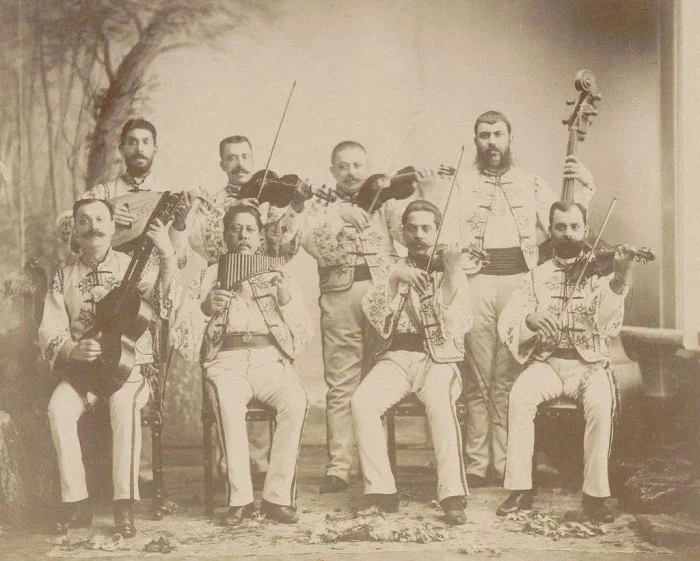
Roma musicians at the Universal Exhibition in Paris, 1889
