
A call or email that seems to come “From the bank” It can be a sophisticated trap: behind the displayed number or email address are hidden techniques that steal passwords, personal data and money. Here’s how you recognize the signs and how you protect yourself, including in Romania.
Spoofing the perfect scam to steal your data or access your Bank Account Photo DMS
Receiving a call or message from an official number is no longer, unfortunately, a guarantee that you will not be the victim of a fraud. The rapid digitalization of the Romanian society – whether we are talking about the relationship with banks, public institutions or online services – has created fertile land for more and more cheating attempts.
A type of attack is particularly dangerous because it often goes unnoticed: spoofing. Under the mask of a seemingly legitimate email or an email address, the attackers, whom Romanians call hackers improperly, manage to win the confidence of people and get access to sensitive data, bank accounts or even whole networks of organizations.
But what hides this method and why it has become called The “perfect scam”? From its obscure origins, from the first technical experiments of the 1980s, to the Sophisticated current forms-falsified emails, websites copied to a millimeter or telephone calls impossible from the real ones-spoofing has evolved into a global fraud mechanism. In the following lines, you will discover how it works, why it is so dangerous, what motivations push the attackers to use it and, especially, what you can do to protect yourself.
What is spoofing and why it is so dangerous in Romania
Spoofing is a technique by which cyber criminals falsify the identity of a call or message, so that it seems that it comes from a legitimate source-a bank, an official institution or even a known phone number. The purpose is theft of data, installing malicious programs or committing financial fraud.
How hackers exploit users’ trust by email and fake calls
The main “weapon” of spoofing is the user’s confidence. The technique exploits how the internet identity is managed, where many systems are based on data such as email addresses or phone numbers, without rigorously check their authenticity, the publication mentions He Espanol.
Thus, an attacker can easily create a legitimate appearance, difficult to question by an unprepared victim.
Origin of spoofing: How did it appear and how cyber fraud has evolved
The term “Spoof” comes from English and means of parody, fake or deceive. The first Internet protocols, such as TCP/IPwere created in an environment based on trust, where security was not the main concern. It was assumed that all network participants were good faith. Today, things are quite different.
The first documents documented by IP spoofing appeared in the 1980s and showed how simple it was for a system to be given as another.
How did the spoofing in the technical trick become an online fraud method
With the popularization of email and web, spoofing has evolved. From a technique used by network specialists, it has become a common method for massive fraud.
Today, even if there are systems meant to reduce these attacks, it is still possible to falsify an email so that it seems that it comes from a legitimate address or to make a phone call in which a confidence number-bank, institution or even from someone known.
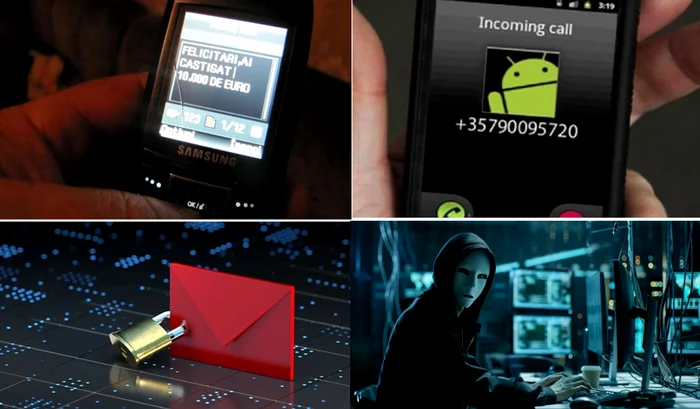
Spoofing the perfect scam to steal your data or access your Bank Account collage DMS
Types of spoofing in Romania: email, calls and false sites
There are several spoofing variants, each oriented towards a certain communication channel.
Email spoofing
It is one of the most widespread forms. The attacker falsifies the header of an email to make it seem that the message was sent by a legitimate source, such as a bank (BNR, Banca Transilvania, BRD, Revolut Romania), from ANAF, the Romanian Post or another official institution, or a well -known company or even a service colleague. The purpose is to deceive the victim to open dangerous links or attachments.
IP spoofing
Works at the network level. The attacker changes the data packs to hide his real IP address and replaces it with a reliable one. Thus, it can launch cyber attacks without being easily detected.
Website spoofing: Supplanting websites
Offenders create almost identical children of bank or commercial sites, including online stores and social networks. The design, logo and even URL look very good with the original ones, having only one changed letter or additional character. Users are deceived to enter their authentication data on these false pages, providing them directly to the attackers.
Caller Id Spoofing: False calls
Applies to phone calls. The attacker changes the number displayed on the screen of the call. It may seem to sound a bank, a public institution, a courier company or a technical service. During a call, through social engineering techniques, criminals try to obtain personal or financial information.
Other forms of spoofing
Arp spoofing – It appears in local networks and allows the interception of traffic between devices.
GPS spoofing -emits false signals to deceive GPS receptors, causing them to believe that they are in a location other than the real one (false routes for navigation applications).
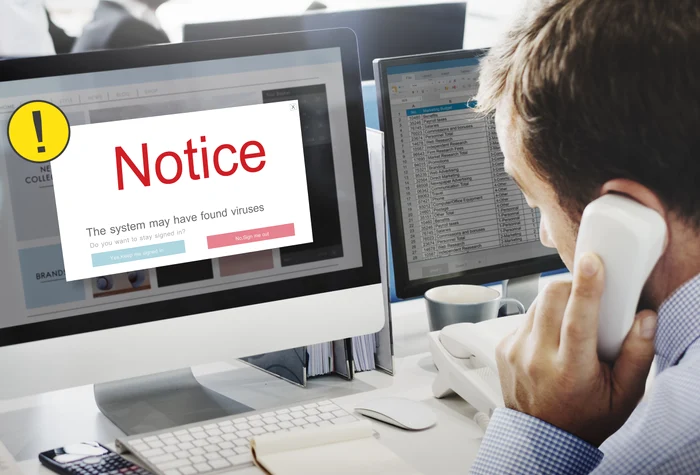
Attention to details, calls, emails and websites suspicious photo shutterstock
Reasons behind spoofing and online fraud
Why do the criminals resort to spoofing and other types of online fraud? The motivations are diverse and depend on both the context and the attackers’ goals. From the desire to win quickly to the corporate espionage or even attacks meant to create chaos, each action has a well -defined purpose. Let’s see what the main reasons are.
1. Financial gain
The main motivation of spoofing is the economic benefit. The attackers are aiming to steal bank credentials, credit card numbers or access to online payment accounts. The ultimate goal is either the direct steel of money from the victims’ accounts, or the sale of stolen data on the Dark Web, where this information has a high value.
2. Corporate and industrial espionage
Another important motivation is economic espionage. By spoofing, an attacker can infiltrate into the network of a competing company to steal commercial secrets, intellectual property or strategic plans. These attacks can cause huge economic damage and seriously affect the reputation of the targeted organization.
3. Disruption and cyber attacks
There are also attacks that do not follow money, but only to cause dysfunctions. An example is IP spoofing, commonly used in DDOS attacks. The attackers hide their identity and launch a huge wave of false traffic on a target. The result: the attacked service overloads and becomes inaccessible to the real users.
4. The distribution of malware
Spoofing is also an effective method of spreading malicious programs. A forged email, which seems sent by a known contact, has much higher chances of being open.
A single click on an attached file or a link in this message can install ransomware, spyware or other types of malware (viruses), compromising the victim’s security and confidentiality.
How to protect yourself from spoofing and false calls in Romania
Prevention of spoofing requires a combination of technology and vigilance from users.
1. Email protection
To combat email spoofing, there are authentication protocols such as SPF, DKIM and DMARC, which helps email servers to check if the message comes from the field it claims to represent.
2. Attention to fake websites
In the case of website spoofing, vigilance is essential. Always check the URL in the browser address bar. It is not enough to look for the lock symbol or the HTTPS connection, as false sites can have these items.
Ideal is to directly type the site address or use saved bookmarks, instead of accessing links by email or messages.
3. Authentication in two steps (MFA)
One of the most effective methods of protection is Multifactor (MFA) authentication. Even if an attacker manages to steal a password through spoofing, he will also need a second authentication factor such as:
- a code generated on the phone,
- a security app,
- or a physical security key.
Thus, your accounts benefit from an additional and essential layer of protection.
4. Suspicious phone calls
In the case of Caller ID spoofing, the golden rule is simple: if a call seems to come from an official source, but the information or requirements raise suspicions, close the immediate call. Call you back using the official number displayed on the institution’s website or the documents you have.
Practical tips for users: Protection against online fraud and spoofing in Romania
Security technologies are important, but the user’s vigilance remains the best defense against spoofing. In order not to fall into hackers traps, here are some practical tips you can apply immediately in everyday life:
- Don’t just rely on the sender’s number or address. They can be falsified easily.
- Check any suspicious request. Use another safe channel for confirmation (official phone, official banking app). If you receive an unexpected communication that requires you personal data or urgent action, stop and check.
- Attention to details. False emails and sites often betray mistakes: grammatical errors, writing mistakes, low quality design. Although the email addresses can be very similar to the real ones, they have small variations: a missing or added letter, for example.
- Always update your systems: the operating system, browser and security solutions.
Conclusion: How to protect yourself from spoofing, calls and fake emails in Romania
Spoofing is a sophisticated method by which attackers / hackers use false calls and emails to steal personal data and money. Even the sites with the “lock” symbol can be fooled, so you don’t rely on HTTPS. In Romania, the vigilance and careful verification of sources are essential to protect you against bank fraud, email phishing and false calls.
If you receive a suspicious message or call, never give personal or banking information and report the incident to:
- The Romanian Police – the Cybercrime Section,
- Cert-r,
- National Authority for Consumer Protection (ANPC).
By applying these measures and using two steps (MFA), you can significantly reduce the risk of becoming a victim of spoofing or other cyber attacks in Romania.
