
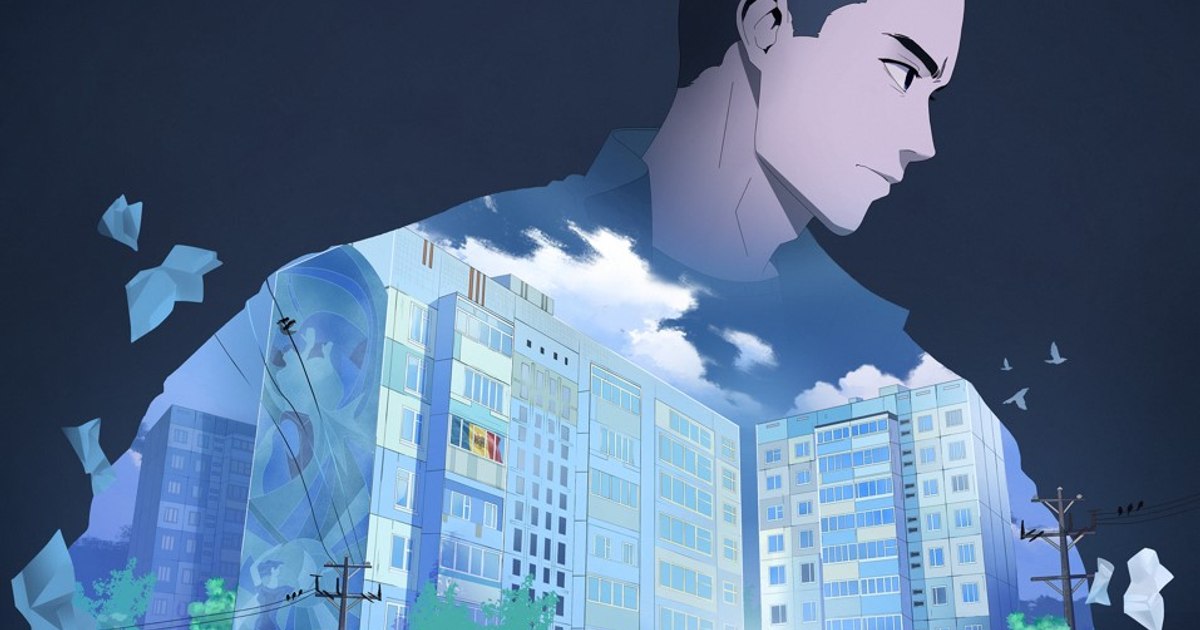
Satoshi is a fresh voice in the landscape of urban music, an artist from the Republic of Moldova, ready to conquer the Romanian scene. The artist became known in our country with the collaboration with Carla's Dreams. He told, in an exclusive interview with Adevărul, how he ended up singing with his idol, signing with one of the biggest record companies, about the musical relationship between Romania and the Republic of Moldova, but also about his personal life.
Satoshi PHOTO Global Records
Born in 1998 in Cahul, Moldova, Satoshi is known for his innovative style with roots in tech trap music and chopper rap.
His real name is Vlad Sabajuc. He is 25 years old and grew up in Cahul, where he graduated from primary school and high school. Later, he moved to Chisinau, to continue his studies at the Academy of Music, Theater and Fine Arts, majoring in Actor's Art.
Along with his strong attitude and a voice to match, Satoshi started working on his first album in 2020 and in 2022 he successfully released his first studio album titled 'RUSH'.
Released and well-received singles include “Mama Told Me” and “Foaie Verde”, “My Headphones”, which was previewed at the Urbanist Sessions. His collaboration with Carla's Dreams for “Night at 3” had a huge impact and brought him a fan base in Romania. Successful singles such as “Dansăm”, “Unde Verile” and “Ochii” followed.
This year, Satoshi released his second album, +373, an album that marks the artist's origins both through sound and storytelling, which he celebrates with a concert on May 23rd at Quantic. Alongside him, EMAA, Adi Istrate, Dara and Tensso will take the stage.
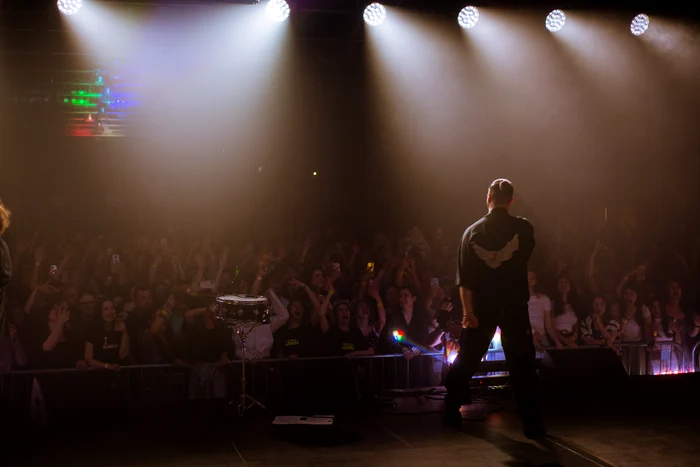
Satoshi – EXCLUSIVE INTERVIEW
The Truth: Hello! First of all, tell us something about yourself. Where are you from, how old are you and how did your passion for music begin.
Satoshi: I graduated from the Academy of Music, Theater and Fine Arts, in the Acting department. In the meantime I have done many other things. I worked in radio and theatre, did voice-overs and wrote music.
I started making music since the 7th grade. I was part of two rock bands, where I was the drummer and lyricist. The first was a band of teenagers who get together and play at home. We were giving small local concerts in Cahul. I also went outside the city, I was in Iași, for example. The second band was in Chisinau, until I started the solo project.
The truth: How did you end up in Romania?
Satoshi: Satoshi's first contact with Romania took place two years ago, when I went on a first small tour through university towns, where I called larger communities of Bessarabians, who had made contact with my music. Then I sang, for the first time, in Bucharest, Cluj, Timișoara, Suceava. In the meantime, I continued to release music, and at the next tour more people came, the proportion between Moldovans and Romanians was already changing. Then I had an invitation to an event that opened access to a wider audience and immediately, after a month, the collaboration with Carla's Dreams appeared, which was also promoted on the radio. The entry into Romania was graduated: from small steps, very small communities, to a large audience.
The Truth: What can you tell us about the collaboration with Carla's Dreams? How did you meet and end up having a piece together?
Satoshi: I met Carla's Dreams at Summer Fest, a big festival in the Republic of Moldova, in 2019. I was working as a mime at the event, I was a second year student and I needed money to buy a new phone and I had a badge by artist. Respectively, I had backstage access.
I have always been an admirer of Carla's Dreams, I felt a great connection on an ideological level and found the opportunity to meet. I felt obliged to thank him, but also some personal and professional questions. I stalked him, I snuck around, and he was happy to hear that I was making music.
Our contact continued by e-mail, I sent him the e-mail on a piece of paper, through a technician. Then, we had tangents during the festivals, short discussions, and at one point, working in a multimedia hub in Chisinau, I had the opportunity to write a script for him, more precisely for the video of the song “Victim”. Then we spent more time together, when he came to Chisinau for a few days, we shared demos, to the point where we became on a very close level of communication.
The Truth: What other artists do you admire and have served as role models?
Satoshi: It was Linkin Park, Metallica, J. Cole, Max Korzh (Belarus), Scriptonite (Kazakhstan), Alternosfera, Tupac, Eminem and Kendrick Lamar.
The Truth: If you could collaborate with any artist in the world, who would it be?
Satoshi: With Mike Shinoda, who is the founder of Linkin Park, and with Max Korzh, although I know he doesn't do collaborations.
The Truth: How did you end up working with Global Records?
Satoshi: The first time was in the context of the collaboration with Carla's Dreams. When it came to producing the song, doing the promo campaign, it was imminent to collaborate with the Global Records team, in Romania. I used to come to Bucharest quite often, a year ago, I used to go to the radio, after which we kept in touch and, at some point, the proposal came to do a collaboration with my record company from Chisinau, Versus Artist and Global Records .
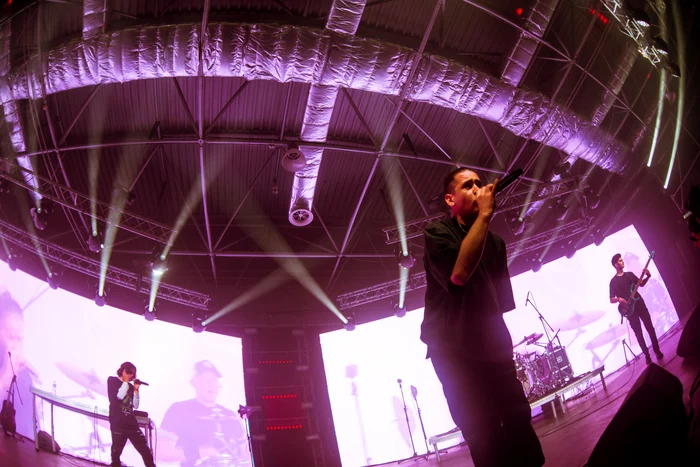
Adevărul: How do you see this relationship, musically, between Romania and the Republic of Moldova?
Satoshi: There are both pluses and minuses. Among the pluses is certainly the fact that we share the same language, culture, many deep and authentic, representative things. Even a communist past unites us, albeit in different forms. The last 30 years have created an involuntary separation, because Moldova acquired a Russian way of thinking, and Romania, after the 90s, acquired a Western way of thinking and a different lifestyle. These ways of thinking are diametrically opposed, and I don't think in a good way. I notice very large dissensions at the level of communication, of preferences, up to the way of feeling the world and acting.
Returning to the positive things, Romania is a developing country, Europeanizing itself in a beautiful sense, evolving and open to supporting us as well, by virtue of its own difficulties. And when artists from the Republic of Moldova deserve to have access to a much wider audience, Romania is usually very open, for which I am very grateful.
The truth: Is this the reason why you think that more and more Moldovan artists are coming to Romania?
Satoshi: To be honest and not to avoid the subject, the threshold of development in the Republic of Moldova, from a musical point of view, is a low one. We also have a small population and no matter how good you are at music, even if you manage to set up a working system, to develop, to make good music, partnerships, concerts, you cannot reach more than the figure that the population allows it. And then, you want to grow, you want to develop, you want to reach new heights.
The Truth: What inspires you when you write?
Satoshi: Any strong emotion. One of my songs is about the things that unite us being more important than the things that separate us.
The truth: What surprises are you preparing for the public?
Satoshi: At the end of March, we released a love song (“Not like a friend”), featuring a female voice. I do love songs very rarely and I try to give a more objective perspective, so it was this time as well. I had the launch of the album titled “+373” in Chisinau, and now, on May 23, I'm going to perform in Bucharest.
The Truth: Do you currently have a special someone in your life?
Satoshi: Yes, I have, but I don't think this information is a public good.
The truth: And how do you manage to divide your life as an artist with your personal life?
Satoshi: Through patience, honesty and communication.
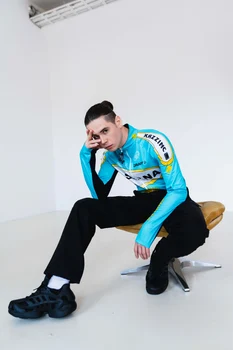
Image 1/7:
Satoshi PHOTO Global Records (1) jpg
