
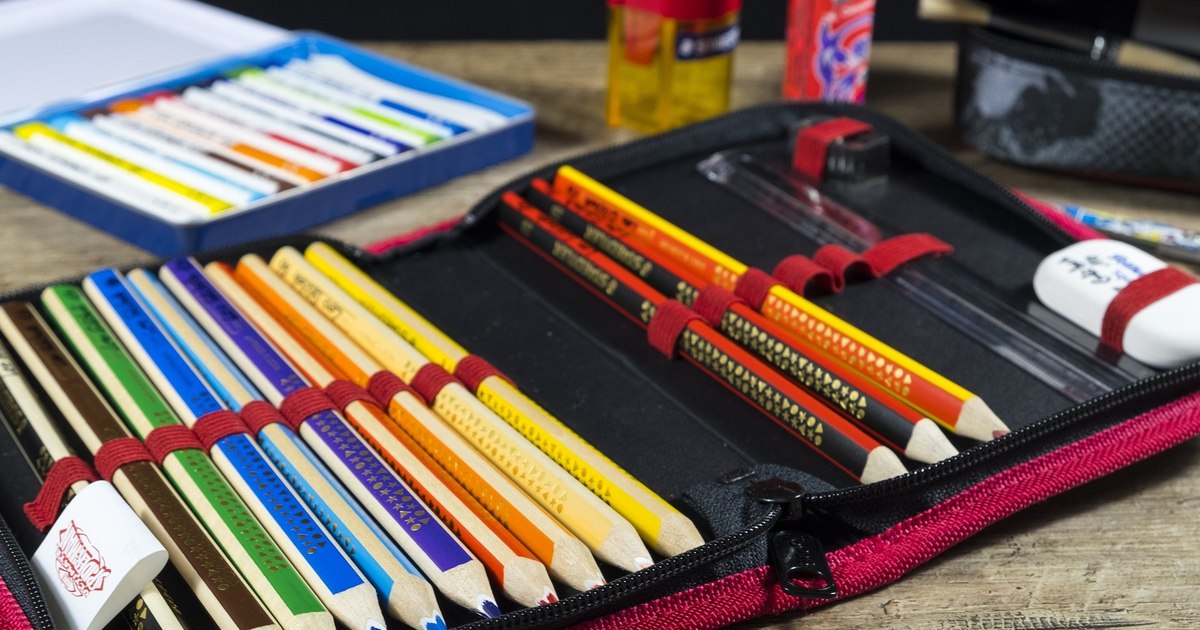
The most expensive aspect of raising a child in Romania is education. Basically, free education is far from free, being in fact a real financial challenge for many Romanians to keep their children in schools.
PHOTO Archive
Parenting in modern society comes with many challenges, and the most expensive aspect is education, although in Romania, education should be free. At least that's what a recent study that investigated Romanians' motivations, perceptions and challenges related to the role of parent in modern society shows.
Opinions are divided when it comes to the average monthly cost of raising a child. Specifically, 36% of Romanians estimate an average of over 2,000 lei, 33% – an average between 1,000 and 2,000 lei, while 28% mention a cost between 500 and 1,000 lei, according to the research carried out by Reveal Marketing Research. And the most expensive aspects of raising a child include education (72%), clothes and shoes (66%), food (59%) and extracurricular activities (53%).
While the number of births in our country is in continuous decline, most young people postpone the decision to become parents: only 29% of those aged between 18 and 24 have children, the proportion increasing to 54% for those between 25 and 34 years old. And the cost of maintaining a little one is an obstacle in this regard. Moreover, even if 65% of Romanians believe that having two children is ideal, most parents have only one child (56%), especially in urban areas (61%).
In fact, financial stability is in second place when it comes to the motivations that influence the decision to have children.
What burdens the parents
“There are two categories of big expenses, some natural, obligatory and unconditional for parents, and here I mean what is clothing, supplies, things like that. Components that return, as is natural, as is normal, to family budgets. So, in other words, regardless of how the school is, good or bad, the parents would still spend on uniforms and other things, because there is no way the school can give uniforms to the children. Then there are the meditations, that is, the money-making industry, and the expenses like the school fund. One relates to what the intellectual infrastructure of the educational process means, namely the preparation of children, and the second, to what the material infrastructure of the process means. These, from my point of view, are unacceptable and belong to a poorly designed school and system“, explained education expert Marian Staș for “Adevărul”.
Thus, education, although theoretically free in Romania, involves a series of hidden costs, such as teaching materials, classroom equipment and other additional expenses, which fall under the parents' responsibility. And they increase with advancement in education. In 2018, for example, in the primary cycle, the average annual expenses were 2,545 lei, in the gymnasium they reached 3,083 lei, and in the high school parents had to take out of their pockets, on average, 3,647 lei per year.
In the context of the pandemic, costs have doubled again, a report by Save the Children from 2021 shows that the online school cost parents approximately 6,798 lei per family, the most significant being IT equipment expenses – average cost of 5,800 lei per family. Also then the prices increased with school after school, increasing their price by 100% in just 3 years.
Class and school funds remain a constant in educational spending, although the percentage of parents contributing to these funds has decreased because, according to the law, it is illegal. “It is quite serious that 72% of parents feel education as a burden. Because, yes, they are a burden in themselves, both clothing, food, books, meditations, transport and others“, also emphasizes Cătălin Nan, the president of the Federation of Parents. This influences both school dropout and the decision to have a child or to choose another country that offers better conditions, adds the parents' representative.
Related to the class fund, Cătălin Nan says that since the law changed and the class fund was banned, only associations with legal personality collect money through which they can do “various activities or purchases that cannot be supported by the school”. “I think the costs will continue to be high. It should come with an infusion of capital in education, all textbooks should be paid for, hot meals should be in all schools, there should be after-school programs everywhere, so that parents no longer have to look for afterschools, they should be funded summer schools“, says Cătălin Nan.
However, “it is appreciable that parents still dedicate a lot of money from their resources to children and to education, considering that the purchasing power in Romania has decreased a lot due to inflation“, the representative of the parents points out the full side of the glass.
Meditations – the black hole in the budget
Paid meditations are increasingly expensive and eat the biggest slice of the budget. “We all want our children to have access to quality information, to a good school, to a good teacher, and then all these costs appear with meditations, extracurricular activities. At least 60% of parents think they think about this option and actually use it. Some, in more delicate moments, to help the child overcome difficulties, others make this an academic goal, and then it is normal to invest“, explained Cătălin Nan.
But, “if the curriculum model were built like the world and the framework plans as it should, and the school would work like in the 21st century, meditations would decrease by 80%, at least. And if the local public administrations and the central budget, and everyone who is responsible for financing education did things the right way, the other expenses of the classroom fund would also decrease by 90%“, explains Marian Staș.
Solutions
First of all, we need adequate financing of education, but also policies that will give a different shape to the education system. “The meditations and the school fund would disappear under conditions where the school is designed properly and society really cares about education, funding it properly. If the school was designed properly, curricularly and institutionally, then the money that parents give to compensate for this story would stay in their pockets, because they would no longer need to spend it on a badly made school“, adds the education expert.
Another possible solution would be to attract European money, there are numerous examples of schools that have managed to develop with the help of non-reimbursable funds. “Such things happen where the principal is open and collaborative with parents. In schools where parents are taken close, kept close to the school management, things happen and we have dozens and hundreds of positive examples where things work. Unfortunately, the vast majority of executives don't do this for various reasons, and that's where things go wrong“, says Cătălin Nan.
But also educational support programs, such as School after school, are essential for keeping children in the educational system and for reducing school dropout, but access to these programs is still limited for many children in Romania. “Programs like this mean you really care about school, as you should. The fact that School After School is almost non-existent means indifference, vapidity, imposture, incompetence and political cynicism“, concludes Marian Staș.
What could the state do to reduce the burden on parents, in Cătălin Nan's view:
• Adequate financing of public education – increasing the budget allocated to education to ensure sufficient resources, so that additional contributions from parents are not needed;
• Subsidizing textbooks and teaching materials – ensuring free textbooks for all students, regardless of education level, would reduce the costs borne by parents;
• Investments in infrastructure and equipment;
• Modernization of schools, their maintenance to create an appropriate environment for 2024;
• Financial support for families with low incomes;
• Development of free afterschool programs – to expand state-funded afterschool programs, because they provide supervision, homework help, extra educational activities and, in doing so, reduce the need for the parent to spend extra for these services privately;
• Continuous training of teaching staff, but “for real, not because they take some courses and get some diplomas because they participated”.
