
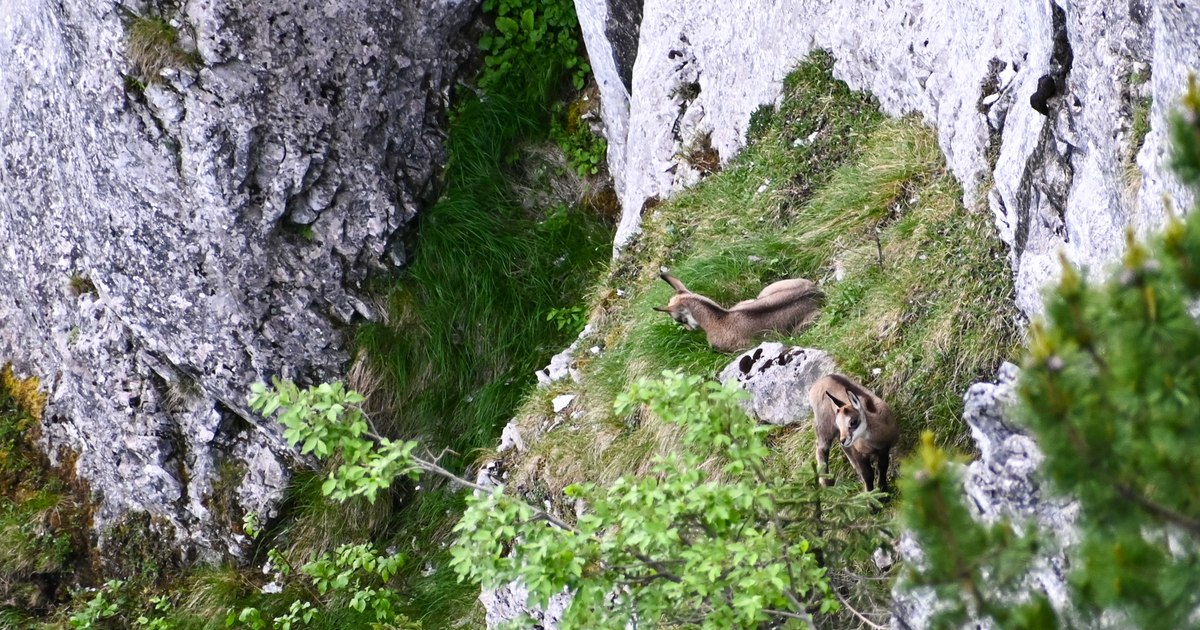
Rare images have been captured in the Retezat National Park, where the number of wild animals is increasing. Two black goat kids, recently calved, were found on the rocks that are difficult for people to reach.
Black goat kids. Photo: Claudia Danau. The administration of Retezat National Park.
Retezat National Park covers almost 40,000 hectares in Muții Retezat, and over 50 species of animals and almost 200 species of birds live on its territory.
Here you can find large predators, such as the bear, wolf or lynx, but also herbivorous animals, including the black goat, deer and deer, or omnivores, such as the wild boar.
During the wildlife monitoring shifts in the Retezat wild land, Retezat National Park employees often witness some rarely seen scenes from the animal world. Biologist Claudia Danău captured in images some sequences from the life of two black goat kids, recently born, in Retezatul Mic.
Although they are only a few months old, the little wildlings roam the rocks that are difficult for humans to reach, in a land where they live unhindered.
The number of wild animals encountered in the Retezat National Park, in the monitoring rounds since the beginning of summer, is high. Bears, black goats, deer, marmots and even a viper appeared in the way of the employees of the reservation, on the meadows of the Retezat mountains.
“Species and habitat monitoring is an essential part of our work to ensure the conservation and protection of species and habitats in the Retezat National Park. With GPS in hand, binoculars to eyes and camera behind us, we traversed the Retezat National Park to observe and record various species of flora and fauna. Regular monitoring helps us better understand the behavior of species, identify any changes in the ecosystem and take action when necessary to protect and maintain nature's delicate balance. Each species has a role in this ecosystem and it is an honor to have the opportunity to help protect them.” informed the administration of Retezat National Park.
Retezat National Park, the land of black goats
Retezat National Park offers an ideal habitat for black goats, and their number exceeds two hundred, according to some estimates. In the past under threat of extinction due to hunting poaching, black goats have become the most popular animals in the alpine area of the massif.
Tourists who arrive in the Retezat National Park have the opportunity to see a lot of black goats roaming the heights of the mountains.
The black goats of Retezat inhabit the rocky area of the massif, but especially the subalpine lands from 1,700 to 2,200 meters, located at the upper limit of the spruce forests. In autumn, some descend in more accessible areas.
“The run (mating period) of the black goat in the Retezat National Park begins with the sharp cooling of the weather, usually in the second half of October, and lasts approximately one month. Cold weather speeds up running, and hot weather slows it down“, informs Retezat National Park.
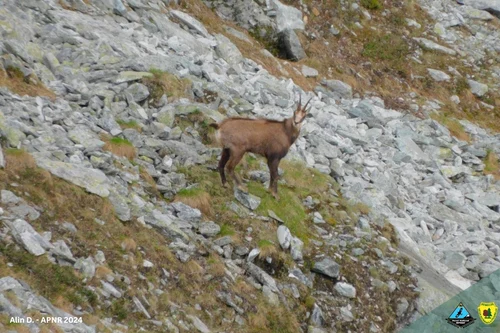
Image 1/14:
Wild animals in the Retezat Mountains Source Retezat National Park (10) jpg
After the gestation period of about 21 weeks, between April and May, females give birth to a single kid, and rarely two. Kids stay with their mothers for two to three years and start breeding when they are 8-9 years old.
Black goats, which have been found in the Carpathian Mountains for over 15,000 years, are wild animals with heights of up to 130 centimeters and weighing up to 50 kilograms.
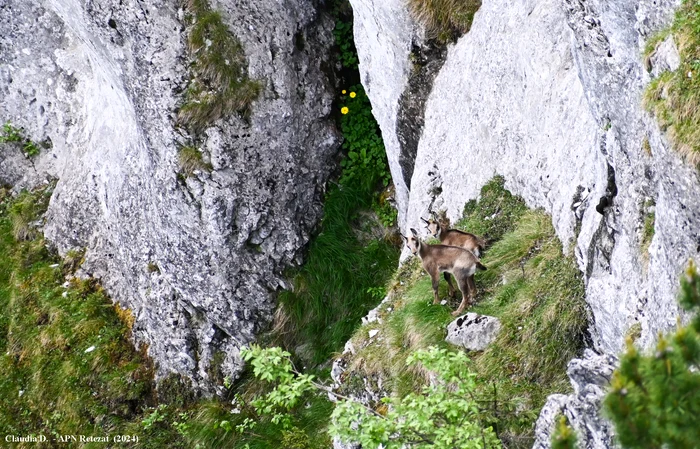
Black goat kids. Photo: Claudia Danau. Retezat National Park
They can live up to 20 years in captivity and 15 – 17 years in the wild. Black goats are threatened by wolves and brown bears, but over time humans have become their main predators.
“Black goats live in herds, groups of up to 30 individuals, led by older and experienced females. Males live in separate groups. The kid is warned by the black goat when a danger is observed by a characteristic sound”informs Retezat National Park.
Black goats are herbivores, which means they only eat plants, not meat. They feed on mountain vegetation in summer and bark, needles and pine shoots in winter.
In summer, black goats can climb up to the mountain ridges, which remain partially covered with snow, but with the onset of winter, the animals descend more frequently into the forested regions.
Sometimes in winter, the snow can become too deep for the animals to find food, so they end up fasting.
Established in 1935, the Retezat National Park includes a rich wildlife. Along with bears, wolves, deer and smaller wild animals, black goats have become regular presences in the alpine areas of the massif.
“Within the range of the park, specialists estimate a number of over 200 black goats. The black goat has its habitat in the rocky mountain areas of Europe. Having highly developed musculature and cloven hooves, the black goat can easily move to rocky areas inaccessible to other species, where it procures food and takes refuge from predators. Romania has a developed population of black goats, hunting specialists estimate it at over 7,000“, informs Romsilva.
The black goats of Retezat (video – biologist Clauddia Danău, Retezat National Park) they became the target of hunters since the 19th century, when the fauna in the mountains was richer and attracted here the members of some noble families and the Austro-Hungarian elite.
At the beginning of the 20th century, the tradition of black goat hunters in the Retezat mountains was continued by members of the Romanian royal family and Romanian hunting associations.
The number of black goats gradually decreased, also affected by poaching, and in the 1940s, when the Romanian state decided to limit the hunting of black goats to 75 per year, about 3,000 still lived in the Carpathian Mountains. In the 60s, more than 500 black goats inhabited the Retezat Mountains.
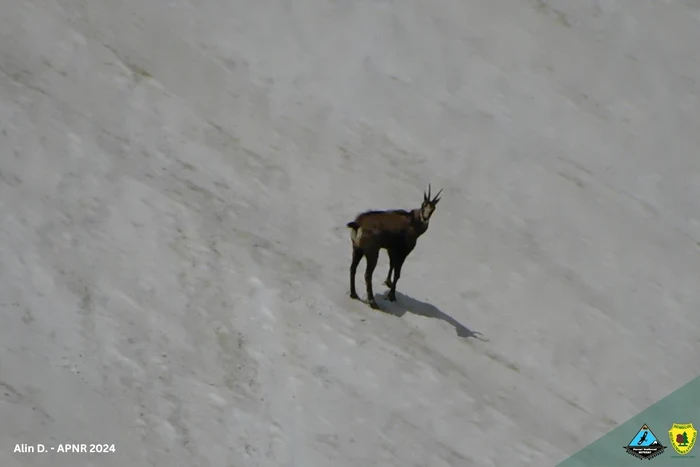
Black goat in Retezat. Photo: Alin Dajulesc. Retezat National Park.
“The most black goats were observed in the Nucșorul basin (Valea Rea, Pietrele, Stînişoara), then in the upper basin of the Bărbat River (Stâna de Râu), as well as in the central part of the park (Bucura, Peleaga, Judele). The majority of the goat population (over two thirds) in this reserve is linked to the carpet of dwarf pines (jepi) spread over 300-500 meters wide, above the upper limit of the spruce trees. This mosaic landscape, created by the interpenetration of the alpine landscape (open) with the forest (closed), provided the black goat with a set of various factors, the interaction of which promoted the development of this game species”. informed Revista Pădurilor, in 1963.
At the beginning of spring, the black goats of Retezat go down to the lower areas, where the plants grow faster.
In the months of April and May, the population of black goats climbs to the top of the mountain, to reach the dwarf forests of cypress trees, where the birth of kids takes place. In the summer, the black goats live around the carpet of jepis. Females, kids and sub-adults, in larger herds on the alpine gap and much smaller herds in the forest. Goats live more alone, Forest Magazine showed.
“In autumn, almost the entire population of black goats graze quietly on their favorite places in the alpine area until the running period (end of October – beginning of November) when they gather in the gaps, through meadows and valleys, in the vicinity of the wintering areas”informs Revista Padurilor.
Wild animals in Retezat
The Retezat mountains are dominated by bears, who during the summer make their presence felt near the flocks, and in the fall they sometimes reach the edge of the orchards at the foot of the mountains. Most often, bears prefer quiet forests, little walked by people.
Wolves travel long distances and gather in packs in winter, preferring the lowlands at the foot of the mountains. Foxes can sometimes be seen around cabins and rest stops, looking for food, or in rocky areas. Wild boars can be found in beech forests or spruce glades.
Black goats occupy alpine hollows, peaks and ridges in large numbers, and in winter descend to their lower floor in search of food. Deer, roe deer, lynx and wild cats can also be found in the forests of Retezat, and there are populations of marmots in the alpine areas.
