
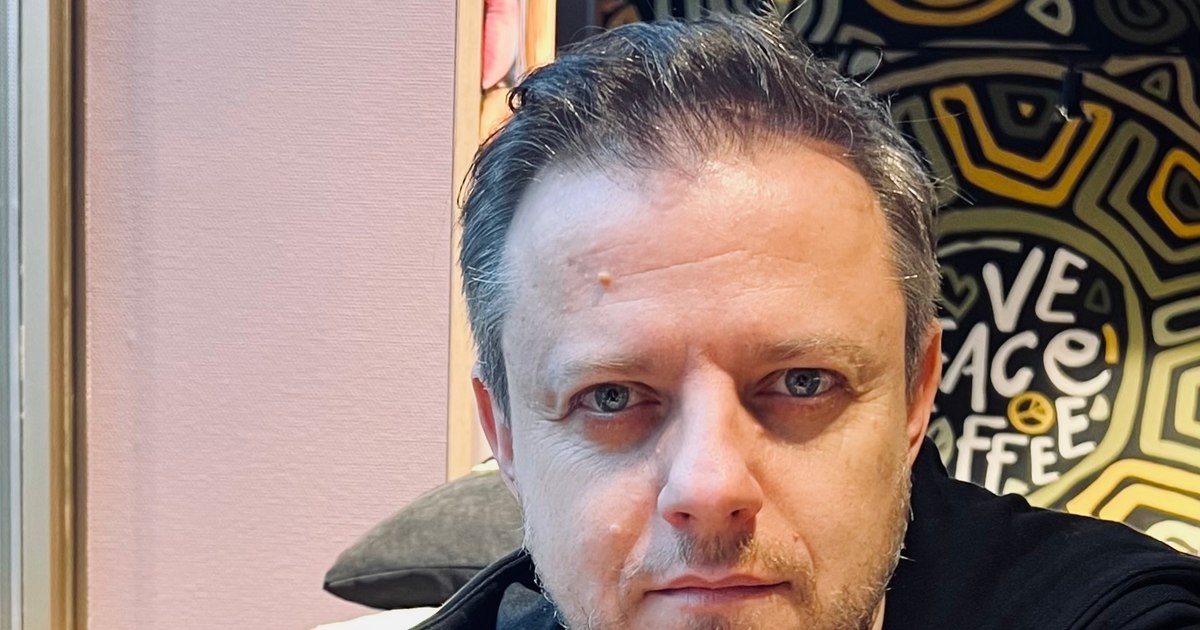
Rareș Beșliu invites Romanians to join the “from RObinet” movement, the first initiative of the “La NORD de cuvinte” association, which encourages the HoReCa sector to make drinking water available to customers from the tap, not just on demand. It is a project that appeals to common sense, human rights, hospitality and, above all, care for the future of nature and humanity.
Rareș Beșliu, the initiator of North of the word and from the tap
Rareș Beșliu says that “there is no shame in drinking tap water, but I have lived with this thinking for the last 30 years. It’s hard to change our mindset and we don’t know how to ask, but if it’s offered to us on our own initiative, then the perspective changes completely. We accept, we taste, we see that it is good and we begin to integrate this habit into our lives.”
The approach of the nature photographer initially aims to make restaurants and other public places responsible to make available to those who cross their threshold drinkable, filtered and good-tasting tap water, as an alternative to bottled water. Thus, they not only comply with the legal requirement to provide water on demand, but go beyond it and find ways to make water easy to find, in visible places and in the most attractive containers. People should be able to fill their own glass whenever they need, and water consumption should not be limited in any way.
Through its own example, the HoReCa sector and beyond will contribute to the education and encouragement of Romanians to adopt this habit at home as well, contributing to more responsible water consumption, reducing pollution and waste, as well as significant savings for Romanians.
To contribute to the initiative, Romanians are invited to nominate the restaurants where they would like to receive water from the house, without having to ask. Nominations are made by commenting on the Instagram post: https://www.instagram.com/p/C8bbnZbMQYc/
“When I started La NORD de words, I told myself that there is only one solution: raising awareness and educating people about the effects of climate change. And how could we do that if not through photography and the emotional images of the polar regions? Very quickly I realized that it was not enough and that I had to get concrete, that there was no room for abstraction or interpretation. And then I realized that in arctic expeditions I noticed a common custom – restaurants and hotels where you don’t have to ask for water, because it is offered to you for free, in ever more pleasant and tasty forms: on the table, in a carafe of ice and mint or basil; on the bar or at the reception, in a jar full of lemon and orange slices. Even on the icebreaker at the North Pole we drank tap water from their reserves. Then I realized that in no place in Romania was I greeted like this. That, in fact, means normality and hospitality. That means caring about everything that happens in the world, and not just about the profit of the business”, adds Rareș Beșliu.
In a world choked with plastic, PETs are one of the largest categories of waste and it is estimated that in 2021 around 600 billion bottles were produced globally. According to statistics, around 1 million plastic bottles are bought every minute around the globe – the equivalent of a pile half the size of the Eiffel Tower. And of the total plastic waste, only 9% is recycled, the rest ending up in landfills or in nature.
The importance of drinking water
According to United Nations data, by 2050, half of the world’s population could be affected by severe water shortages. Moreover, global water demand is anticipated to increase significantly in the coming years, mainly due to population growth, urbanization and accelerated industrialization.
Climate change will affect the distribution and availability of water around the world, amplifying droughts, floods and other extreme events that can compromise access to drinking water. This will increase tensions and conflicts in different regions of the world, where access to clean water will become a strategic priority.
“We’ve been fighting the heat wave since the beginning of the month, and the forecast doesn’t look any better. Giving up plastic is not at all easy, but not negligible. Instead, it’s a gesture that each of us can do and that gives us hope that we can still save ourselves. And it’s not just about plastic, it’s about transporting bottled water and the associated carbon emissions. Most restaurants in Romania serve water from Italy, transported thousands of kilometers. Let’s stop accepting this! I dream of that day when we will choose the places where we go out according to the level of common sense and whether or not we receive good drinking water, for free”, says Rareș.
Legislation
In April of this year, Law 96/2024 entered into force, which aims to regulate the free access of customers of restaurants, canteens and catering services to drinking water from the tap, upon request.
“It’s a welcome law but, like many other laws, respected only by those who want to. There are no rules of application and the provisions are not clear. Waiters are not informed and people are embarrassed to ask, as I was before I started this endeavor. Moreover, Romanians do not trust the quality of public water, another argument in favor of bottled water. This is also the main reason why we are now addressing the HoReCa sector – once more and more restaurants offer tap water, people will get used to it. Will they go home wondering why they are still carrying 1, 2 or 5 liter bottles when this resource is flowing through the pipe? And if they don’t like the taste, they will choose to put a filter that improves the quality considerably. Then, in the city, they will prefer a reusable bottle, because they can easily fill it in any public place. And it’s also cool!”, adds Rareș.
For more information and to support the initiative, follow the Instagram page “from RObinet”.
About Rareș Beșliu
He is the Romanian photographer who artistically documents the nature and wild life beyond the arctic circle, through the project La NORD de cuvinte. It includes a series of northern expeditions to Svalbard (where he reached the icebreaker as far as 81 degrees north latitude), Greenland and Canada. From his experience, Rareș believes that before you can take care of nature, you have to come to love it. And through wildlife photography and his efforts, he hopes to bring people closer to nature and animals, convey emotions and make them more aware of how their actions impact life. Because only NOW is not too late.
In addition to Romania and the Arctic, Rareș has so far photographed wildlife in Iceland, the Faroe Islands, Scotland, Cuba, Cyprus, the Czech Republic, Italy and beyond. The most beautiful and emotional images from all these places were selected and included in the “emotions” photo album, printed in both hardcover and paperback versions. The book contains 300 pages with photos chosen from the last 4 years in which Rareș was one with nature and was inspired by its wild life.
Rareș’s photographs have been awarded at competitions such as: Romania NOW, Annual Photography Awards, European Photography Awards, WPE Awards, London Photography Awards. For more information and photos, visit: raresbesliu.com; instagram.com/raresbesliu and lanord.ro.
