
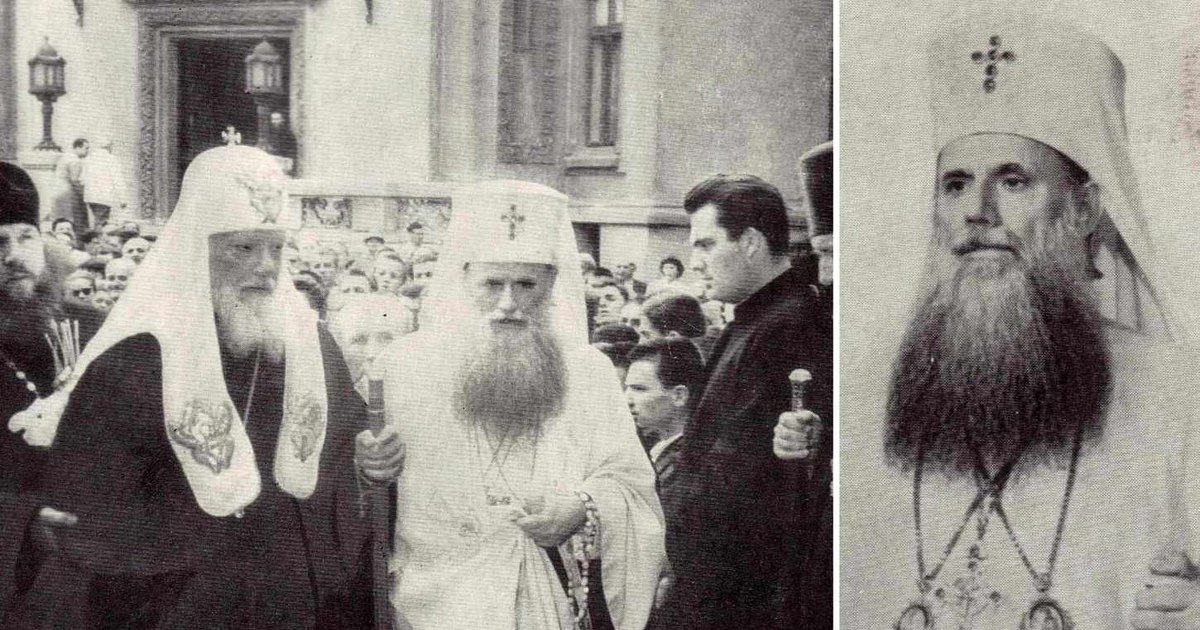
Justinian Marina, nicknamed the “Red Patriarch”, was for three decades at the head of the Romanian Orthodox Church, during one of the most disturbing periods in its history. The story of his rise is full of controversy.
Justinian Marina (right) and Patriarch Alexei of the Russian Orthodox Church. 1962. Source: Wikipedia.
Patriarch Justinian Marina (1901 – 1977) led the Romanian Orthodox Church for three decades, between 1948 and 1977.
The hierarch was one of the most controversial figures in Romania’s recent history, and some historians called him the “Red Patriarch” due to his closeness to some of the leaders of the communist regime of his time.
The escape of Gheorghe Gheorghiu-Dej
One of the events that hastened his rise to the head of the Romanian Orthodox Church happened in 1944, when Marina, then a young priest in the Râmnicu Vâlcea region, would have hosted Gheorghe Gheorghiu Dej, the future leader of Romania, who escaped from the camp from Târgu Jiu.
The story was told by some former communist leaders, like Ion Gheorghe Mauer, who participated in the escape, but it was also known through the reports of some Western intelligence agencies.
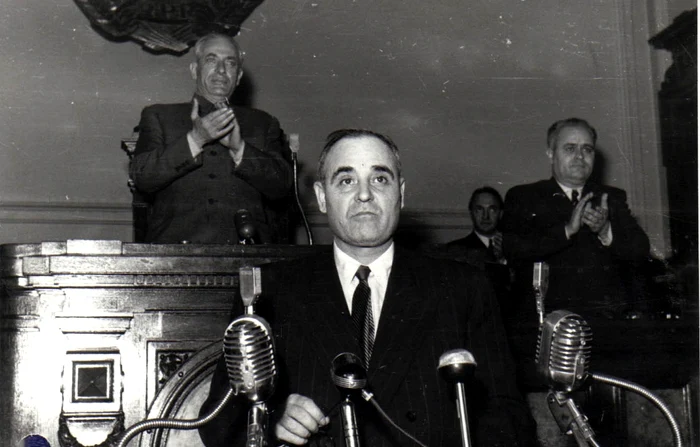
Gheorghe Gheorghiu Dej. Source: Photo library of the communist regime
“Marina was a minor parish priest from the Vâlcea region when one day he hosted a fugitive who had asked him for shelter in the church. The escapee was Gheorghe Gheorghiu Dej, today the leader of the communists. Marina immediately hid him in the bell tower of her parish house. When Gheorghiu Dej became general secretary of the Communist Party, the cunning Marina knew that the time had come to ask for compensation for his trouble. He visited Dej and asked him to be promoted, his request was accepted, and after a few years, the Central Committee of the Romanian Communist Party appointed Marina head of the Romanian Orthodox Church,” read a 1951 memo preserved in the Radio Free Europe (RFE) archives.
Pilgrimages to the relics of Saint Paraschiva
After the Second World War, the priest from Râmnicu Vâlcea soon became archbishop-vicar and then metropolitan of Moldova. The hierarch approved the first processions with the reliquary with the relics of Saint Paraschiva, in a region affected by drought and suffering from the war.
“This year the celebration of St. Paraschiva took on the character of a great religious event. Many believers from the city and the county participated, who came especially for the solemnities that take place on this occasion. The coffin with the remains of the saint was taken out of the metropolitan cathedral on Saturday afternoon, in the presence of I. P. S. Metropolitan Irineu of Moldova, of PS. Valerul Botoşăneanu and Justinian Vasluianul, vicars of the archdiocese of Iasi. A huge audience wanted to witness the removal of the holy relics from the cathedral“, informed the newspaper Universul, in 1945.
In 1948, after the death of Patriarch Nicodim, the hierarch Justian Vasluianul was elected patriarch of the Romanian Orthodox Church. Some historians have accused Patriarch Justinian Marina of having contributed to the suppression of the Greek Catholic Church in Romania and would have accepted the regime’s persecution of Catholic priests.
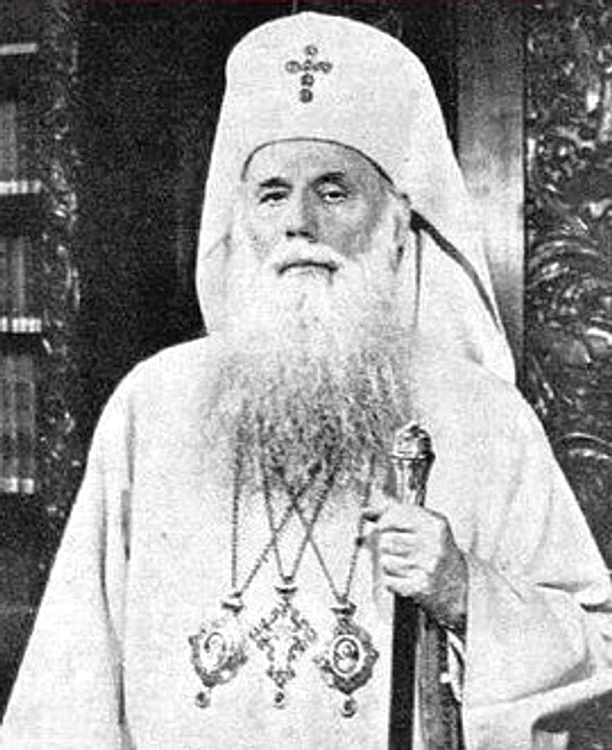
Patriarch Justinian. Wikipedia
Other historians and theologians considered him as providential for the Church in the position he held during the years of terror of the communist regime. They showed that they would have strengthened the Orthodox Church, using their diplomatic skills and resorting to compromises in front of the power of those times.
“A simple priest from the Diocese of Râmnic, Justinian Marina (…) managed to suddenly become the metropolitan of Moldova, without having any prominence or any special merit as a man of the church. In May 1948, he was elected Patriarch of the Orthodox Church of the RPR, succeeding the last patriarch, Nicodim. As patriarch, Justinian Marina, who publicly asserted himself as a devoted supporter of the regime, was certainly the right man in the right place in the eyes of the Groza Government. It was already illustrated in this way by the Pastoral of March 14, 1948, in which he glorified the future constitution of the RPR. From his last and highest throne, he served as the defender of the regime, both through words and deeds. No more devoted tool could have found the communists elsewhere.” it showed a report from 1950, called “Religious Persecution in Romania”, drawn up by the Romanian National Committee, from the USA, preserved in the digitized archives of the US Central Intelligence Agency.
Priests, persecuted in the first years of communism
The report published by the Romanian National Committee (CNR), a body whose purpose was to defend Romanian democratic interests in the West, revealed the religious persecution in Romania during the first years of communism. The Catholic, United and Orthodox churches were targeted.
Propaganda actions against Catholicism were numerous, as were the arrests of priests and the confiscation of their properties. According to an estimate by the Vatican, until the beginning of July 1949, no less than 600 priests and members of the religious orders of the Catholic Church were arrested in Romania, according to the report of the Romanian National Committee, found in the CIA archives. The representatives of Catholicism were often demonized, sometimes even by the leaders of the Romanian Orthodox Church.
The Greek Catholic Church was suppressed in 1948 and incorporated into the BOR, although ten years ago it had 1,725 churches under its care, where almost 1,600 priests served, and the number of believers was over 1,400,000, the report showed. Until November 1948, about 600 Greek Catholic priests were arrested.
Two prisons dedicated to priests were operating in Romania at the beginning of the 1950s. “Ploiesti: a camp specially built on the outskirts of the city, for Orthodox priests who refused to cooperate with the communists. 500 priests were sent here at the end of 1952. Vlăhiţa: more than a thousand priests are interned in the camp at Vlăhiţa, Transylvania,” another secret note from the CIA archives, dated December 30, 1953, stated.
Hundreds of priests were sent to work on the Danube – Black Sea Canal, another document from that time showed.
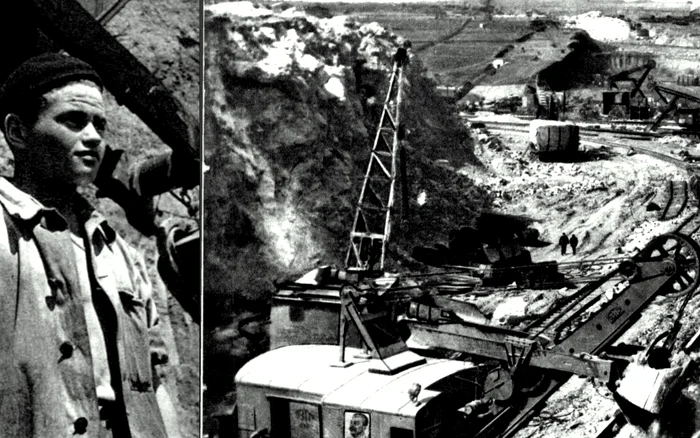
Danube Black Sea Canal. Photo: Flacăra magazine.
Some informational notes of the Western intelligence agencies described the “Red Patriarch Justinian Marina” as an ardent supporter of the Soviet regime, but questioned his power to resist as the head of the Romanian Orthodox Church, precisely in the background of the religious persecutions in Romania in those years .
According to information, his days at the head of the institution were numbered, although he maintained close ties of friendship with the Romanian communist leaders, especially with Gheorghe Gheorghiu Dej, whose car was often sent to the patriarch to bring him to the leader of the Romanian people. On formal occasions, Marina used her own car, a Buick, which was given to her by the government, the secret memos showed.
Other testimonies preserved in the archives described the excesses he displayed in front of his subordinates. He was an absolute dictator, feared by all his priests, who had to kneel when he passed by and kiss his hand. It led to the idea that he was a religious man, but his private life showed the opposite, another informative note, from 1951, preserved in the RFE archives, showed.
Other testimonies described the luxury in which patriarch Justinian Marina lived in Romania in the 1950s and his appetite for “worldly lusts”.
Testament of Patriarch Justinian Marina
In the will of Patriarch Justinian Marina, which he wrote in 1973, the hierarch showed that he had not amassed any wealth and would have used his income over time to support the church and the community.
“Being overwhelmed by infirmities and old age and day by day weakening with my body, I thought of writing this spiritual Testament, through which I would make it known to those who would, after my end, seek the fortune in my cell, not to labor in vain, nor tempt those who have served me, to find out my wealth or the treasure that I have gathered as Patriarch in the more than 25 years of patriarchy. I did not collect gold and silver, nor jewels and precious stones, because I never put my hope in them, but I always put my hope in God”wrote Justinian Marina.
