
The incident in Olimp, as a result of which 24 tourists arrived at the hospital poisoned with chlorine from a hotel pool, can happen anywhere and anytime, experts warn. There is, however, a method by which we can tell if too much or too little chlorine has been poured into the water. “People believe in a myth that it’s time to demolish,” Răvan Pavel, the technical manager of a company that builds and maintains public and residential swimming pools, told “Adevărul”.
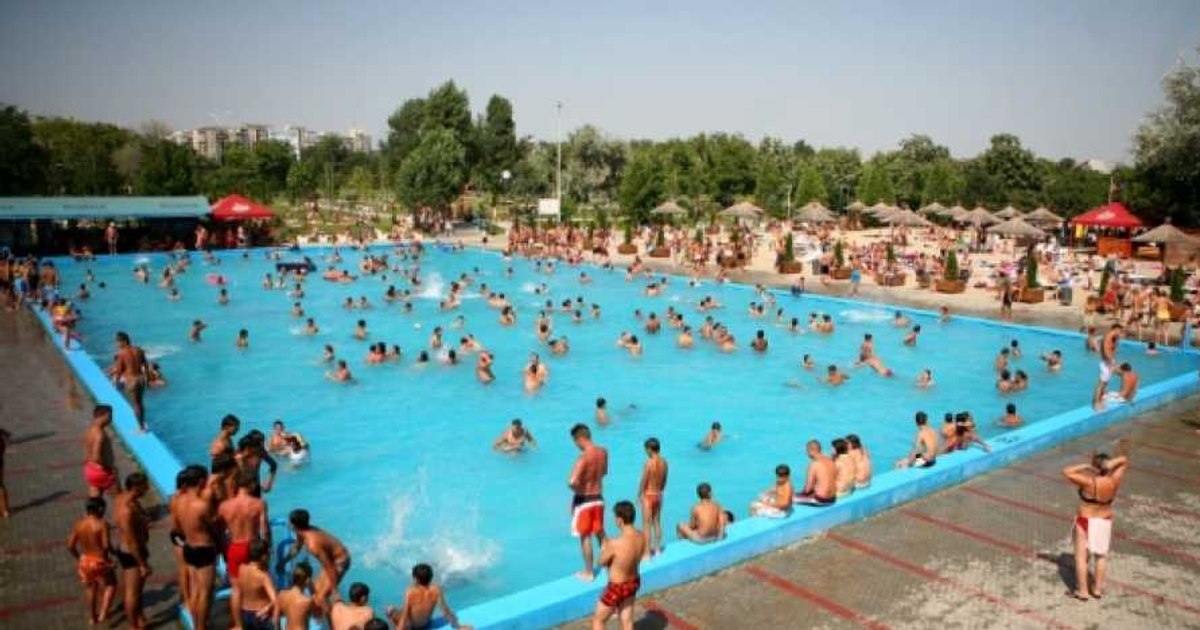
On hot days the beaches are stormed by tens of thousands of people. Photo source: archive
The heat wave takes us out of the house and sends us to the beach or swimming pools, but the coolness can also come with disadvantages. “If the pool administrator does not comply with the recommended amount of substance for water disinfection or if the chlorine dosing system breaks down, people who bathe can get poisoned”, explained Răvan Pavel, the representative of a company that builds swimming pools.
How you can get chlorine poisoning at the pool
Public pools are regulated by legislation regarding the substances used to disinfect the water. “There is even a ministerial order regulating their quantities and concentrations. In the case of chlorine, for example, the law clearly states: the concentration range must be between 0.7 and 1.5 ppm, (parts per million). If we are below this value, we can talk about the risk of contamination with various pathogens (bacteria, microorganisms, algae) that develop in water. If the value is increased above the allowed threshold, the water in which we bathe can affect our skin, eyes, respiratory system, etc. We can develop allergies, we can wake up with irritations, etc., continues the expert. Then, he says, pool administrators are obliged to buy and use disinfectant products approved by the Ministry of Health. “And dose these products according to the manufacturer’s specifications. There is more concentrated chlorine, less concentrated chlorine, and depending on the volume of the pool and the dosing instructions, the amount of chlorine that is put into the water is calculated.” Therefore, one of the reasons why we could become intoxicated with chlorine is the incorrect dosage of the substance in the water.
Another situation that could put us in danger would be the failure of the dosing system, as would have happened in the case of the Olimp incident. “In general, the dosing of disinfectant substances is done automatically, through some specialized devices. They are called dosing devices and are part of the installation of the respective pool. We are talking about some sensors that read the concentrations of chemicals in the water and, depending on them, dose a smaller or larger amount of chlorine. If the device gives an error, then we can talk about either an overdose or an insufficient dosage. In both cases, man is exposed to danger”, Răzvan Pavel continues. “Dosing is done continuously, as long as the water circulates through the pipe and the device doses its own values. But, in order for it to work perfectly, the system must be maintained, checked periodically, with revisions carried out on time”, he says.
And one more very important aspect: chlorine consumption in a swimming pool increases depending on the water temperature. “The dosages recommended on the product instructions are calculated at a temperature of 25 degrees in water. But, on hot days, the temperature of the water in the pools can rise above this value. Concretely, with each degree above the limit of 25 degrees, the dose of chlorine administered increases by 5%. That is, if the water is 30 degrees, it means that we already have 5 degrees more, so we will have a 25% higher amount of chlorine”.
How to tell if there is too much chlorine in a pool
Theoretically, we have no way of knowing whether or not the recommended amount of chlorine is respected in the respective water. But, Răvan Pavel says, there is still a method. “It is not known to most of us. Moreover, what we know is totally wrong. Let me explain: many people who go to the beach or the pool and smell a strong chlorine smell think that too much chlorine has been spilled into the water. On the idea that if it smells bad or too strong, then something is wrong with the concentration. But I have to tell you that everything is just a myth! Because things are exactly the other way around. If the water has a clear appearance, is crystalline and does not smell very strongly or even at all, then the chlorine concentration may be either at its normal value or above this value. The moment you feel a strong smell of chlorine then you must know that, in fact, the water has a lower concentration of this substance. What, then, is the explanation of the smell? In the absence of chlorine, some chemical compounds called chloramines are formed, and the smell they emit is a disturbing, strong one“, explained the specialist.
What substance could replace chlorine in water?
Instead of chlorine, the specialist explains, active oxygen could be used, but this substance is not regulated by law and, if it were to be used, it would be used illegally. The reason? “It is an unstable substance, meaning it evaporates quickly. She is not sure. We are talking about an auxiliary water treatment, but which is not recommended and therefore not used. Water treated with active oxygen would be disinfected in a very short period of time and would become contaminated just as quickly.”
A high concentration of chlorine can lead to severe allergies
Dr. Sandra Alexiu, president of the Association of Family Physicians in Bucharest, explained to us that normally, when we go to the pool, we should not worry about chlorine. Chlorine, in small amounts, does not affect our health. “Pools must be disinfected, that’s for sure, and yes, chlorine is used. But the disinfection solution does not affect the body. There are indeed more sensitive people who tear up a little, but we are not talking about a concentration that would harm us. But if this concentration exceeds the limit then things can get worse. Most often the skin can be affected, because chlorine is a basic solution, we are talking about a burn after all, but with a base, not an acid”.
Raluca Popovici, dermatologist specialist, continues the idea by stating that this substance, in high concentration, affects especially sensitive people. “It can cause irritation especially for people with more sensitive skin, who have an atopic terrain, prone to allergies. An allergy is manifested by redness, irritation, pus, the appearance of blisters, etc. Mucous membranes such as the eyes and mouth can be particularly affected. But also on the part of the patient there must be a predisposition towards such conditions”.
Symptoms of chlorine poisoning and first aid measures
In serious cases of intoxication, but also depending on how we come into contact with the substance, respiratory, skin or digestive problems may occur. According to doctors, among the symptoms of chlorine poisoning are nausea, diarrhea, abdominal pain, dizziness, coughing, sneezing, feeling of suffocation, hyperemia and congestion of mucous membranes, burning sensation, edema of the respiratory tract, wheezing, nasal obstruction, asthma attacks but also watery eye secretions. In such situations, first aid measures should be taken urgently. To begin with, the person poisoned with chlorine must be removed from the respective environment and exposed to fresh air. They should then drink liquids such as water, milk or tea and rinse their eyes, mouth and nose with a 2% sodium bicarbonate solution. During this time, 112 should be called for emergency medical assistance.
Several adults and children complained of feeling sick and suffocating after allegedly entering the swimming pool of a hotel in the Olimp resort, where they were staying, yesterday. Following the call to 112, the Red Intervention Plan was activated. The alarm was raised around 6:00 p.m., and seven ambulances and two special vehicles for transporting many victims arrived at the scene. Six adults and seven children were hospitalized.
