
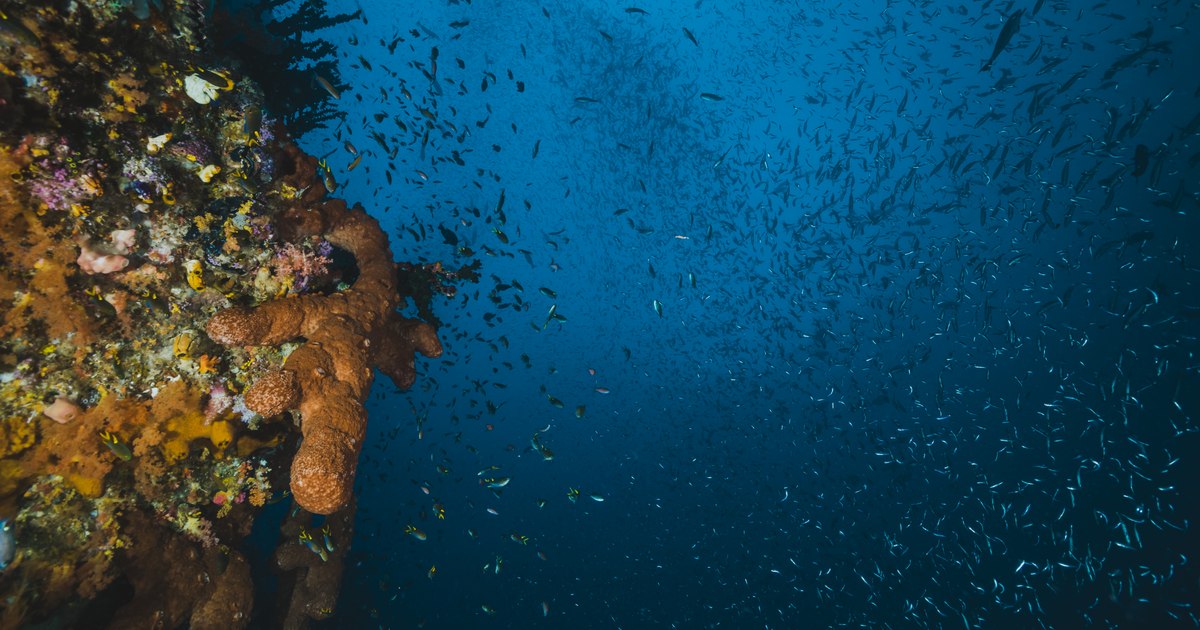
A team of scientists led by ecologist Kevin Rose of Rensselaer Polytechnic Institute in the US said that the supply of dissolved oxygen in the Earth’s oceans is rapidly depleting. According to them, this is one of the biggest threats to the life support system on the planet, Science Alert reports.
Dissolved oxygen reserves in Earth’s oceans are rapidly depleting. PHOTO: Archive
Both atmospheric oxygen is important for animals and humans, and dissolved oxygen (DO) is essential for aquatic ecosystems, both freshwater and marine. Billions of people around the world depend on water for food and livelihoods, so the fact that aquatic ecosystems are losing oxygen is a cause for concern.
The scientists propose adding water deoxygenation to the list of “red lines” that describe the thresholds “within which humanity can continue to develop and thrive for generations to come.” Currently, the planetary red lines are climate change, ocean acidification, stratospheric ozone depletion, interference with global phosphorus and nitrogen cycles, rates of biodiversity loss, global freshwater use, earth system change, aerosol loading and pollution chemical.
The authors of the new study insist that this list does not include one of the most important constraints on Earth.
“The observed deoxygenation of Earth’s marine and freshwater ecosystems is an additional planetary boundary process that is critical to the integrity of Earth’s ecological and social systems and that regulates and responds to ongoing changes in other planetary boundary processes. Corresponding oxygen critical thresholds are approaching at a rate comparable to that of other planetary boundary processes”the authors write in their study.
Causes and effects
The concentration of dissolved oxygen in drinking water is decreasing for several reasons. For example, warming waters can no longer hold as much oxygen as before. Greenhouse gases increase the temperature of the air more and more, so that surface waters are less and less able to retain this vital element.
In addition, dissolved oxygen can be absorbed by aquatic life faster than it is replenished by ecosystems. Algal blooms and bacterial proliferations caused by the influx of organic matter and nutrients in the form of agricultural and household fertilizers, sewage and industrial waste rapidly absorb the available dissolved oxygen.
In the worst cases, oxygen is so low that microbes suffocate and die, often taking larger species with them. Microbial populations that do not need oxygen then feed on the large amounts of dead organic matter, growing to such a density that they reduce the amount of light and limit photosynthesis. As a result, the entire water mass is drawn into a suffocating cycle called eutrophication.
Deoxygenation of water is also caused by an increase in the density difference between the layers of the water column. This is due to the fact that the upper layers warm faster than the deeper ones, as well as due to the melting of glaciers, which reduces the surface salinity of the ocean.
And the more defined these layers are, the less movement there is between them, which can lead to a cessation of ventilation in the deepest water areas.
Scientists have pointed out that the warming of the world’s oceans is leading to the spread of harmful algae in the polar regions of the planet. For example, in 2022, the Bering Strait was affected by a bloom of toxic organisms that resulted in shellfish poisoning.
