
According to The Guardian, over the past century, cases of insect-borne diseases such as dengue fever and malaria have increased significantly. These diseases have also reached Romania, which is why it is important to know how to recognize the symptoms and prevent severe infection.
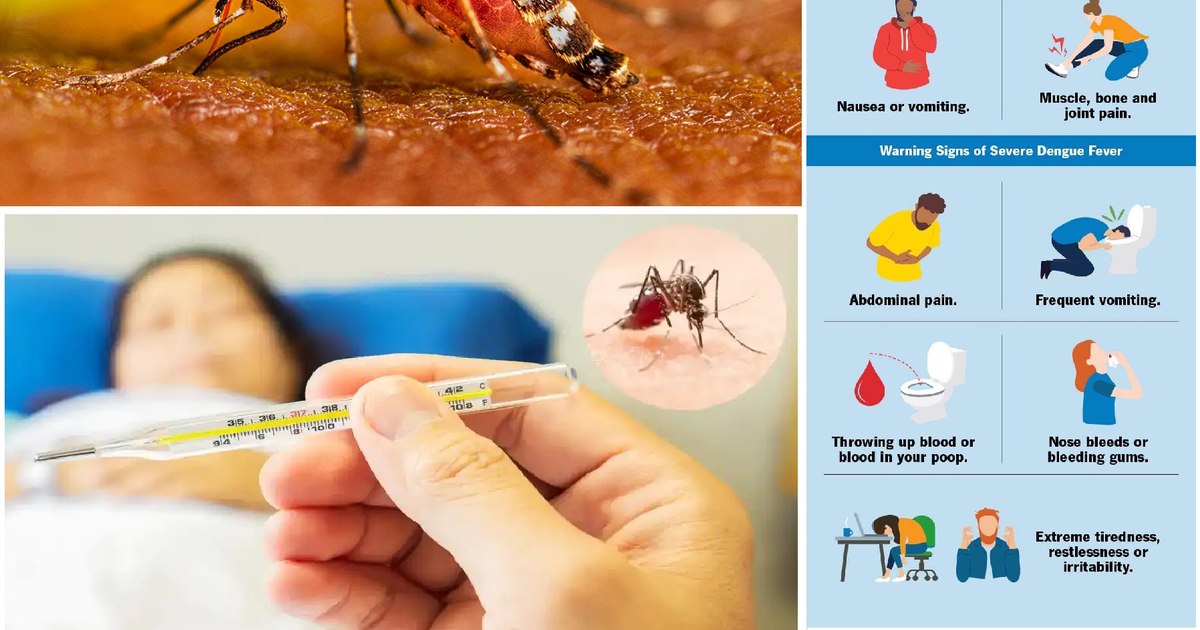
Dengue fever, an extremely dangerous disease that also appeared in Romania Photo Collage DMS
Global warming has created warmer and wetter conditions, allowing some very dangerous disease-carrying insects to thrive. Last month, an alert was issued at the level of 13 countries in the European Union, including Romania, related to the appearance of the dreaded tiger mosquito. According to specialists, a single bite of this insect is enough to transmit diseases such as Dengue, West Nile and others, which until now were specific only to Africa, Asia and South America.
In addition to the favorable climatic conditions, the increase in international travel has facilitated the presence of this insect in the myoritic realms.
Although Dr. Emilian Popovici emphasizes that there is no immediate danger, the presence of the tiger mosquito is an alarm signal. Control includes measures to prevent stings and eliminate breeding sites. The World Health Organization (WHO) has reported Dengue as an endemic disease in more than 100 countries, with more than six million cases and 7,000 deaths recorded last year, mainly in Asian countries such as: Bangladesh, Malaysia, Thailand and Vietnam. Research estimates that nearly 400 million people become infected with Dengue every year, but most (about 80%) have no symptoms.
In Romania, according to a map provided by the European Center for Disease Prevention and Control (ECDC), the presence of the mosquitoes in question was reported in the counties of Constanța, Giurgiu, and Bucharest. Ilfov, Prahova, Sibiu, Mehedinți and Bihor. The species was also detected in many of the popular destinations of Romanians, including Bulgaria, Greece and Italy.
How can you recognize the disease, what are the symptoms
Dengue fever is manifested by a sudden onset of fever (40 degrees), severe headache, pain behind the eyes, muscle, joint and bone pain, nausea, vomiting, swollen glands and skin rashes, experts explain.
These symptoms usually appear 4-10 days after the mosquito bite and can last between 2 and 10 days. Early diagnosis is essential because Dengue Fever can quickly progress to severe forms known as Dengue Hemorrhagic Fever or Dengue Shock Syndrome.
These severe forms are characterized by a decrease in the number of platelets in the blood and damage to the blood vessels, which become permeable. This can lead to shock, internal bleeding and organ failure, and ultimately death. In such cases the symptoms are: abdominal pain, frequent vomiting, vomiting blood or blood in the stool, nose or gum bleeding, extreme fatigue, restlessness or irritability.
Dengue fever is not directly transmitted from one person to another, except for pregnant women who can transmit the virus to their baby during pregnancy or childbirth. Early recognition of symptoms can be life-saving.
When is it recommended to get tested for Dengue?
If you have the symptoms mentioned, it is recommended to do a Dengue NS1 antigen test, which measures the non-structural protein of the virus, or a PCR test.
Subsequently, the test for IgM antibodies is performed on the fourth or fifth day, when the infection is most likely to be detected.
It is important to have a complete blood count (CBC) and, if the result is positive, repeat the test every two days to monitor platelet levels. One of the most relevant indicators is the packed cell volume (PCV) known as the hematocrit test, which measures blood viscosity. This may signal an increase in the number of red blood cells or dehydration.
Why is hydration important?
The patient usually feels better after the fever subsides on the fourth or fifth day. However, if the patient hydrates adequately to compensate for fluid losses caused by fever and vomiting, complications may occur after the fourth day. That’s why specialists recommend consuming between three and five liters of water or oral rehydration solutions, coconut water and soups.
In severe cases of Dengue, intravenous fluid therapy is indicated, in a hospital, where the patient can be closely monitored to manage possible complications.
How to prevent cases of severe Dengue
To prevent severe complications of Dengue, it is essential to have regular blood tests to monitor the levels of blood platelets – platelets – and especially the hematocrit. Hematocrit is the percentage of red blood cells. In Dengue, an elevated hematocrit may indicate possible plasma leakage, while a low hematocrit may signal bleeding. If platelet levels drop significantly, medical intervention may be necessary.
The hematocrit level should be monitored every 24 hours to allow early recognition of Dengue Hemorrhagic Fever and every 3-4 hours in severe cases. To manage symptoms, pain relievers and fever reducers such as paracetamol can be helpful, but non-steroidal anti-inflammatory drugs (NSAIDs) such as aspirin and ibuprofen should be avoided as they can increase the risk of bleeding, a serious complication of the disease.
Physical exertion is also prohibited, rest being essential to prevent worsening of the condition.
Is there a vaccine?
In some regions of the world, a vaccine against Dengue Fever (Dengvaxia) is available and recommended for people who have been previously infected. Clinical trials are also ongoing, but finding an effective vaccine against the four prevalent viral strains remains a challenge for universally effective Dengue treatment.
