
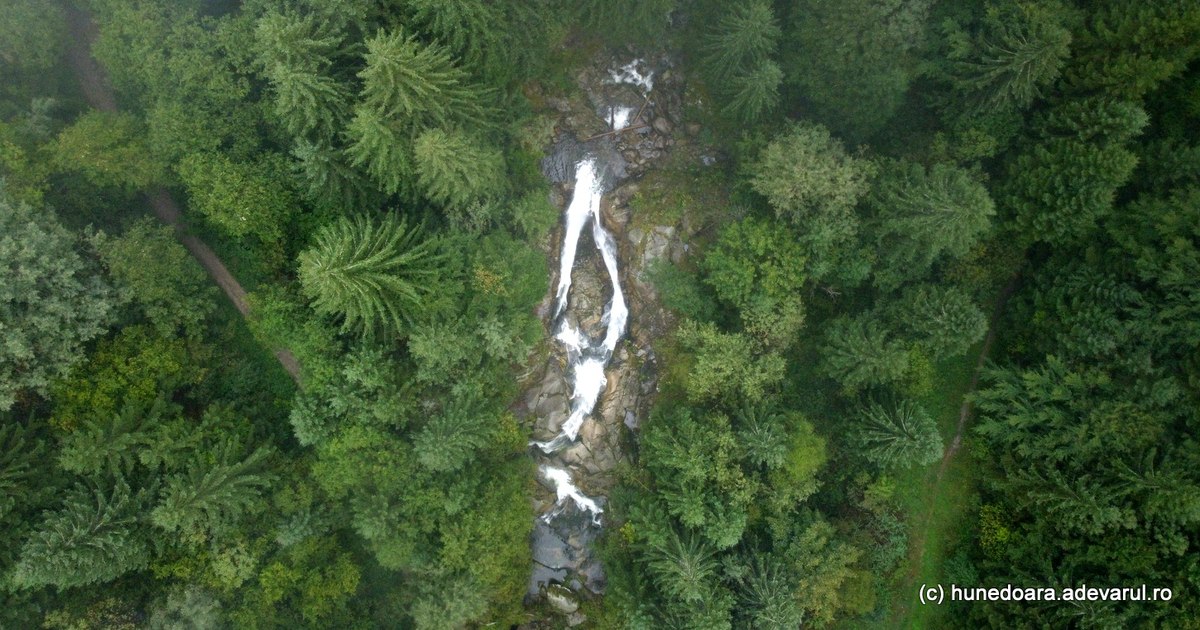
The most popular routes in Retezat have almost always been polluted by tourists. One of them, which crosses the Pietrele valley past the Lolaia waterfall, aroused the fascination, but also the dissatisfaction of the true lovers of the mountain.
Lolaia waterfall from Retezat. Photo by Daniel Guță. TRUTH
For over a century, the valley of the Pietrele River (Nucșoarai) has been one of the most sought-after hiking trails in the Retezat Mountains (video).
In the past, travelers covered most of the route on foot that started from the Ohaba de Sub Piatră village station to the Pietrele Hut in Retezat, located at an altitude of 1,480 meters, the starting point for several mountain routes.
The 20-kilometer route can be traveled by car to the Cârnic stop, the entry point to the territory of the Retezat National Park.
Here, travelers can leave their cars in the parking lot and follow the nearly five-kilometer forest road to the Pietrele complex in Retezat. Some travelers do not take into account the state of the road and continue the ascent by car, for another kilometer, to the Lolaia Waterfall area.
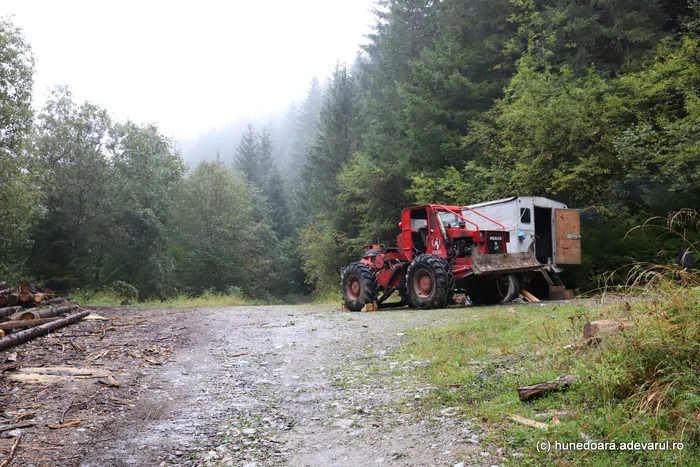
TAF in Retezat. Photo: Daniel Guță. TRUTH
On the same road, tourists can also find the forestry machinery working in the forest in the sustainable conservation area (buffer) of the Retezat National Park.
“In the buffer zones, according to art. 22 of GEO 57/2007 and Law 49/2011, various forestry works are allowed, very clearly regulated: conservation cutting, extraction of accidental and hygiene products, progressive cutting, afforestation, maintenance of plantations“, pointed out the administration of the Retezat National Park.
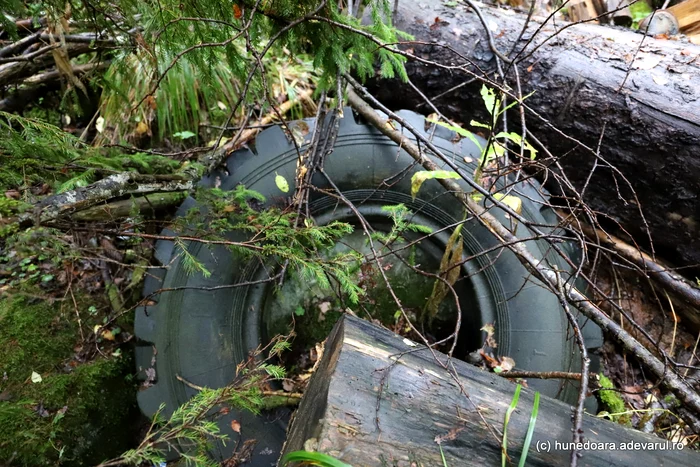
A forester tractor tire, lost on the bank of the Pietrele stream. Photo: Daniel Guță
Beyond the inconveniences related to the presence of cars and forestry equipment in Retezat, some tourists who climb the Pietrele valley also complain about the remains left behind by other hikers.
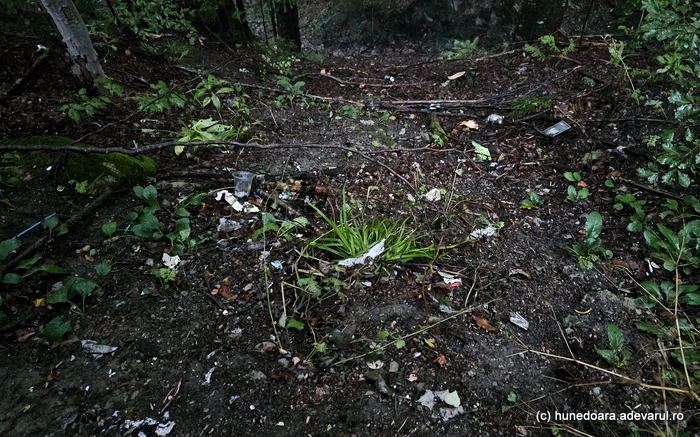
The rest of the tourists, left in Retezat. Photo: Daniel Guță. TRUTH
Some garbage was thrown in the vicinity of the Cârnic parking lot, where a bench intended for tourists is also the place from where some of the guests of the mountain throw their garbage into the forest.
Lolaia waterfall, the pearl of Retezatu
Packaging, plastic bottles, napkins and other objects were thrown on the side of the path that goes up to the Lolaia Waterfall, but also in the forest that surrounds it.
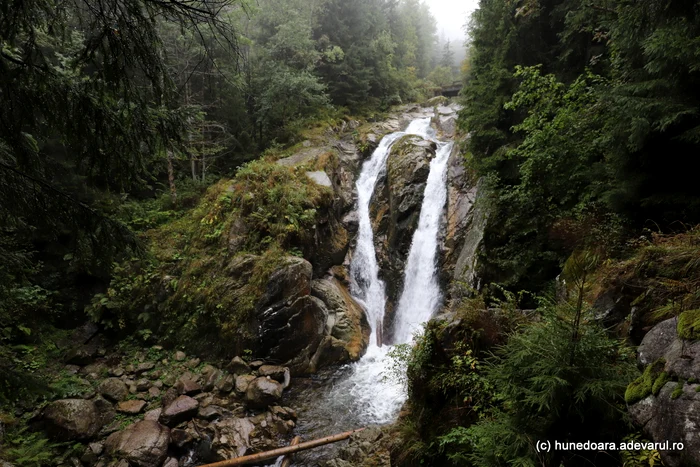
Lolaia waterfall from Retezat. Photo: Daniel Guță. TRUTH
Lolaia Waterfall (video), located about 15 minutes’ walk from Cârnic, is the most accessible point of attraction on the hiking route to the Pietrele and Gențiana cabins. The stream that forms it collects the sources of four large former glaciers: Stânișoara, Pietrele, Valea Rea and Galeșul.
“Their water, collected in the red bed of stone, cuts a finished gorge at about 1,000 meters altitude, with a threshold of 15 meters above which the water breaks into two strips with a thunderous noise. 200-300 meters below the waterfall, the Pietrelor water joins the Chiagul water, also descending from the waterfall, thus giving rise to the Nucșoara river“, informs the geographer Nae Popescu.
Most of the tourists who climb Retezat stop by the Lolaia Waterfall to admire it. Travelers who do not have time to continue on their way turn back here, some delighted by the spectacular appearance of the waterfall. Above Lolaia, other smaller waterfalls give a special charm to the valley carved by nature during the glaciations.
Romanians, uncivilized on the mountain
The numerous tourists who arrive at the Pietrele valley from Retezat have left their negative mark on the environment. The mess left behind is not a new fact, however. In Retezat, over time, numerous travelers, Romanians and foreigners, have complained about those who pollute the mountain.
“In no other place than in the mountains, does pollution, in its various forms, seem more absurd, more incomprehensible, the abnormality being generated by normal people who, some, give you kindness on the way, the very young, unfortunately, they don’t really like to say the usual “Good morning”, so full of meaning on the mountain paths). Near the Lolaia waterfall, two plastic bags thrown into the stream, “competed” the fascinating color of stones, mosses and water. Papers, packaging of all kinds, even intimate objects, which I won’t mention here, could be seen on the route. The cans, by the hundreds, wanted to “sanctify.”“almost everywhere the place”, wrote the publicist Mihai Sin, in 1972.
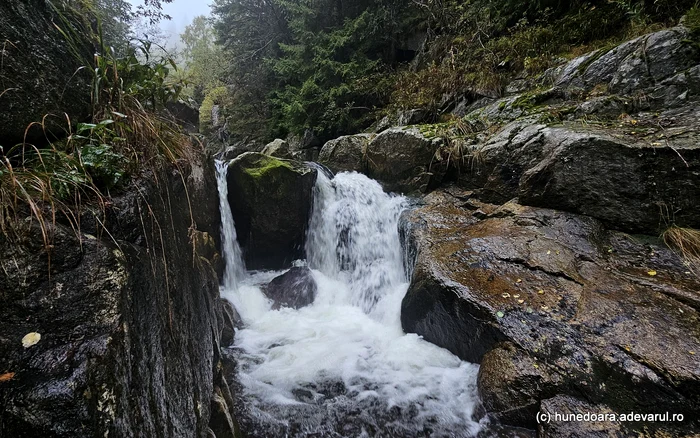
The waterfall on the Pietrele valley. Photo: Daniel Guță. TRUTH
Lake Bucura, one of the most popular camping spots in the Retezat National Park, has also, over time, been polluted by tourists.
“At Lake Bucura, as at other lakes in Retezat, there is a pile of rusty cans, a kind of cemetery of leftovers, surrounded by boulders. Next to each cemetery there is an inscription with the following text, which I quote from memory: “Tourists! These cans were removed from the lake by the Guardians of the West from Filea de Jos commune, Cluj county. Please revise your attitude!” Cans were thrown into the frozen blue, pure water of the alpine lakes! In the meantime others had appeared, perhaps fewer than before the raid of the Guardians of the West, but they had appeared. “Please revise your attitude!” A clean, polite, dignified, pathetic, ultimately dramatic appeal. A call about the effectiveness of which I began to doubt, up there. It seems to me that the appeal to conscience and education, served with drops, becomes pure talk in some cases”the publicist pointed out.
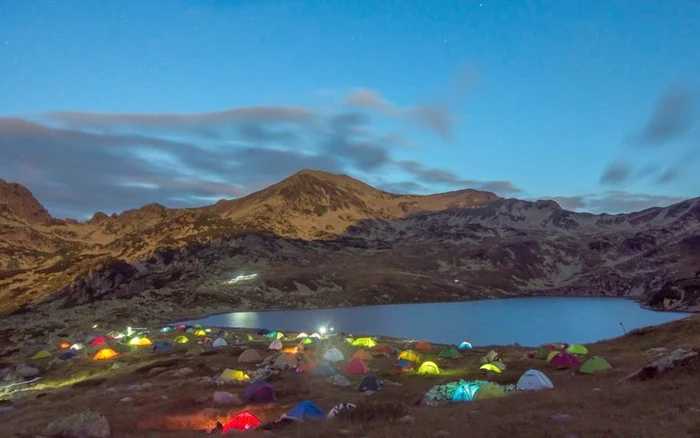
Lake Bucura. Photo: Lucian Ignat.
We have laws and they are not respected, fines are provided and they are not applied, added the author of the report, who had never seen a tourist fined on the mountain for mess.
“On the shores of Lake Bucura, it looks like the largest alpine lake in the country, a lot of tents. It was evening and, viewed from the surrounding heights, the wave of the lake passed from one shade to another. But there was no time for contemplation or reverie: a group of boys and girls, a “sporty” group no doubt, although their silhouettes could barely be seen, were washing in the water of a stream that flowed into the lake. And the “operation” was accompanied by screams and screams hard to imagine in a temple, they say, of silence and seclusion. – “Haidaaaa!” shouted some initiative boys, from a large group of young people from Timisoara. I didn’t even see them up on the mountain, they had arrived at Pietrele in the evening, they had a great time”, recalled Mihai Sin, in 1972.
The foreigners, revolted by the customs of the Romanians on the mountain
At the end of the 80s, the Pietrele refuge appeared in a precarious state, reported the American journalist Mary Hillery, in 1989, after spending two weeks with her husband in the mountains of Romania.
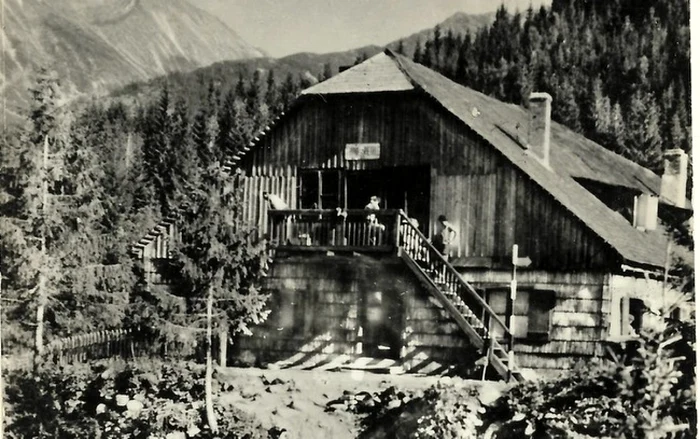
The refuge in Retezat. Photo: The Boston Globe. 1989
“After a one-hour flight, a two-hour bus ride and an hour-and-a-half easy climb, we arrived at the Pietrele refuge, crowded, dirty and noisy, packed with Transylvanian tourists dancing on the porch. The next day was foggy with drizzle, but for our six-day peak expedition, it was a good warm-up. At times, the fog was so dense that we could not see the heights of the mountains, but we could hear the bells of the herds of goats above us.” the journalist wrote in 1989, in the American newspaper “The Boston Globe”.
The surroundings of the Pietrele cottage in Retezat were also full of empty cans, a sign that many of its guests were not educated to respect nature.
“When I came down from the Pietrele cabin, I thought of writing to the Romanian Tourist Office about the abundance of tin cans thrown around it. I have now come to appreciate the management of America’s wilderness parks. Our rules from the reservations about removing everything we bring here from the park were not adopted by the Romanians. The trails were not crowded, but the Pietrele cabin was the dirtiest”Mary Hillery reported,
Some rescuers remember that in the past, however, the mountain trails were not as in demand as they are today, being more difficult to access without proper communication routes and cars.
