
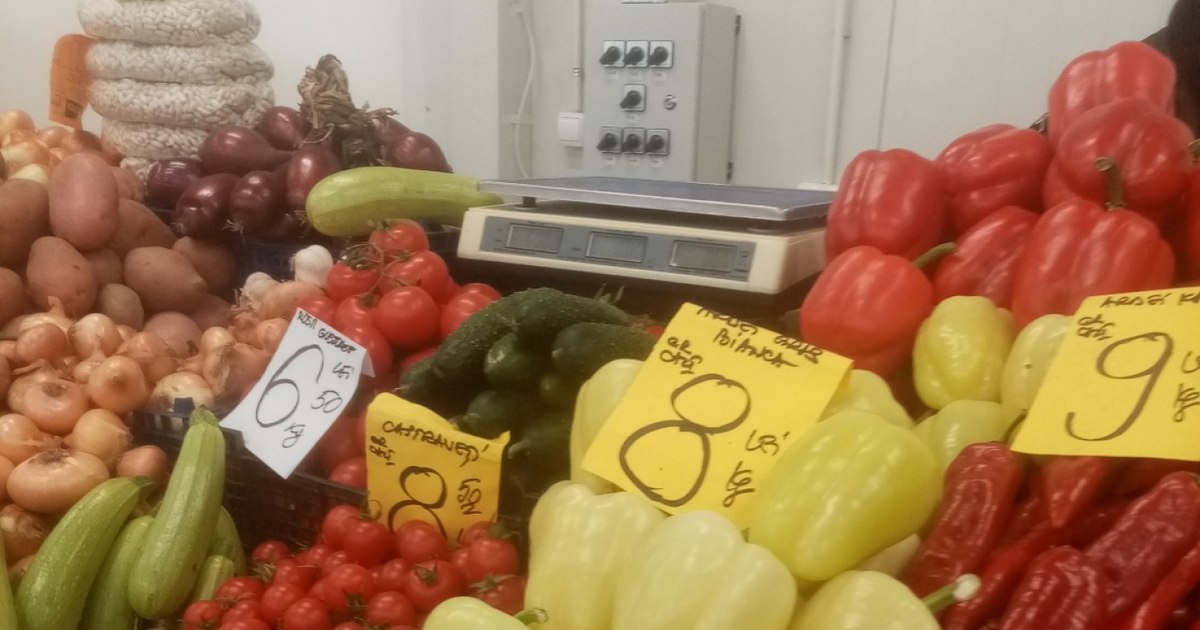
Fruit and vegetables sold in supermarkets, neighborhood shops and markets, controlled by the DSVSA, have proven to be not entirely risk-free, even if pesticide and fungicide residues are within legal limits.
We should opt for seasonal fruits and vegetables, doctors advise us PHOTO: Adevărul archive
The controls carried out by DVSA Olt during August in shops and markets, completed with sampling, showed that the vegetables and fruits sold are not 100% “clean”. Out of 44 analyzed samples, pesticide residues (below the maximum allowed limit) were detected in 10 samples, most in lemons and grapefruit.
“Pesticide residues found in vegetables and fruits are, in particular: azoxytrobin, thiabendazole, acetamiprid, etc. Pesticide residues detected in vegetables and fruits come, in particular, from treatments with fungicides, followed by those with herbicides.
After analyzing them, there were no non-compliant results, i.e. exceeding the maximum allowed limits of pesticide residues, all the values obtained were below the maximum allowed limits provided by Reg. (EC) 396/2005″DSVSA Olt sent, through a press release.
The vegetables and fruits tested came from both import (Turkey, Egypt, Poland, South Africa, Serbia, Greece, Albania, Peru, Ecuador, Macedonia) and domestic production (19 samples were collected within the self-control programs) .
The fact that the residues detected in certain products are within legal limits should not reassure us, doctors say instead, because we almost certainly do not consume a single product that has such substances, and the cumulative effect represents a significant health risk.
Many of the consumers have felt, moreover, on their own skin the effect of the substances used for all kinds of treatments. Some even ended up at the Emergency Room, where, especially during the summer, such presentations are not at all exceptions.
“They came with vomiting, cramps, diarrheal stools”
Most undesirable events usually occur at the beginning of the warm season, when the first fruits and vegetables also appear on the market, and there is a suspicion that, in order to gain “earliness”, producers use substances that force ripening.
“We have found quite a few patients in the Emergency Department who arrive with gastrointestinal symptoms after consuming certain products on the market. All summer we had after they ate watermelon. They came with vomiting, cramps, diarrheal stools and dehydration syndromes. Again, after eating strawberries, with the same symptomatology and skin rashes.” says doctor Antoaneta Bucur, head of the Internal Affairs department at the Slatina County Emergency Hospital.
Investigating the reasons that could have led to the alteration of the state of health, the doctors found out that the patients had newly used certain fruits and vegetables in their diet during that period.
“This is what we face most often, with gastrointestinal symptoms: nausea, vomiting, diarrhea, abdominal cramps, headaches, fatigue, sweating, with such symptoms they reach us. And with allergic skin reactions, they fill up with bumps“, adds the doctor.
Such reactions may also occur with small amounts of residual substance, depending on individual sensitivity. Or they may not appear at all shortly after consumption, instead after long-term consumption the effects can be seen over time, says the doctor.
“And the hormones we get from certain foods, for example. We don’t see their effects immediately, we see them in years, most of all in the upbringing of our children. 4th grade girls look like 8th grade girls. There are things that we see for a long time”adds Dr. Bucur.
The appearance of cancers, especially those in the gastrointestinal sphere, detected much more frequently than 20 years ago, is another alarm signal and is related to nutrition, whether we are talking about excessively processed vegetables and fruits, or ultra-processed products which also have a lot of substances that prove harmful through the cumulative effect.
“Stomach cancers, colon cancers, which have nothing to do with the patient’s hereditary status. No one in the family had, he has. And this is a fairly common consequence. You find them and you don’t know why to tie them”says the doctor.
How we can limit the unwanted effects
Knowing that fruits and vegetables have an increased risk of being treated with products that can affect our health, it should become a priority to be interested in their origin. Let’s look for reliable suppliers, possibly recommended by reliable people if we do not know them personally, if we have decided to purchase from local manufacturers, and this is because qualified institutions still test extremely few products. In the supermarket, where the products, at least theoretically, are tested more frequently than in the market, let’s look for products of EU origin, because the rules that must be followed in the European space are much stricter than in non-EU countries (in non-EU states certain withdrawn phytosanitary products are still legally used in the EU).
A seemingly trivial gesture can also be of great help: washing fruits and vegetables with plenty of water.
“Where it allows us, let’s take their peel, because the toxic is found 70-90% in the outer layer, in the shell. We peel the apples, we peel the pears, we don’t eat them with the skin anymore”, explained the doctor Antoaneta Bucur. The specialized products that are sold including at the vegetable-fruit stand to be used for washing these products are not very effective, the doctor also says.
An advice that doctors also give us is to opt for seasonal products, brought from farms as close as possible to the place of sale, it being obvious that products that cross seas and countries need more treatments to withstand transportation and storage.
