
Difficulty breathing, which may be accompanied by chest pain, fatigue, palpitations, dizziness or fainting, are signs and symptoms that may indicate potentially severe heart disease. Mitral regurgitation, also known as mitral regurgitation, occurs when the mitral valve does not close properly. Thus, some of the blood that reaches the left ventricle returns to the left atrium.
As a rule, the disease progresses slowly, and clinical manifestations can appear after many years of evolution of the condition. Left untreated, mitral regurgitation can lead to severe complications such as heart failure, pulmonary hypertension, or atrial fibrillation. Periodic check-ups with the cardiologist and performing a cardiac ultrasound allow early diagnosis of mitral regurgitation and the establishment of appropriate treatment.
The treatment of mitral insufficiency depends on the severity of the disease and the particularities of each patient. In cases of mild mitral insufficiency, the doctor may indicate monitoring or drug treatment. Conversely, in severe mitral regurgitation, surgical treatment is needed, involving mitral valve repair or replacement, as appropriate.
Currently, surgical interventions are most often performed without opening the sternum, through minimally invasive cardiovascular surgery procedures, or through endovascular interventional cardiology procedures. Transcatheter mitral valve repair is indicated in cases where open heart surgery cannot be performed, while transcatheter mitral valve replacement is dedicated to those patients in whom neither classic nor minimally invasive surgery can be performed.
In transcatheter mitral valve replacement, the surgeon inserts a prosthetic valve through the blood vessels to the heart using a catheter. Being minimally invasive interventions, the advantages for patients are multiple, from reduced risk of complications and quick recovery, to short hospitalization, with the resumption of usual activities shortly after the operation.
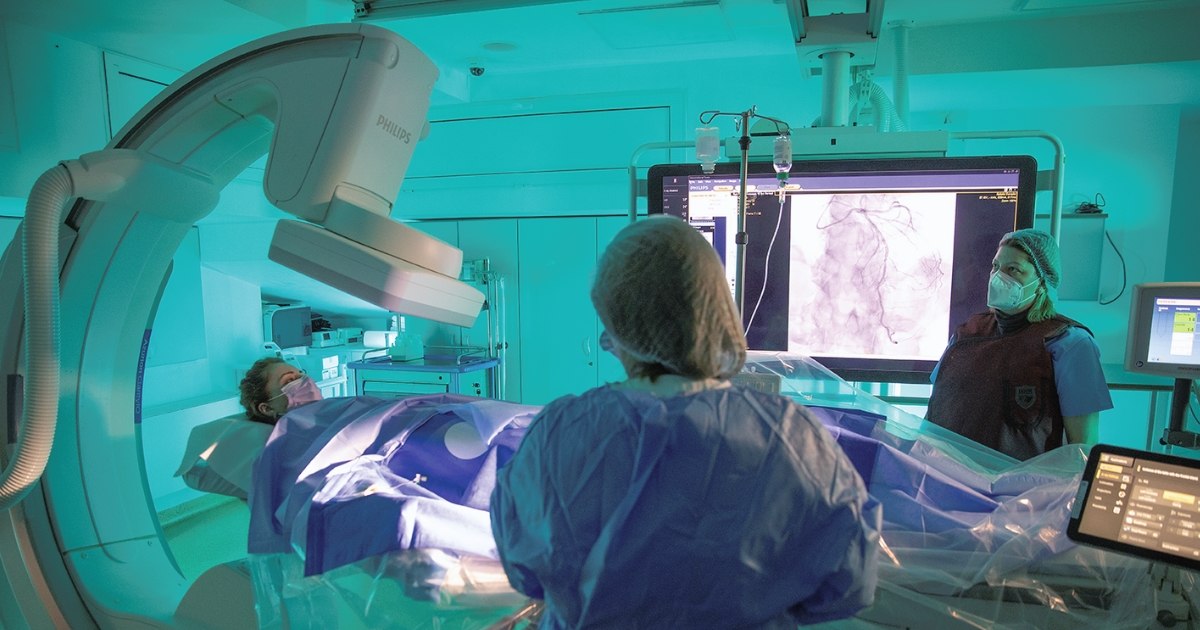
Patients with cardiovascular diseases have access to state-of-the-art treatments at the Center of Excellence in Minimally Invasive Cardiovascular Surgery at the SANADOR Clinic Hospital. Depending on the indication, surgical interventions are performed both classically, open, or minimally invasively, through minithoracotomy or endoscopic surgery, in the first fully digitized operating room in Romania. Interventional cardiology interventions are carried out in the Catheterism Laboratory at the SANADOR Clinical Hospital, equipped with high-performance equipment, including two Philips Azurion 7 angiographs.
Advanced medical care is provided in the only Department of Anesthesia and Intensive Care for Cardiovascular Surgery of category I in the private medical system in Romania, as well as in the Advanced Monitoring and Treatment Unit for Critical Cardiac Patients (USTACC).
The SANADOR Clinical Hospital has an Emergency Department, the only one in the private medical system in Romania, where cardiovascular emergencies are successfully managed. At the SANADOR Clinical Hospital, 26 on-call lines operate, including cardiology, interventional cardiology, cardiovascular surgery, USTACC and cardiovascular ATI lines.
World Heart Day is marked annually on September 29, an opportunity to raise awareness of the importance of prevention, early diagnosis and timely treatment of cardiovascular diseases. In this sense, periodic check-ups with the cardiologist and performing a cardiac ultrasound are essential.
