
The story of Noah’s Ark, iconic in the biblical tradition, symbolizes salvation and hope. Researchers claim to have found the remains of the boat near Mount Ararat in Turkey, a country that offers the traveler absolutely fascinating stories.
Image 1/10:
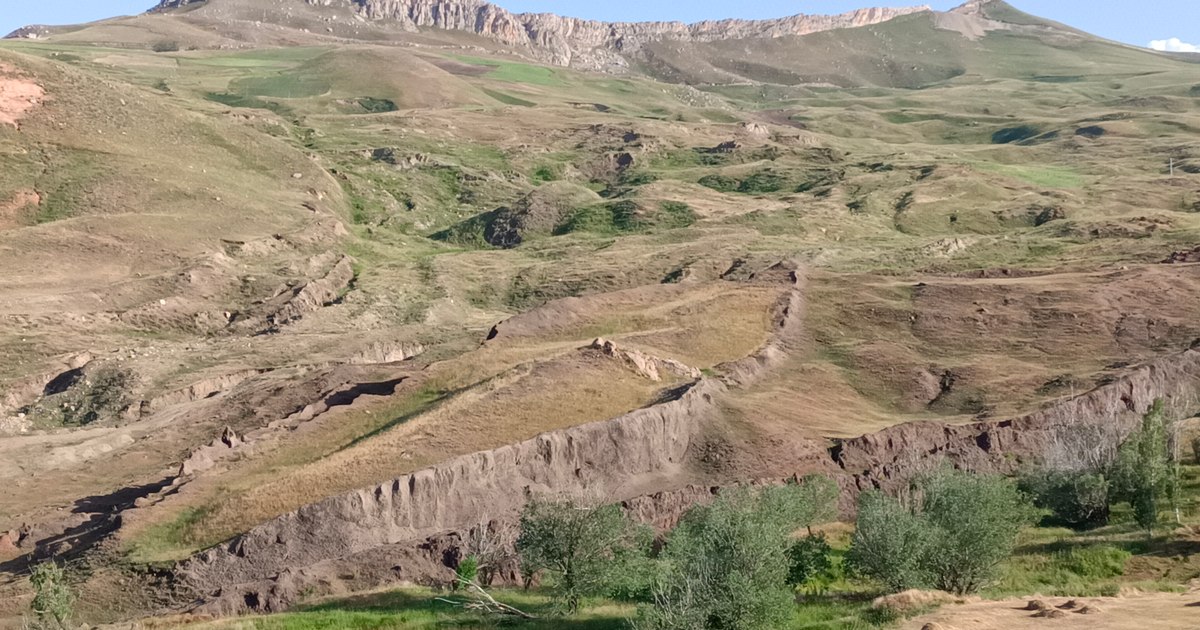
Noah’s Ark archaeological site in the Dogubayazit Agri area in Turkey Photo Daciana Stoica for the Truth
According to legend, Noah built a huge ark to save his animals and family from a devastating flood. Turkish researchers say they know the exact location of the remains of the legendary boat, which would be near Mount Ararat, a place also mentioned in the Bible. The discovery, made in the middle of the last century, has been promoted more intensively lately, causing a wave of interest and controversy, raising questions about its veracity and significance in the context of human history.
But the story of Noah’s Ark is only part of Turkey’s cultural heritage. Lake Van, the largest lake in the country and among the largest salt lakes in the world, is also located in the extreme east of the country, on the border with Iran. Here, the vestiges of ancient civilizations take us back thousands of years.
The ruins of the Kingdom of Urartu, an empire that flourished in the area over 3,000 years ago, are scattered throughout the region. Ishak Pasha Palace in the Doğubayazıt – Ağrı area is an outstanding example of its architecture, evoking the stories of “One Thousand and One Nights”. This imposing palace not only offers a glimpse into the military history of the empires that passed through this area, but also a spectacular panorama of the surrounding volcanic mountain landscape.
By exploring the myth of Noah’s Ark and the discoveries related to it, we expand our horizons to a region rich in history and culture. Ancient vestiges and natural beauty blend harmoniously, offering us not only a glimpse of the past, but also an invitation to discover the richness and diversity of the Turkish landscape. From biblical legends to the historical and natural treasures of Lake Van, this journey promises to reveal countless secrets of Turkey.
Although today we focus on the fascinating discovery of Noah’s Ark, it is important to note that Turkey is rich in history and treasures, which we will explore in future editions.
Noah’s Ark and the Flood
The story of Noah’s Ark, one of the most famous in the Bible, is told in the Book of Genesis. According to the Bible, God saw that the earth was full of violence and corruption and decided to bring a flood to destroy everything. Noah was instructed by God to build an ark to save his family and animals from the devastating flood. He was also told what kind of wood to use, but also what dimensions the ship should have. Therefore, the ark was constructed of gopher wood (cedar according to other sources), covered with pitch, both inside and out, to make it waterproof.
According to the story, God sent a flood that covered the entire earth, lasting 40 days and 40 nights. The water rose for 150 days before the ark came to rest on Mount Ararat, often associated with the area in eastern Turkey, although the Bible does not specify a specific location.
As a side note, although it is outside the borders of modern Armenia, Mount Ararat is the main national symbol of this country, being considered a sacred mountain by Armenians (the area once belonged to Armenians). It is the highest mountain in Turkey, also known as “Masis”, “Agiri” or “Sour“.
The snow-clad peak of Ararat offers an impressive panorama of the region. Spectacular scenery, hiking opportunities and mountain expeditions are among the attractions of the area.
In the footsteps of history, in search of Noah and his ark
But what if there were tangible evidence of this legendary boat?
Researchers in Turkey have claimed the discovery of the remains of Noah’s Ark, claiming to have identified the remains of the boat near Mount Ararat / Ağrı. This claim has sparked a wave of interest and controversy, raising questions about the veracity of the discovery, its historical significance, and implications for understanding the myths and legends of the past. Over the years, numerous expeditions and archaeological discoveries have been reported that claim to have found the remains of the legendary ark.
In 1959, Captain İlhan Durupınar, a Turkish army officer and expert in photogrammetry (the technique of measuring distances by means of aerial photographs – topography), noticed an unusual formation in an aerial photograph during a reconnaissance flight in the mountainous region of the east Turkey, close to the border with Iran and Armenia. The formation was shaped like a boat. This is where the real story begins, as Captain İlhan Durupınar’s discovery is one of the most interesting and discussed possible proofs of the existence of Noah’s ark.
The theory is also supported and promoted by the current Turkish government. We learned interesting details about this discovery right on the spot, with the help of a local guide, Adem Kocaman, during an event organized this summer by the Turkish Tourism Promotion and Development Authority (TGA), part of the Ministry of Culture and Tourism.
“According to religious writings, Mount Ağrı (Ararat) is where Noah’s Ark came to rest after the Great Flood. This area, called “Noah’s Lost City” or “Noah’s Ark Trail”, is believed to be the place where the sacred story of Noah took place. This place is located 3.5 km from the Turkey-Iran transit road, south of Mount Ağrı, between the villages of Telçeker and Mesar”Adem Kocaman mentioned about the location of the legendary ship.
Turkish officer’s discovery, only partially confirmed
The place itself is a hilly and rocky area. Seen from afar, the formation looks like a mound of earth in the shape of a giant boat. A small museum has been set up on a nearby ridge, behind which there is a belvedere area. The museum exhibits several rocks and fossils that are said to have been extracted from the formation, as well as images of the person who made the discovery in the late 1950s.
The guide also told us: “After seeing the photo, Durupınar thought it could be Noah’s Ark, so he brought the discovery to the attention of the Turkish government and the scientific community. İlhan Durupınar’s discovery captured the attention of the public and the media globally, sparking a special interest in the story of Noah’s ark.”
He also mentioned that: “Noah’s Ark is mentioned in both the Torah, the Bible and the Holy Book of the Koran, and all civilizations speak of Noah’s Ark in their history. Of course, there are many theories about Noah’s Ark.”
A number of pieces of evidence led the Turks to consider this theory, as guide Adem Kocaman also noted: “Interestingly, Durupınar’s discovery had dimensions that correspond to those mentioned in the Bible: approximately 137 meters long (300 cubits), 23 meters wide (50 cubits) and 13.5 meters high (130 cubits). Metal objects were also found in the archaeological site. During the excavations, many pieces of wood were also discovered. It was an incredible sign. See here a small part of what was discovered. You can touch these fossils. Do you feel the energy? Let’s go outside and see the reality.”
The Search for Noah’s Ark – a story of decades of expeditions and discoveries
Also on this occasion, we also learned that the discovery of the Turkish officer has continued to attract the interest of explorers and researchers over the decades, becoming the subject of several expeditions and studies. In 1960, a team led by Dr. Arthur Brandenberger and Dr. George Vandeman visited the location. Although the conclusions were not final, they acknowledged that the formation is remarkable.
And in 1977, another American explorer, Ron Wyatt, made several expeditions to this area and stated that he found wooden structures and other evidence that would support the hypothesis that the formation could be the ark. His findings were controversial and criticized by many experts.
Earlier, in 1955, an expedition led by Fernand Navarra claimed to have found fragments of wood on Mount Ararat, which he believed came from the ark. And more recently, in 2010, a team of evangelical explorers from China and Turkey announced that they had found wooden structures on Mount Ararat dating back some 4,800 years that they claimed could be the remains of the ark.
Instead of conclusion
The international scientific community maintains that, to date, there is no definitive archaeological or scientific evidence to confirm the existence of Noah’s Ark as described in the Bible. Many of the discoveries are disputed or considered fraudulent, with many historians and archaeologists considering the Noah’s Ark story to be a myth or legend, similar to other flood stories from ancient cultures, such as the Epic of Gilgamesh in Mesopotamia.
Some geologists analyzed the formation and concluded that it could only be a natural formation of rock and earth, without completely ruling out the possibility that the result was influenced by human intervention.
In 2023, however, the first results of rock and soil samples taken a year earlier from the area believed to contain the remains of Noah’s Ark, located in the Doğubayazıt district of Ağrı, were published by a team of researchers from İbrahim Çeçen University of Ağrı (AİÇÜ) and Istanbul Technical University (İTÜ). According to these results, it was established that there was human activity in the region since the Chalcolithic period, between 5500 and 3000 BC.
The vice-rector of AİÇÜ, Prof. Dr. Faruk Kaya, mentioned on this occasion: “The flood is known to date back 5,000 years. In terms of dating, it has been stated that there was life in this region. This was confirmed by laboratory results. We cannot say, however, that the ark is here based on dating alone; long work is needed to clarify this aspect”.
The researcher also mentioned that the subject was debated during the 7th International Symposium on Mount Ararat and Noah’s Ark, stating: “Another important aspect of the symposium was that we agreed that more effective results could be obtained by conducting joint research in Cudi and Ararat, areas that we know to be part of the Mesopotamian region and which are mentioned in the Qur’an and the Books Holy. From now on, we will intensify our activity both in Cudi and on Mount Ararat.”
In conclusion, Captain İlhan Durupınar’s discovery represents one of the most discussed and controversial possible Noah’s Ark sites. While some believe it could be a significant clue, others believe it is just a natural formation. What is certain is that the story continues to fascinate and inspire new research and expeditions.
The formation remains a subject of debate in the scientific community, with differing opinions on its nature and origin. At the same time, Noah’s Ark remains a fascinating subject of study and speculation, both for theologians and archaeologists. Despite numerous expeditions and claims of discovery, its story remains legendary and continues to inspire and intrigue people around the world.
Today, at the Noah’s Ark Center, people from all over the world gather to discover what is believed to be Noah’s Ark.
