
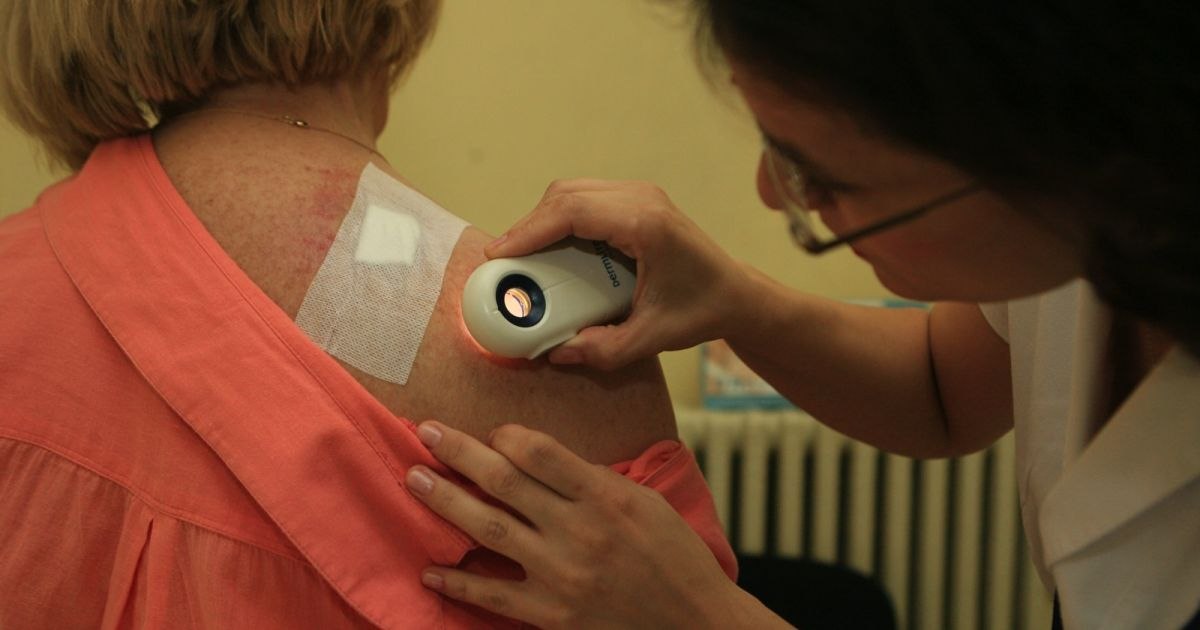
A vaccine will arrive in Romania for the first time. It is about the serum that immunizes against one of the most painful diseases: Shingles. The announcement was made by Dr. Gindrovel Dumitra, coordinator of the vaccinology group within the National Society of Family Medicine. The specialist gave more details to “Adevărul” journalists.
In the spring of this year, Romania will register a first in terms of population immunization. A new vaccine will be brought to our market which, for now, is only found and administered abroad.
“It’s about the vaccine against Zoster, also known as Herpes Zoster. The serum is called Shingrix, it is produced by Glaxo and is aimed at people over the age of 50. It is a vaccine approved by the European Medicines Agency, and last fall a request was submitted to be marketed in Romania as well”, explained dr. Gindrovel Dumitra. The National Medicines Agency has not yet issued the opinion, but this is expected to happen soon. “I expect that in the spring of this year Romanians will be able to immunize themselves against Zoster. I cannot tell you at this time whether the serum will be settled or not. To be determined. But what I can tell you with certainty is that people over 50 who want to prevent the onset of this terrible disease will be able to do it.” said the specialist.
Vaccination schedule against Zoster
The Shingrix vaccine is the second vaccine already in use abroad. “The first was Zostavax, which appeared about 10 years ago in Western countries. Why didn’t we purchase it too? It is about the interest of the manufacturing companies who had no interest in marketing it in a country where adult vaccination is not of interest to the population”, explains the specialist. As for the vaccination schedule, it involves the administration of two doses at an interval of two months and a booster. “It is not known, for now, at what time interval the recall will take place, if it will be 5, 7 or more years. This information is to come in time”said Dr. Gindrovel Dumitra.
He explains that all people who have had chicken pox at some point in their life are at risk. “The chance of there being among the population people who have not had chicken pox is quite small, except for the cohort of vaccinated children. Otherwise, almost everyone has had this childhood disease. So, almost everyone is at risk”. But, continues the doctor, people over 50 have a higher risk of getting sick. The reason? With age, the body’s immunity also decreases. “At risk are people with chronic diseases that cause immunosuppression, patients undergoing immunosuppressive treatments or we are only talking about the so-called immunosenescence, i.e. the physiological aging of the immunological response in people over 50 years old”explains dr. Gindrovel Dumitra.
Chickenpox vs. Shingles area. What is the connection between these two diseases?
Dr. Sandra Alexiu, president of the Bucharest-Ilfov Association of Family Physicians, explained to “Adevărul” what is the difference between chicken pox and Zoster, but also how these two diseases are correlated, precisely to avoid any confusion. “Zoster and chicken pox appear as a result of infection with the varicella-zoster virus. The first time you come into contact with this virus, you get chickenpox. After healing, the virus remains confined in the body, on a ganglion nervous. And at some point in life, at a time when your immunity isn’t very great, it kicks in. Right now you’re not getting chicken pox, you’re getting Zoster,” explains dr. Alexius.
Chicken pox is an acute, highly contagious infectious disease that manifests itself throughout the body. “In the case of Zoster Zone, which is the second stage of the infection, a skin infection appears, especially on half the body, in the skin area that is assigned to the respective ganglion, where the virus is found. So if it’s lodged in a ganglion somewhere in the chest area, you’ll have pustules half way up your body along that nerve. If they burst, these pustules are contagious, and anyone who comes into contact with that liquid will get chicken pox.” continues the specialist.
Zoster area is accompanied by intense pain, it is hard to bear: “These pains can occur even before the skin infection occurs. And there are pains that can even mislead doctors, because they very well mimic the occurrence of a heart attack, for example, or a biliary crisis. It depends on the nerve that is affected by the virus. There were situations when patients were treated for biliary crisis, and in two or three days the symptoms specific to Zoster appeared, those vesicles filled with liquid”.
Dr. Sandra Alexiu explained that these pains persist even after the pustules have healed. They are excruciating and compared to the pains of childbirth. And the older the patient is, the longer these pains can persist. “If the patient is 70-80 years old, he could suffer from pain for up to two or three years after the cure of the disease”, explains the specialist. The pain caused by this condition is treated through a complex therapy, and sometimes even the anesthesia of the affected nerve is resorted to, the doctor also pointed out.
What is the risk of children vaccinated against chicken pox who nevertheless have contact with the virus
Another aspect that needs to be clarified concerns the situation of children who are immunized against chicken pox and who nevertheless get this disease. “These children get a mild form of chicken pox, being immunized against the disease. Parents need to know that their little ones, even though they got sick, are not at risk of developing Zoster later. They are safe from this disease. Vaccinated people do not develop crusted forms of chicken pox, so they do not leave scars, are not contagious, and do not retain the virus in the body. So I don’t do Zoster”, Dr. also explained to us. Sandra Alexiu.
