
The cancellation of the elections followed by the resignation of former President Klaus Iohannis creates an unprecedented moment. The function, however, was interim insured, for shorter periods, by Nicolae Văcăroiu and by Crin Antonescu, the current candidate of the ruling coalition in the presidential elections.
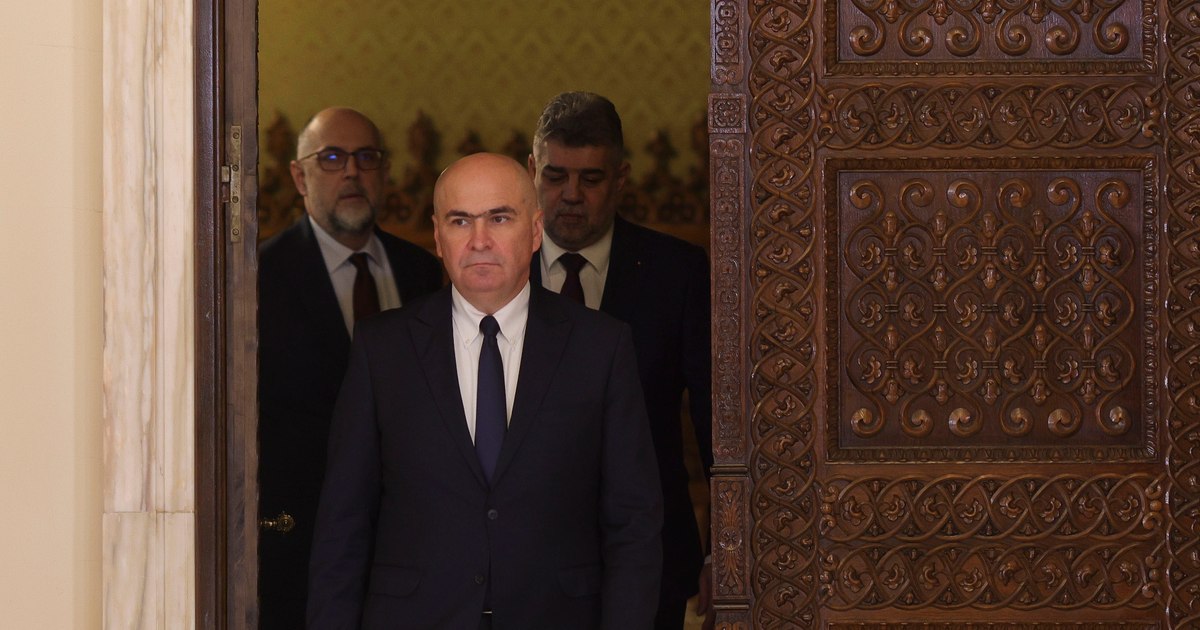
The interim management of the state is provided by Ilie Bolojan Photo Inquam Photos
Romania has had two interim presidents in the last 35 years. However, the current situation is a different one, in the context in which it will not be concluded with a return of the president, but with the election of a new head of state. The two previous interim were insured in the context of some suspensions of the former President Traian Basescu.
Nicolae Văcăroiu, the interim chief who did not want his function
The first to ensure this role was Nicolae Văcăroiu, between April 20 and May 19, 2007, during the first suspension of President Traian Basescu. At that time, Nicolae Văcăroiu was leading the Senate, a position he fulfilled from December 2000 to October 2008. Previously, between 1992-1996, he was a prime minister.
During the interim period, Văcăroiu delegated his people from the Senate to advise him, in the context in which he faced, between other challenges, with an absence of the heads of Department in Cotroceni. During the interim period, he organized weekly meetings with the head of the Executive and with the heads of Parliament. At the end of the 30 days he had at his disposal, Văcăroiu said on the edge of the highway, in Pitesti, that he did not want this role.
Crin Antonescu, in power behind
The current candidate supported by the governing coalition in the presidential elections, Crin Antonescu, was the second interim president, in 2012, during the second suspension of President Traian Basescu. Antonescu spent 46 days in Cotroceni, after the USL alliance changed the heads of the Parliament and managed to suspend the president. The result would be the same, and Basescu would return to office, after the result of the dismissal referendum did not reach the required 50%quorum. At the ballot box, 46.24% of Romanians were presented.
At that time, Crin Antonescu took over the interim leadership of the state from the position of chief of the Senate, which he occupied by July 3, 2012-4 March 4, 2014. In 2014 he was replaced at the PNL leadership by Klaus Iohannis, and in the Senate by Călin Popescu Tariceanu.
Bolojan’s mandate, unprecedented
The interim now provided by Ilie Bolojan will have a period of 100 days, ie the longest period is installed a temporary boss. The chief editor of Historia, Ion M. Ioniță, explained for “Adevărul” that the current situation is completely different from the previous interim, given the resignation of Klaus Iohannis, a prime minister for Romania. “The interim president has absolutely the same skills with a normal president, to say, with a few small issues he cannot do. (. (…) Now there is a completely different situation and the interim president must act precisely in order to restore confidence, to ensure that we will have a correct, transparent electoral process ”, explained Ion M. Ioniță.
The previous interim, given the president’s suspension, “They didn’t bring anything good.”
“There were two political suspensions. In the first interim provided by Mr. Văcăroiu, he wanted to not interfere with the presidential function. Wanted to have the lowest profile possible. That is, to keep his place, simply, if something had happened and a document signed by the president was needed, he would have done it to not block the country, but he did not even enter Trajan’s office Basescu, as far as I remember ”pointed out Ion M. Ioniță.
“In the second term I had Crin Antonescu. He did not have anything to bring him anything, nor to Romania. There were two crises that Romania could have been exempt. Romania should not have gone through this. They were simply the result of sterile, political battles in Romania, without vision. And in the first, but also in the second suspension, with the forcing many constitutional and legal provisions. It was a huge effort, especially in the second suspension, escaping the president, but who did not bring anything to Romania, and even put the country in a difficult situation, because indeed, the European partners wondered What happens in Romania. They were very worried about the political stability, the extent to which these suspension actions fall within the Constitution. They brought political costs, image, they a lot warmed up, but they practically did not bring any positive moment. They did not obtain any image capital, Nicolae Văcăroiu did not even want to have such a thing. The function performed it because it had to perform it ”, explained the chief editor of Historia.
The elections that will give a new head of state will take place on May 4 and May 18. The election campaign for presidential elections 2025 begins on April 4 and ends on May 3. On February 18, however, the electoral period begins, and the candidates will be filed until March 15, the appeals will be analyzed until March 19.
