
The researchers urge people to go out and watch the sky this fall, as Saturn becomes visible throughout September.
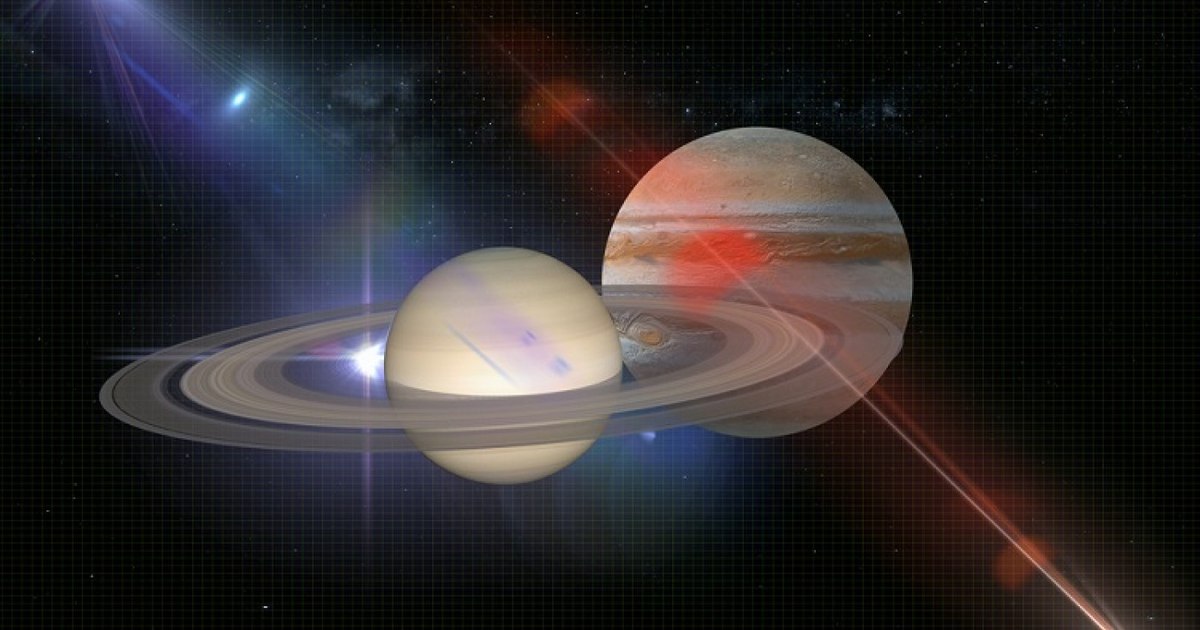
The planet can be seen shining in the sky in September / Photo source: Archive
“Look up!” Experts urge the public to observe the planet Saturn and the heavenly events of autumn
Saturn will be very visible throughout September, and scientists say that looking at the planets and stars allows us to see “The overall image”, According to theguradian.com.
He fascinated minds like Galileo’s, inspired composers and fed science fiction fantasies, but although Saturn will be visible throughout September, who really looks at him?
The gas giant with the rings will be very visible on the night sky all month, reaching its maximum brightness on September 21, when the Earth will be directly between Saturn and the Sun, a configuration known as the opposition.
Moreover, the planet will have an unusual appearance, with the almost visible rings in the profile towards the Earth, after an event called “The passage of the rings”, which happens about every 15 years, when the planet is at the equinox.
Show in the sky: Saturn, “the jewelry of the solar system” will be visible this month and will bring “for the soul”
The observers of heaven from some parts of the world, including the US and the United Kingdom, could have another show this month, as Saturn, Titan, and its shadow will pass in front of the planet, revealing a body that scientists believe could host life.
Experts urge the public to go out and watch the sky. “It is good for the soul, I think, to remind us that we live on a planet that is part of a moving solar system, which in turn is part of a galaxy,” said Prof. Chris Lintott, from Oxford University. “For me, by the mere look up, through the attention paid to the Moon and the planets, I truly feel the cycles of life.”
Dr. Ed Bloomer, an astronomer at the Greenwich Royal Observatory, said that those who hope to see Saturn should go out at night and look south, where the planet will appear as a white, shiny and constant object, without flickering. If the observation is difficult, there are numerous applications that can indicate the exact position of the planet.
Those who hope to see Titan’s transit will need a telescope
“It is quite challenging, you look at a small point that moves in front of a larger one, but … it is technically possible”said Bloomer. The transit is expected shortly before the East in the UK on September 20.
Bloomer explained that the observation of Saturn and other objects in the sky helps people understand the mechanics of the solar system. “The planets, in particular, move relative to the background of the stars”he said.
Dr. James O’Donoghue, an expert in planetary astronomy at Reading University, said he showed Saturn people through the telescope for the first time maybe 50 to 100 times. “Sometimes people are 70 years before seeing it like this.”he said. “And I can’t see it now because it’s dark outside, but I’m sure their hair is on the head of emotion.”
O’Donoghue said that the fifth planet in the sun is particularly special. “Saturn is the jewelry of the solar system. I know everyone has said that, but I really believe. And I think it is more than that: it is a symbol of science.”
Saturn’s system is unusual because Titan-a month often visible as a bright point near the planet-is considered to have underground liquid water, as well as lakes and methane seas and sealer on the surface, making it a key candidate for the possibility of life.
O’Donoghue added that, in addition to raising many questions, looking at the sky helps people gain perspective. “We all have many problems every day”he said. “I would say that it is looking at the bigger image, but it is the biggest image, and I think it is really beneficial for mental health.”
Saturn is one of the planets that can be observed with the naked eye
Although light pollution causes many people to see the Milky Way, Saturn is one of the planets that can be observed with the naked eye.
Lintott said: “Some of the most memorable moments of my life have been under dark heavens, looking with astonishment and admiration the Milky Way with their mouths. So, a dark sky is extraordinary and should care about the bright pollution.
But, on a regular day, you can see the moon and planets as well in central London, or in the center of Oxford or Edinburgh, or from anywhere, as well as on a hill in the middle of Lake District or a place with dark sky. “
Other heavenly events that will take place this fall
October 29 – Mercury will be visible Mercury is a planet difficult to see and potentially dangerous because it is closest to the sun. However, when it reaches the greatest east distance to the Sun, on October 29, it will appear down the horizon, during the sunset, and could be visible to the naked eye. “It will be a challenge, and the viewer will have about half an hour to see him, with a perfectly flat horizon,” Bloomer said. “Possible, but difficult.”
November 17-18 – Meteors Leonides active meteor throughout November, the peak of the rain of Leonide will be in the middle of the month. The show takes place when the Earth passes through a cloud of debris left by Comet Tempel-Tuttle, which orbits the Sun every 33 years old.
November 21 – Uranus visible Uranus is often difficult to see with the naked eye, defending weakly on the night sky. However, when Uranus is in opposition, the earth is between the planet and the sun, thus being the most visible. Bloomer recommends a dark place and clear sky. “Little binoculars or telescope recommended for those who have no excellent view!”
