
University professor Valerius M. Ciucă harshly criticizes the CCR’s decision regarding special pensions. He says that “all the Romanian judges could cry” and notes a materialistic and unforgiving approach to public institutions.
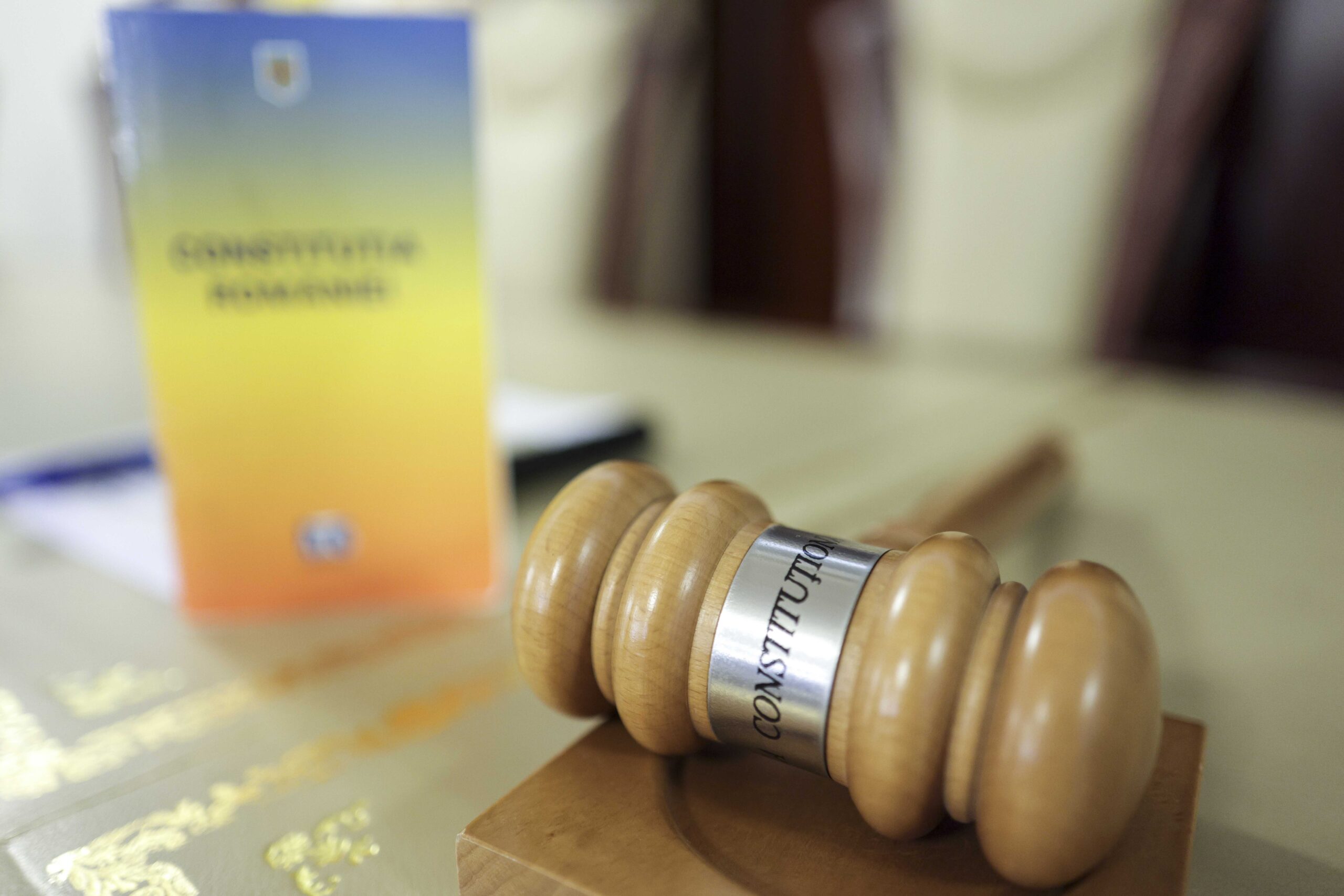
CCR rejected on Monday the reform of magistrates’ pensions PHOTO Inquam Photos / Octav Ganea
University professor Valerius M. Ciucă, expert in constitutional law and former judge of the European Union Court, expressed his indignation at the way in which the Constitutional Court of Romania treated the issue of special pensions. According to him, the CCR’s decision reflects an approach that “serves the procedure at the expense of law and equity.”
“The waters are clearing, easily, easily… The five invoke the procedure… What a scandalous way out of a destructive situation for all…!!! Which constitutional court in the world, from the beginning until now, in these last two centuries, has invoked something like this??? The procedure serves the right and the idea of fairness, not the other way around! Aquila non capit musca!!!”the professor wrote on his Facebook page, stressing that the CCR should not be reduced to a simple procedural check, but act as a guardian of fundamental principles.
Valerius M. Ciucă also criticizes the role of the Superior Council of Magistracy (CSM) in the context of the decision, considering that the Romanian institutions exceeded the limits of their constitutional prerogatives: “How can I ask for an opinion from the one who denounces, ante factum, my regulatory intention??? Is this opinion written in the Constitution of Romania, or in the consolidated constitutional customs? Is there, in this fundamental law, any mention related to the CSM, as a strictly professional body, by no means as a substitute for the Ministry of Justice…?”
The professor also draws attention to the way in which Romanian judges have been turned into public targets, with moral and social repercussions: “All the Romanian judges, to whom you have caused immense shame through this unforgivable materialistic and personal approach, could cry, today, knowing that they are assimilated with you, with the five… It was unforgivable for the CSM that it pre-pronounced something unacceptable at the level of a power holder, a judge.”
In his opinion, the CCR could have withdrawn from this competence, in order to respect the constitutional and moral principles: “How simple it would have been to declare, today, your incompetence, according to the Romanian Constitution, according to European constitutional norms and according to common morality that you do not do “justice” yourself, not even indirectly, in such a sensitive cause from a social, legal and moral perspective… How simple…!!!”
Finally, the professor emphasizes that Romania and its judicial system remain, despite the challenges, able to withstand pressures and abuses: “Romania is still noble and royal. It will not be aristocratized, according to your ignoble face, and Europe, the treasurer of rational values, will save it, as a worthy daughter of hers, including on the legal level.”
The claims come after Constitutional Court judges ruled on Monday that the law that was supposed to change the special pensions of magistrates was unconstitutional. Specifically, after postponing the decision twice, on Monday, October 20, they announced that the reform of magistrates’ pensions violates the fundamental rules of the state.
Subsequently, the CCR submitted that the Law for the amendment and completion of some normative acts in the field of service pensions is unconstitutional as a whole. The Constitutional Court established that, in the present case, “The government undertook its responsibility over the Law for the amendment and completion of some normative acts in the field of service pensions in compliance with art. 114 of the Constitution, as it regulated a homogeneous field of social relations and justified both the urgency and the necessity of adopting the law”.
Valerius M. Ciucă is a PhD professor at the Faculty of Law of “Al. I. Cuza” University in Iasi, associate professor at ULCO, Lab. RII, France, visiting professor at the University of Ottawa, Canada, 2013 and ex-judge of the Court of the European Union.
