
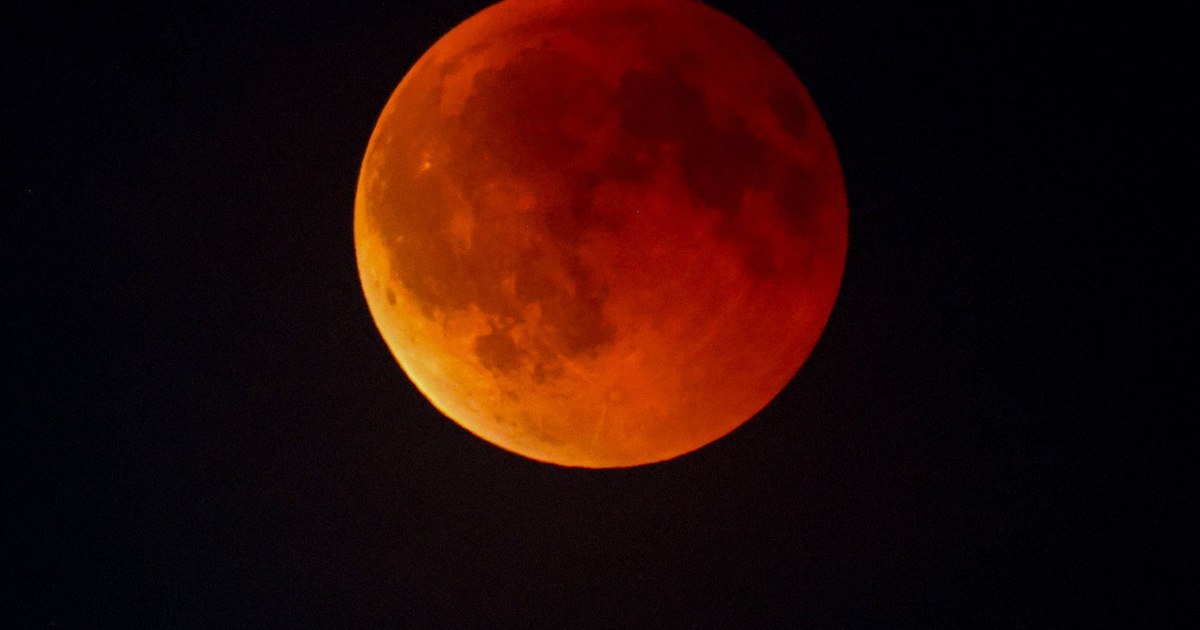
A total lunar eclipse, popularly known as “blood moon”, will take place on Tuesday, March 3, 2026. Visible before sunrise across much of the United States, the eclipse will color the Moon a reddish hue for nearly an hour as it enters Earth’s central umbra.
It’s the only total lunar eclipse of 2026, and also the last that will be visible from anywhere on the globe until December 31, 2028. However, western North America will be ideally positioned to see it in its entirety, Forbes reports.
A total lunar eclipse occurs when the Earth comes directly between the Sun and the Moon, and its central shadow, called the umbra, completely covers the natural satellite. During the phenomenon, the Moon gradually darkens, then takes on a spectacular copper-red color as sunlight is filtered through Earth’s atmosphere.
The totality phase of the eclipse on March 3, 2026 will last 58 minutes and 18 seconds, with the Moon about 15 percent inside the Earth’s shadow. The phenomenon will be impressive, the most favorable areas being the southwestern United States, northwestern Mexico and the interior of Australia. And from the rest of the globe the Blood Moon will be visible.
About 2.5 billion people, or 31% of the global population, will be able to see “red moon” during totality.
The red color of the Moon occurs because, during a total eclipse, it is illuminated by sunlight deflected through the Earth’s atmosphere. The phenomenon, called Rayleigh scattering, filters out the blue light and lets the red and orange hues reach the Moon.
The intensity of the color depends on the amount of dust, water vapor and particles in the atmosphere, and a possible recent volcanic eruption can make “blood moon” to appear much more intensely colored.
