
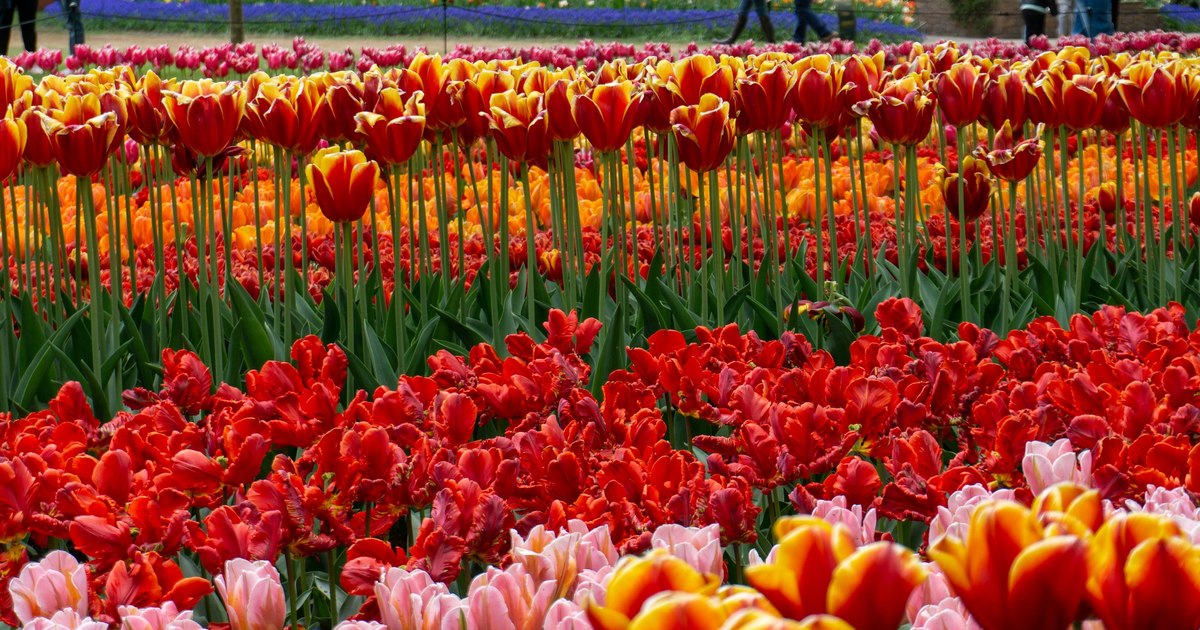
The tulip has crossed empires, inspired poets and ruined fortunes. Today, she is the star of the most beautiful garden in the world. If you dream of a garden break among seven million flowers, Keukenhof awaits you with a show that will saturate all your senses. And, between two perfect photos, you’ll discover how this fragile flower triggered one of the biggest financial fevers in history.
There is a moment, somewhere in the middle of April, when the Netherlands ceases to be just a country of canals and bicycles and becomes, for a few weeks, the visual epicenter of the Planet. The air takes on the smell of fresh earth and freshly opened flowers, and the horizon is fragmented in saturated colors, drawn with an almost unbelievable precision. If you’ve ever felt the need for an escape that’s neither a cultural marathon nor total abandonment on a sun lounger, then a three-day garden break, in the heart of the tulip region, is the answer. With one essential condition: here, spontaneity is built methodically.
Planning as a form of refinement
Imagine you want to get a seat at a sold-out concert. That’s how Keukenhof works. The show lasts a short time, the demand is huge, and the difference between a memorable experience and one crowded to the point of exhaustion lies in the details. The first rule is to defy the weekend. Tuesday or Wednesday are the days when the park breathes, and you can hear the rustling of petals, not just the synchronous sound of cameras.
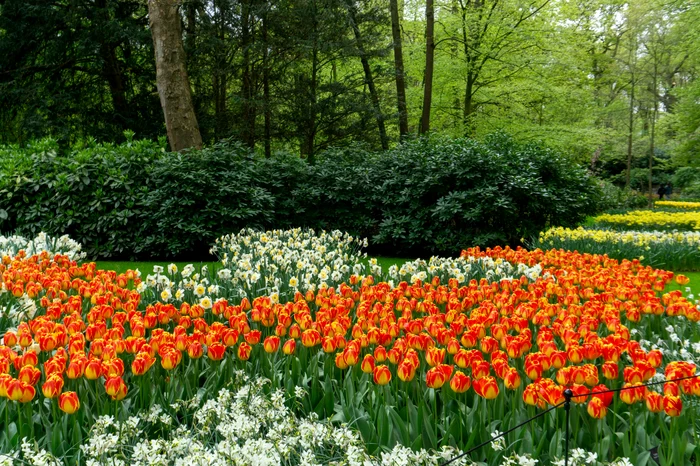
The ticket for Keukenhof, 21 euros, can be purchased exclusively online, with a fixed time interval. Choose the time 8:00. It is the only window where the light is raw, almost cinematic, the air smells of dewy hyacinth, and tourists are still drinking their coffee in Amsterdam.
Why Leiden becomes “home”
Once landed at Schiphol, let Amsterdam remain a promise for another time. Take the train to Leiden. In 15 minutes you arrive in a university town that operates on a human scale: narrower canals, historic buildings that don’t compete for attention and a bohemian, discreet atmosphere. With a reservation made in time, you can find boutique hotels with personality, at prices that do not seem like a punishment for good taste.
Leiden becomes your strategic base. From here, the Keukenhof Express bus drops you at the park gate in less than 20 minutes. In the evening, the city slowly lights up: warm lights reflected in the water, terraces full of low voices and that hard-to-translate Dutch feeling, gezellig, which you understand perfectly when a local beer and a portion of bitterballen (meatballs) cost around 15 euros and seem just right.
The presence exercise
A walk through Keukenhof is not a simple route among flowers, but an exercise in presence. You don’t need botanical knowledge to feel how the place changes your breath and slows your steps. If you enter at 8:00 in the morning, when the dew still clings to the petals and the sun timidly begins to dry the alleys, the park reveals itself layered, like a scenography built on levels of sensation.
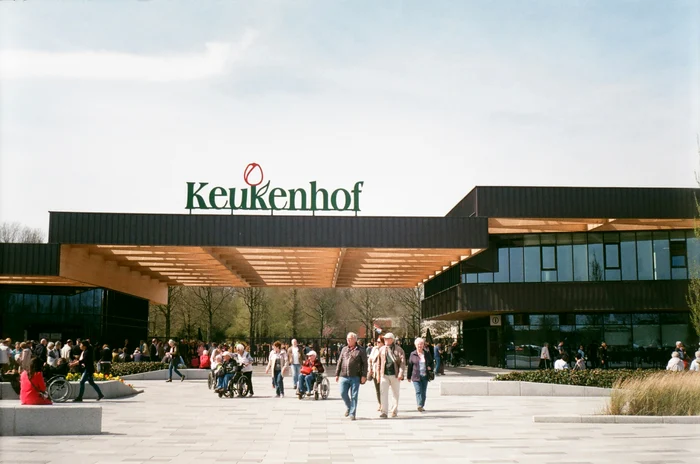
Immediately after the wooden gates, the first impact is not visual, but olfactory. A dense, sweet, almost tactile aroma emanates from the compact masses of blue and purple hyacinths that flank the entrance. Under your feet you can feel the fine grain of freshly raked gravel. The air is cold and humid, but the sensation is counterbalanced by the chromatic intensity of the flowers, which seem to give off warmth.
As you proceed, you reach the Willem-Alexander Pavilion, the largest covered structure in the park. The temperature rises slightly, the acoustics change, and the footsteps echo. Here, the tulips are displayed almost didactically: thousands of threads, hundreds of varieties, arranged at different heights. Seen up close, the petals reveal their texture. Some are velvety, others have jagged edges, as if carved in ice, and the “parrot” varieties have a waxy, almost unreal consistency.
Leaving the pavilion, the landscape opens up to the central lake. The sound changes again: the rustle of weeping willows and the trickle of water dominate the background. There are round stones, placed directly in the water, that you can step on to reach the middle of the pond. You feel a slight instability under your feet, and a constant coolness rises from the water. The swans walk past you unimpressed. From this point, the park seems wider, more airy.
The windmill rises in the northern corner. Climb onto her outer platform. Here, the border between show and reality becomes visible. You turn your back to the millimetrically arranged garden and look at the commercial fields: long, mathematical lines of primary colors that disappear into the horizon. The wind is stronger and the smell of freshly tilled earth rises from the fields.
Descending, you head towards the Beatrix Pavilion. The atmosphere becomes tropical. Orchids and anthurium dominate the space, the filtered light creates soft shadows on the glossy leaves, and the small detail becomes essential. You have to get within a few centimeters of the flowers to discover the complex designs on the orchid petals, like hand-painted miniatures.
Towards the end, the theme gardens offer a moment of respite. “Tea Garden”, with the smell of mint and sage, tempers floral oversaturation. A small hedge maze isolates the sounds of the park, leaving you with only the rough texture of the leaves and your own inner rhythm.
The experience ends on the water, aboard a Whisper Boat. The electric boat starts noiselessly, with only a barely perceptible vibration. Navigate narrow channels at ground level. The water, almost black, contrasts violently with the yellow and red of the tulips on the banks. You are outside the park, but in the center of the show, in a silence broken only by the rustling of the reeds.
Beyond the garden
After the intensity of Keukenhof, the real magic continues outside. Rent a bike from the entrance and set off towards Lisse or De Zilk. The rows of flowers stretch to the horizon, like huge ribbons of colored silk. It is the space of iconic photos, but also of respect: don’t step among the flowers. The order of this landscape is the result of meticulous work, repeated year after year.
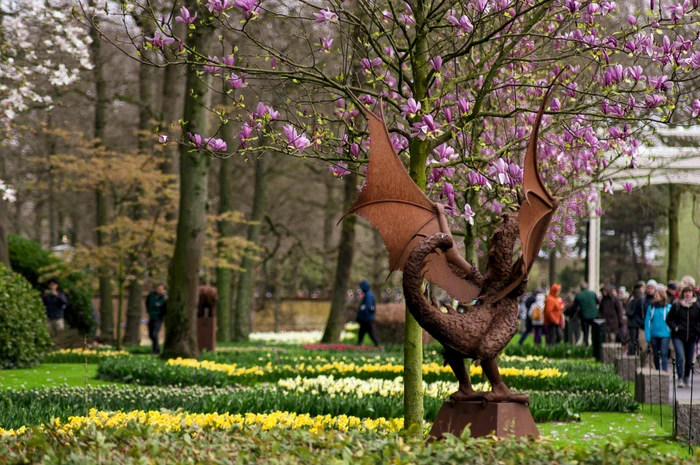
If you want a moment of peace, Keukenhof Castle offers exactly the necessary contrast. Its gardens are free, airy, dotted with discreet sculptures and avenues shaded by centuries-old trees. And for a salty-breeze finish, Noordwijk awaits you just a few kilometers away. A lunch with fresh fish on the beach, around 30 euros, sets the perfect end to a weekend that recalibrated your senses.
The budget of a memory that does not wither
A three-day garden break in the tulip region costs around 400-500 euros per person, without flight. Quality accommodation, well-chosen meals, tickets, transport and experiences that are not consumed quickly. It is an investment in a state, not in a tick on the map.
So, if you want spring not to pass you by in an urban gray, open the calendar. The Kingdom of the Netherlands is waiting to show you what the world is like when someone decides to plant seven million colored smiles in the form of bulbs. Book now. You’ll thank yourself later.
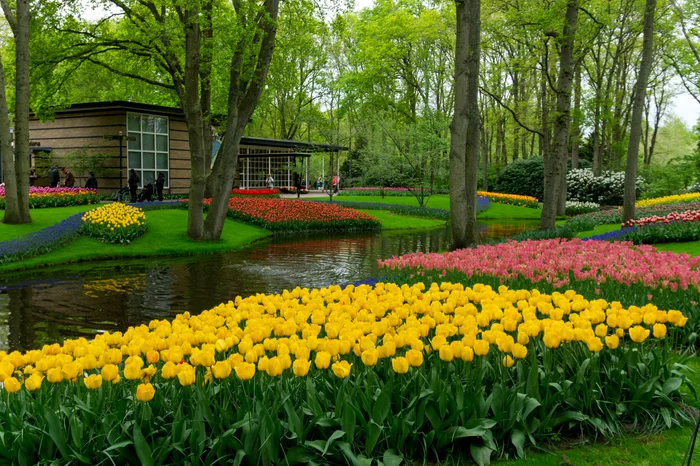
At the end of the three days, when you return to Leiden with the smell of earth still clinging to your soles and your retina saturated with color, you begin to understand that the tulip is not just a beautiful flower. It is an object of desire. A symbol of control over nature, but also of the temptation to exaggerate its value. Looking at the perfect fields, drawn with an almost mathematical rigor, it becomes clear that this order is not accidental. It is the result of an ancient, intense and sometimes dangerously passionate relationship between humans and these fragile flowers.
Because, before it was a reason for a garden break and cover photo, the tulip was currency, investment and obsession. It sparked overnight fortunes and financial ruins, absurd contracts and a collective fever that gripped 17th-century Holland with a force hard to imagine today. The Keukenhof of today, with its calculated tranquility and perfectly managed beauty, is, in its own way, the heir to a history in which flowers were not only admired, but hunted.
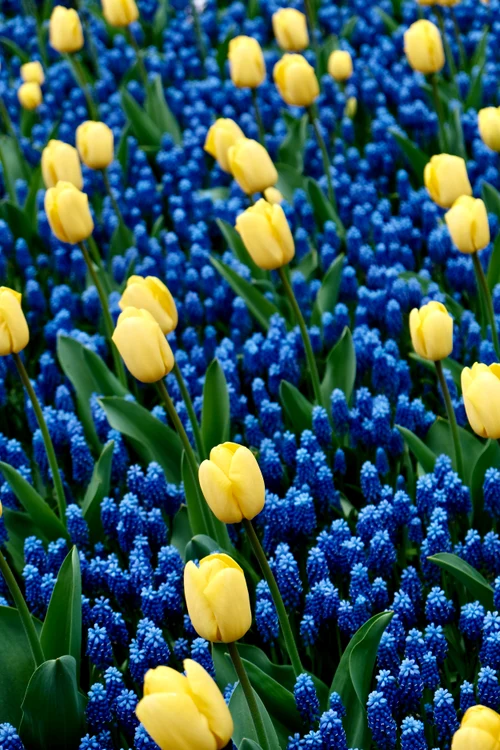
So, before you close the travel guide and promise yourself to come back, it’s worth taking a step back in time. To understand why, in a not very distant era, a single tulip could be worth as much as a house, and spring meant not only rebirth, but also risk. This story begins with the same explosion of color, but leads to one of the most fascinating financial madness in history.
Tips & Tricks
Onion wardrobe: The weather in April is capricious. Wear layers: a t-shirt, a cardigan and necessarily a jacket resistant to wind and rain.
Card, not cash: The Netherlands is almost cash-free: from parking meters to stroopwafel stalls, everything is paid by card.
Application 9292: It is essential for public transport; it tells you every second which train or bus to take.
Period: The garden will be open from March 19 to May 10, 2026.
