

The thymus, a lymphoid organ long thought to become nearly useless in adulthood, may play a much more important role in health and longevity than scientists previously thought, according to recently published research.
Recent scientific studies show that the role of the thymus in human immunity and long-term health is more important than it is currently appreciated.
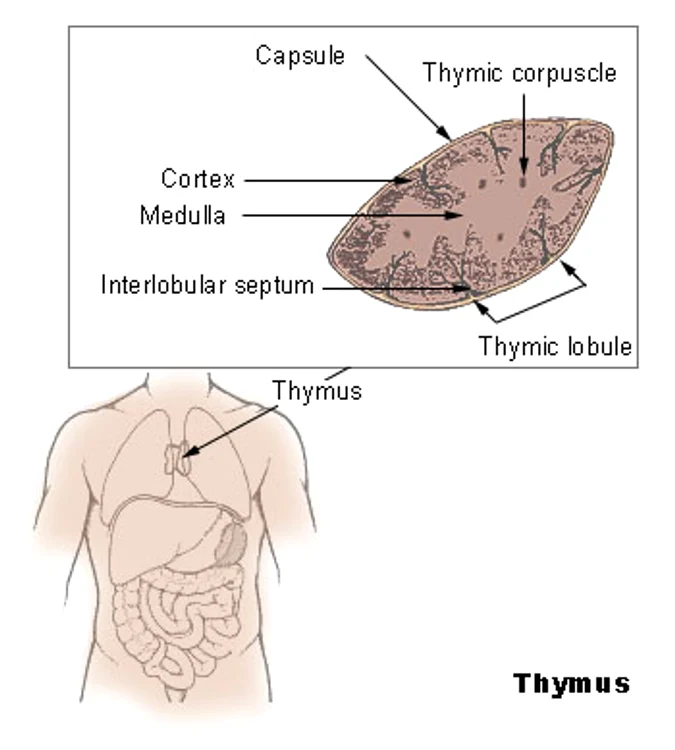
The thymus, a little-known gland located in the chest near the heart and lungs, is largely responsible for the formation of T cells, a type of white blood cells that help fight infections, notes the science magazine Scientific American, citing research recently published by the Nature platform.
Although it is also preserved in adulthood, it is most active before and during puberty. But its role in adults has long been ignored, in part because it shrinks with age and is gradually replaced by fat tissue—something scientists have interpreted as a sign that the organ is becoming less important.
But two recent studies show that the thymus may be more important to long-term health than previously thought, according to Science. The results fit with growing evidence that the immune system plays a major role in how we age.
The lesser known role of the thymus
In a research published on the Nature platform, scientists used artificial intelligence to analyze approximately 27,000 CT scans and medical records.
“In the National Lung Screening Trial, better thymus function was consistently associated with a lower risk of death from any cause, lower incidence of lung cancer, and lower cardiovascular mortality over 12 years of follow-up, even after factors such as age, sex, smoking, and other diseases were taken into account. In the independent Framingham Heart Study, better thymus status was also associated with lower risk of death from cardiovascular causes, independent of age, sex and smoking”, says the research published on the Nature platform.
The researchers noted that thymus health is also related to overall inflammation in the body and metabolic disorders, but also to modifiable lifestyle factors, including smoking, obesity and physical activity levels.
“Overall, the results suggest that the thymus may play a central role in the aging process and disease susceptibility in adulthood, and maintaining the function of this organ could become an important target for prevention and medical strategies aimed at extending healthy life.” note the authors of the research.
The secret of mental longevity. What a Harvard professor ruled out to rejuvenate his brain by 10 years
The finding is an important piece of the long-term health “puzzle,” said lead study author Hugo Aerts, a researcher at Mass General Brigham and a professor at Harvard Medical School and Maastricht University in the Netherlands.
The AI analysis showed that there is huge variation between people in the condition of the thymus.
“In some people, the thymus remains very active into old age. In others, it loses function quite quickly, starting at a younger age.” says scientist Hugo Aerts.
Research has shown that thymus health appears to be linked to overall health. People with a healthy thymus tended to live longer and have a lower risk of lung cancer or cardiovascular disease, even after the researchers took into account factors such as age, gender or smoking.
The organ that “must not be forgotten”
In another study, also published in Nature, researchers observed that cancer patients who had a healthier thymus responded better to immunotherapy.
“These two studies show that this almost forgotten organ, the thymus, may play a central role in our health throughout life,” says Hugo Aerts, quoted by Scientific American.
Other research indicates that the efficiency of the immune system, especially that related to T cells, is a key factor in healthy aging, says María Mittelbrunn, immunologist at the Spanish Research Council and visiting professor at Columbia University. Previous studies have shown, for example, that patients who had their thymus removed had more health problems in later years.
“However, the results are not conclusive. Studies show a link between the thymus and long-term health, but they do not prove that it is the direct cause. It is possible that the thymus reflects the overall state of the body, not determines it.” notes the publication.
People with a healthier thymus also had lower levels of inflammation, which could indicate that it’s a matter of a better overall state of the body, not just the function of this organ. Other organs may show similar trends, the researchers say.
According to the publication, the researchers say that further studies are needed to understand exactly the role of the thymus in longevity, but the results show that this organ deserves much more attention.
“It’s like saying: this organ should not be forgotten”concludes Hugo Aerts.
