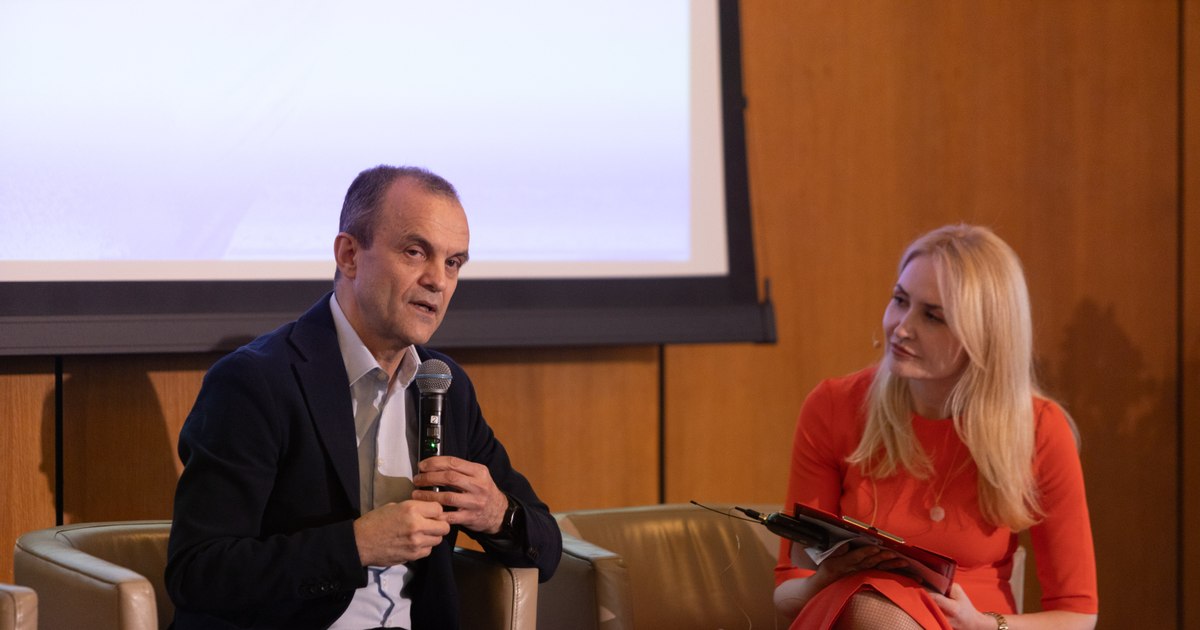
When life needs saving, there should be no room for arrogance. Patients from Romania can benefit, thanks to the European form, from treatment in European hospitals, when there are no solutions here. Doctor Cătălin Cîrstoveanu, head of the Neonatal Intensive Care Unit at the “Marie Curie” Children’s Emergency Hospital, is one of the people who strongly believes in the need to ask for help, when it is outside the borders. “I personally went with more than 800 children to other countries. (…) During this time we tried to develop the similar infrastructure in this country. Whoever said we need 20 years was pretty classy with us. We need 50 years to achieve what we need” says the doctor.
“We need 50 years to achieve what we need”
Doctor Cătălin Cîrstoveanu has been working at the “Marie Curie” Children’s Emergency Clinical Hospital in Bucharest for over 25 years. He laid the foundations of the most modern Intensive Care Unit for newborns in South-Eastern Europe, he has articles published in medical journals from all over the world, trainings carried out at prestigious medical facilities, but he does not hesitate to ask for help when patients’ lives are at stake.
“Collaborations exist because we are limited in what we can do. (…) It’s about lack of infrastructure, it’s about lack of staff, it’s about lack of competence many times, let’s be serious. And it is said that Romania is part of an organization, we pay some money – systematically, annually – and for this money Romanians can be treated abroad, if that problem cannot be solved in time in Romania. I recently went to Madrid with a child who had four transplants in one day: intestine, liver, pancreas and stomach. And part of the esophagus. So we are talking about such things. Which Romania does not know how long it will take to reach them“, says the doctor.
Over the years, he went with more than 800 children to other foreign countries. “Almost a commune” say.
“He was born on Saturday and we had to be there on Sunday, because the child was dying. During this time we tried to develop the similar infrastructure in this country. Whoever said we need 20 years was pretty classy with us. We need 50 years to achieve what we need”
A painful truth, but one that must be accepted. And for which children do not have to pay.
,,What has changed in Romania from yesterday to today so that I can say I have the same relationship as I have in the United Kingdom? We have the same economy somehow and we don’t know this? Or do I have a nurse stay by a patient day and night? We try through voluntary work – that is, standing from morning to night, until the next day, until the third day, we try to make up for what we cannot achieve in an organized way.”
In addition to the transfers, the “Marie Curie” Hospital constantly receives doctors from Italy, from the San Donato Hospital, who operate and offer expertise to Romanian doctors, based on a collaboration protocol. All for the benefit of the little patients.
Collaboration, also essential in the department he leads
Empathy and collaboration – these are the principles he says govern the ward he leads at “Marie Curie”. Every year, from all over the country, hundreds of newborn babies arrive at the Neonatal Intensive Care Unit, but with serious health problems. The doctors take care of everything from premature babies to babies with complicated malformations.
Crisis in the neonatal intensive care unit at Marie Curie. All beds are occupied after the closure of the ward in Iași
“The patient belongs to the ward, not to the doctor, to the personality. What I have been doing for over 25 years in the place where I work proves this. That helped us weld a good team. A very professional team. We were interested in nothing but the good of the patient. We have no vendettas between us. We don’t compete with each other. The one who is a good professional is accepted and demanded every time, without pride, by others. There are professional skills and everyone has a certain one: one knows how to do hemodynamics well, one is better at programming the mechanical ventilator, interacting better with the ventilator and the patient. And we each decline our skills when one of us is very well trained in an area. When the patient is well, we are all well.“
This is how they managed to save thousands of lives and do everything possible for every child admitted to the ward.
We are in the middle of the hospital. And there are surgeons, radiologists, cardiologists, heart surgeons, neurosurgeons with whom we collaborate extremely well and motivate them to be a team together. This has helped us a lot over time so-called miracle cases appear. In fact, it is an extended competence of each of us who brings his input to these patients.
The ward is expanding, so that more children can receive treatment
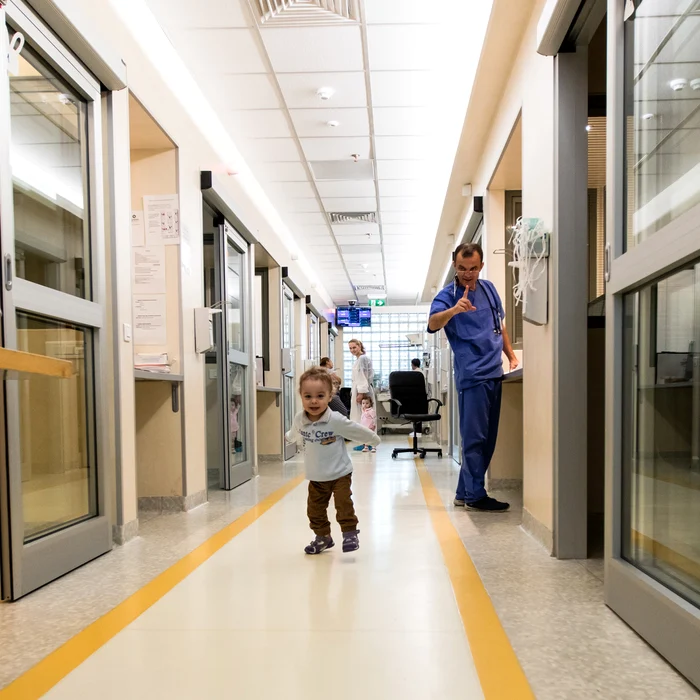
Although it is very modern, the ATI Neo-Născuti ward at Marie Curie currently has 27 places, because that is what the space allowed. However, the number of children who need help is much higher. And doctors live a nightmare: that of lives on the waiting list.
“Every year, 30 children died on the waiting list. We always have waiting lists of 10-15-20 patients. That’s why we’re building another building”
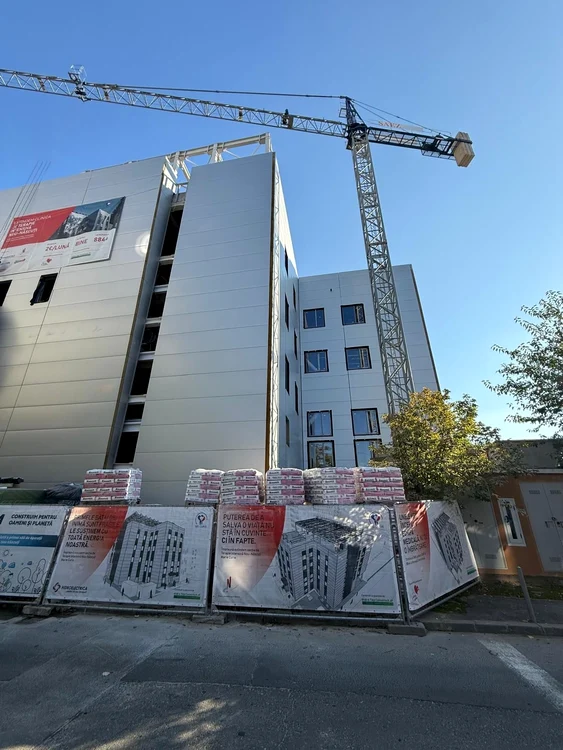
So far, approximately 9 million euros have been raised. The money comes from SMS donations from well-wishers, sponsorships from private companies, and PNRR funds. The works are nearing completion.
“I spend three hours each on the construction site – morning, evening, night. I can’t wait for the moment when all our patients will have their place and special facilities.“, says doctor Cătălin Cîrstoveanu excitedly. When it is ready, the new ward will have an indoor operating room, neonatal MRI, accommodation for parents and a training center for doctors and nurses. And, most importantly, it will mean more lives saved.
The stage of the works, how you can help, and more details can be found on the section’s Facebook page.